
About Alexandre Mercereau
Lived 1884 – 1945 (aged 60). Alexandre Mercereau was a French poet, journalist, writer, art critic, lecturer and editor-in-chief.
Alexandre Mercereau (22 October 1888 – 1945) was a French symbolist poet and critic associated with Unanimism and the Abbaye de Créteil. He founded the Villa Médicis Libre, which helped impoverished artists and operated as charitable reformatory for delinquent teenagers. Mercereau's work inspired the revolutionary artistic movement of the early 20th century known as Cubism.
Early life and career Born Alexandre Mercereau de la Chaume, he signed his first texts Eshmer-Valdor, a pseudonym he quickly abandoned. In 1901, at sixteen years of age, Mercereau's first verses were published; poetry and criticism in Oeuvre d'art international. In 1904 he co-founded the magazine La Vie, where he became assistant editor, drama critic, and columnist.
In 1905 he published Les Thuribulums affaissés, a book of verse that attracted much attention. At the same time, he co-founded the Association Ernest-Renan. In 1906 he organized the French section of Salon exhibition and literary review La Toison d'Or.
Abbaye de Créteil, ca.1908. First row: Charles Vildrac, René Arcos, Albert Gleizes, Barzun, Alexandre Mercereau. Second row: Georges Duhamel, Berthold Mahn, d'Otémar
Abbaye de Créteil
The Abbaye de Créteil was a phalanstère utopian community founded during the fall of 1906 by Alexandre Mercereau, along with the poets René Arcos, Henri-Martin Barzun, Charles Vildrac, and the artist, theorist Albert Gleizes. The movement drew its inspiration from the Abbaye de Thélème, a fictional creation by Rabelais in his novel Gargantua.
Albert Gleizes met the artists Berthold Mahn, Jacques d'Otémar and Josué Gaboriaud while in Amiens (1904), as well as the printer, Lucien Linard, who would run the printshop at the Abbaye de Créteil. At this time, the art critic Jean Valmy Baysse (and soon historian of the Comédie-Française), in collaboration with Alexandre Mercereau, René Arcos, Charles Vildrac and Georges Duhamel were invited to participate on a new journal, titled La Vie.
Symbolist poet and writer Henri-Martin Barzun joined the group of writers and painters in 1905. Gleizes assisted in the formation of the Association Ernest Renan in December at the Théâtre Pigalle, in an attempt to counter the rise of militarist propaganda. In the process, publications and artwork tended towards a more popular and secular culture. Gleizes was in charge of the literary and artistic developments that organized poetry readings and street theatre.
Villa Médicis Libre Mercereau founded the Villa Médicis Libre, in Villepreux, under the patronage of Fondation Georges Bonjean, to provide inexpensive accommodations for avant-garde artists living in difficulties. André Lhote and Raoul Dufy resided there in 1910.
Mercereau and Cubism According to Albert Gleizes, Mercereau is responsible for having introduced him to Jean Metzinger, Robert Delaunay and Henri Le Fauconnier in 1910—the same year that Mercereau curated and included these artists in a Moscow exhibition, probably the first Jack of Diamonds Exhibition. Prior to meeting, Gleizes and Metzinger had been linked by Louis Vauxcelles' disparaging comments on "des cubes blafards" which likely referred to Metzinger's Portrait of Apollinaire (1909–10) and Gleizes' L'Arbre (The Tree) (1910) at the Salon des Indépendants. Mercereau had previously included Gleizes' Les Brumes du Matin sur la Marne in a Russian exhibition of 1908.
"Given Mercereau's long standing delight in promoting group activity", writes art historian Daniel Robbins, "it is easy to recognize his pleasure in having brought together three painters whose works exhibited similar interests and who could be identified with his own synthetic ideals, ideals which had been influential in the Abbaye's development". As organizer of the literary section of the Salon d'Automne of 1909, he was able to introduce Gleizes to painters exhibiting there and to introduce his own concepts to the world of painting.
"In poetry", writes Robbins, "this post-symbolist attempt to achieve new forms had to break decisively with the old unities of time, place and action. Unity of scene did not correspond with the reality of modem life; unity of time did not correspond with the culturally known and anticipated effects of change. That is why Mercereau (as Metzinger noted
This group of artists met regularly at Le Fauconnier's studio near the Boulevard de Montparnasse. Salmon and Apollinaire were only peripheral members, participating in divers literary and artistic circles, but clearly Apollinaire's conception of Cubism was influenced by the epic notions found in the old Abbaye circle. In his preface to the 1911 Brussels Indépendants, Apollinaire wrote:
...thus has come a simple and noble art, expressive and measured, eager to discover beauty, and entirely ready to tackle those vast subjects which the painters of yesterday did not dare to undertake, abandoning them to the presumptuous, old-fashioned and boring daubers of the official Salons.
This conception is not based on the studies of Picasso and Braque (what became known years later as the analytical Cubism), which had annihilated subject matter almost entirely and confined it to exceedingly flat space. Instead, it suggests the broad concepts held by the Mercereau-Gleizes circle, concepts at that time visible only in the paintings of Albert Gleizes, Henri Le Fauconnier, Robert Delaunay and Fernand Léger. The subjects treated by these Cubists differed significantly from the isolated still lifes or figures chosen by Picasso and Braque.
Alexandre Mercereau, quick to spotlight the merit of others, so fastidious about honor that he indicates the provenance of any idea he did not find within himself, possessor of an intelligence where the most antinomic philosophies are elaborated, has very quickly passed through the phases of contemporary literature, with the cheerful self-assurance of someone who has never been affected by the herd instinct. ...
Alexandre Mercereau glorifies the androgyne, establishes ingenuous relationships between sacred vessels and instruments for the boudoir, and remains expressly a poet.|Jean Metzinger, 1911
The man represented in the painting is very likely a portrait of Jean Metzinger. The book entitled Paroles devant la vie, held prominently by the model was written by Mercereau in 1913. Gleizes had collaborated in founding the Abbaye de Créteil, and was very familiar with Mercereau's writings. Metzinger wrote an important text about Mercereau in 1911.
In 1914 he curated Moderní umění, 45th Exhibition of SVU Mánes in Prague. This "Survey of Modern Art" was one of the last prewar exhibitions in Prague. The exhibition included works by Alexander Archipenko, Georges Braque, Constantin Brâncuși, Robert Delaunay, André Derain, Marcel Duchamp, Raoul Dufy, Othon Friesz, Albert Gleizes, Roger de La Fresnaye, Louis Marcoussis, Jean Marchand, Jean Metzinger, Piet Mondrian, Diego Rivera, Edvard Munch, Max Pechstein, Pablo Picasso, Otto van Rees, Adya van Rees-Dutilh and Jacques Villon, in addition to Czech artists.
By 1914, Mercereau had met the Spanish sculptor Julio González and became his lifelong supporter and friend.
Publications Les Thuribulums affaissés, poèmes, 1905 Gens de là et d'ailleurs : gens de la terre, gens de la ville, gens de Paris, 1907 Contes des ténèbres, 1911 La Littérature et les idées nouvelles, 1912 Paroles devant la vie : la vie, le poète, la fiancée, la femme enceinte, la mère, soi-même, la demeure, la mort, 1913 La Paix armée et le problème d'Alsace dans l'opinion des nouvelles générations françaises, 1914 Évangile de la bonne vie, 1919 Séraphyma, 1922 La Conque miraculeuse, 1922 Les Pensées choisies d'Alexandre Mercereau, 1922 Une histoire merveilleuse, 1928
Don’t just read it —
keep it.
Full-length biographies made to live with: read them, listen on the way to work, watch them tonight.
- E-book
- Audio
- Video
Instant download · yours to keep · every purchase keeps this site free
Important facts
People in Alexandre Mercereau's life
Named in this biography and alive at the same time



Related people
Same field, nearest in time
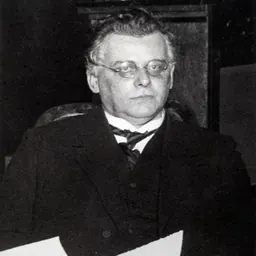
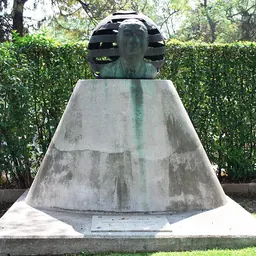

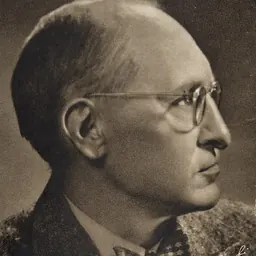
Contemporaries
People whose lives overlapped Alexandre Mercereau's
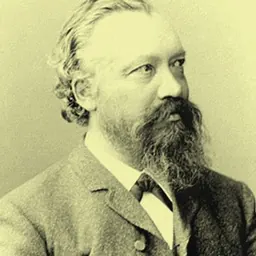
Frequently asked questions
Who was Alexandre Mercereau?
French poet and art critic (1888–1945)
When was Alexandre Mercereau born?
Alexandre Mercereau was born on 22 October 1884 in 5th arrondissement of Paris.
When did Alexandre Mercereau die?
Alexandre Mercereau died on 6 June 1945 in Gandelu.
What was Alexandre Mercereau's occupation?
Alexandre Mercereau was a poet, journalist, writer, art critic, lecturer and editor-in-chief.
What nationality was Alexandre Mercereau?
Alexandre Mercereau was French.
Sources & further reading
· Wikipedia: Alexandre Mercereau
· DBpedia: Alexandre Mercereau
Cite this page
APA: Biography.guide. (2026). Alexandre Mercereau. https://biography.guide/alexandre-mercereau/
MLA: "Alexandre Mercereau." Biography.guide, https://biography.guide/alexandre-mercereau/.
Chicago: "Alexandre Mercereau." Biography.guide. https://biography.guide/alexandre-mercereau/.
Data last updated: 2026-09-20 · Spot an error? Report a correction.
Page generated 2026-09-27 05:25 UTC