
About Alexandre Lacassagne
Lived 1843 – 1924 (aged 81). Alexandre Lacassagne was a French physician, medical examiner, anthropologist and criminologist.
Alexandre Lacassagne (; 17 August 1843 – 24 September 1924) was a French physician and criminologist who was a native of Cahors. He was the founder of the Lacassagne school of criminology, based in Lyon and influential from 1885 to 1914,
Biography Lacassagne studied at the military school in Strasbourg, and for a period of time worked at Val-de-Grâce military hospital in Paris. Later he attained the chair of Médecine Légale de la Faculté de Lyon (Forensic medicine of the Lyon Faculty), and was also founder of the journal Archives de l'Anthropologie Criminelle. Among his assistants was famed forensics scientist Edmund Locard (1877–1966).
Lacassagne was a principal founder in the fields of medical jurisprudence and criminal anthropology. He was a specialist in the field of toxicology, and was a pioneer regarding bloodstain pattern analysis and the research of bullet markings and their relationship to specific weapons. While he did not come up with a system to classify these markings, Lacassagne's research and study is considered the beginning of the science of ballistics.
He had a keen interest in sociology and psychology, and the correlation of these disciplines to criminal and "deviant" behaviour. He considered an individual's biological predisposition and social environment to be important factors in criminal behaviour.
Lacassagne became famous because of his expertise in various criminal affairs, including the "malle à Gouffé" in 1889, the assassination of President Sadi Carnot, stabbed in 1894 by the Italian anarchist Caserio, and the case of Joseph Vacher (1869–1898), one of the first known French serial killers.
Politically, Lacassagne supported the initiative of his friend Léon Gambetta, an Opportunist Republican, in favour of the 27 May 1885 Act establishing penal colonies, dubbed "Law on relegation of recidivists" (the bill had been introduced by Pierre Waldeck-Rousseau and Martin Feuillée). He also opposed the abolition of death penalty, proposed in 1906 by an alliance of Radicals and Socialists and rejected in 1908, as he considered that some criminals were irredeemable.
Lacassagne died in Lyon.
Lacassagne school
Lacassagne's School was widely influential in France from 1885 to 1914, and the main opponent to Lombroso's Italian School, although its importance had been overshadowed and was recently re-discovered, under the influence of new historians' works. "To the fatalism which ineluctably follows from anthropological theory, we oppose social initiative." "Justice shrivels up, prison corrupts and society has the criminals it deserves."
Lacassagne was originally influenced by Lombroso, but started opposing himself to the latter's theory of the "born criminal," of a "criminal type" and to his insistence on heredity. Under the influence of the sociologist Gabriel Tarde, Lacassagne placed the main emphasis on environmental influence, although the environmental determinism did not exclude, from his viewpoint, hereditary matters nor physical anomalies. Lyon had in fact been an important center for phrenology, with the presence of Fleury Imbert (1796–1851), a disciple of Fourier who married Gall's widow, and Émile Gromier (1811–78), who preceded Lacassagne in the Lyon Faculty. They considered that the social environment had a physiological influence on the brain, and thus opposed Lombroso's theory which alleged that criminal factors were not only biological, but exclusively individual. Furthermore, he divided society itself according to these zones, which produced according to him three "type" of criminals, "thought criminals", "act criminals" and "sentimental or instinctual criminals", respectively corresponding to the frontal social zone, the parietal social zone, and the occipital social zone.
Lacassagne's overshadowing by the Lombroso School was probably due to his insistence on the value of phrenology, which at that time had become discredited in most scientific circles. Criminology was at the time divided into two main schools - one relative more to "biopsychological" theories stressing the importance of individual traits and aiming at establishing an essential difference between honest citizens and criminals, the other opposed to this medical determinism social determinism, mainly influenced by Durkheim. Lacassagne's approach, which combined both biological and social factors, was too ambiguous to last.
Main publications (1872) (1876) On-line (1878) On-line (1881) On-line (1887) (1891) On-line (1891) (1892) On-line (1894) On-line (1898) On-line (1899) On-line (1906) (1908) (1913) (1920)
Don’t just read it —
keep it.
Full-length biographies made to live with: read them, listen on the way to work, watch them tonight.
- E-book
- Audio
- Video
Instant download · yours to keep · every purchase keeps this site free
Important facts
People in Alexandre Lacassagne's life
Named in this biography and alive at the same time

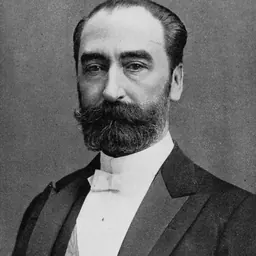
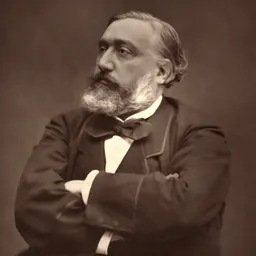


Related people
Same field, nearest in time



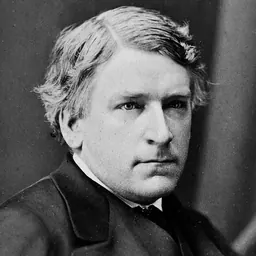

Contemporaries
People whose lives overlapped Alexandre Lacassagne's
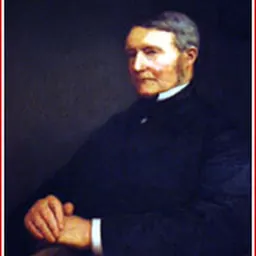
Frequently asked questions
Who was Alexandre Lacassagne?
French criminologist (1843-1924)
When was Alexandre Lacassagne born?
Alexandre Lacassagne was born on 17 August 1843 in Cahors.
When did Alexandre Lacassagne die?
Alexandre Lacassagne died on 24 September 1924 in 3rd arrondissement of Lyon.
What was Alexandre Lacassagne's occupation?
Alexandre Lacassagne was a physician, medical examiner, anthropologist and criminologist.
What nationality was Alexandre Lacassagne?
Alexandre Lacassagne was French.
Sources & further reading
· Wikipedia: Alexandre Lacassagne
· DBpedia: Alexandre Lacassagne
Cite this page
APA: Biography.guide. (2026). Alexandre Lacassagne. https://biography.guide/alexandre-lacassagne/
MLA: "Alexandre Lacassagne." Biography.guide, https://biography.guide/alexandre-lacassagne/.
Chicago: "Alexandre Lacassagne." Biography.guide. https://biography.guide/alexandre-lacassagne/.
Data last updated: 2026-09-20 · Spot an error? Report a correction.
Page generated 2026-09-27 05:24 UTC