
Alexandre Banza
African army officer and politician
About Alexandre Banza
Lived 1932 – 1969 (aged 36). Alexandre Banza was a politician, military personnel, military officer and minister (government).
Early life and military career Banza was born on 10 October 1932. He was the first of three sons and grew up in the heart of Gbaya territory. Banza studied In Cameroon and Congo-Brazzaville. He had a similar military record to his future colleague Jean-Bédel Bokassa, who had also served in the First Indochina War and had been stationed in Africa and Europe as a radio transmissions expert. Afterward, Banza returned to the Central African Republic, where he enlisted in the armed forces. Brian Titley, author of Dark Age: The Political Odyssey of Emperor Bokassa described Banza as an "intelligent, ambitious, and unscrupulous" military officer. after winning a power struggle against Abel Goumba. Bokassa left the French army to join the Central African Republic army in 1962. By 1965, the country was in turmoil—plagued by corruption and slow economic growth, while its borders were breached by rebels from neighboring countries. Dacko obtained financial aid from the People's Republic of China, but in spite of this support, the country's problems persisted.
Tensions between Dacko and Bokassa increased. In December 1965, Dacko approved a budget increase for Izamo's gendarmerie, but rejected the budget proposal for Bokassa's army. Dacko planned to replace Bokassa with Izamo as his personal military adviser, and wanted to promote army officers loyal to the government, while demoting Bokassa and his close associates. Banza, who was then commander of the Camp Kassaï military base in northeast Bangui, offered Bokassa his support and persuaded the still-worried commander-in-chief to carry out the coup. Bokassa called Izamo at his headquarters, asking him to come to Camp de Roux to sign some papers that needed his immediate attention. Izamo, who was at a New Year's Eve celebration with friends, reluctantly agreed and traveled in his wife's car to the camp. Upon arrival, he was confronted by Banza and Bokassa, who informed him of the coup in progress. After announcing his refusal to support the coup, Izamo was overpowered and locked in a cellar. Meanwhile, Banza took over administrative centers, where politicians, diplomats and other high-level officials were celebrating the coming of the New Year.
Minister in the Bokassa government
Banza was appointed minister of finance and minister of state in the new government. The regime first secured diplomatic recognition from President François Tombalbaye of neighboring Chad, whom Bokassa met in Bouca, Ouham. After Bokassa reciprocated by meeting Tombalbaye on 2 April 1966 along the southern border of Chad at Fort Archambault, the two decided to help one another if either was in danger of losing power. Soon after, other African countries began to diplomatically recognize the new government. At first, the French government was reluctant to support the Bokassa regime, so Banza went to Paris to meet with French officials to convince them that the coup was necessary to save the country from turmoil. Bokassa met with Prime Minister Georges Pompidou on 7 July 1966, but the French remained noncommittal in offering their support.
As a minister of finance, Banza directed much of his energy and time into lifting the country out of bankruptcy. Banza was also successful in his efforts to build the government's reputation abroad, all the while establishing himself as a respected and well-liked leader. Many believed that he would not remain as Bokassa's right-hand man for much longer. After Banza was promoted from captain to lieutenant colonel in 1965, Bokassa realized that his greatest political threat was not from the remaining group of Dacko supporters, but from Banza himself.
1969 coup plot Banza revealed his intention to stage a coup to Lieutenant Jean-Claude Mandaba, the commanding officer of Camp Kassaï, who he looked to for support. Mandaba went along with the plan, but his allegiance remained with Bokassa. He was sentenced to death by firing squad, taken to an open field behind Camp Kassaï, executed and buried in an unmarked grave. The circumstances of Banza's death have been disputed. The American newsmagazine, Time, reported that Banza "was dragged before a Cabinet meeting where Bokassa slashed him with a razor. Guards then beat Banza until his back was broken, dragged him through the streets of Bangui and finally shot him." The French daily evening newspaper Le Monde reported that Banza was killed in circumstances "so revolting that it still makes one's flesh creep":
Aftermath of coup A few days later, Bokassa had Banza's wife and their nine children arrested and deported to Berbérati and then Birao. They were released on 6 May 1971. Banza's mistress, Julienne Kombo, who entered the Palais de la Renaissance crying hysterically after her lover's death, was arrested and jailed until 24 June 1972. Banza's father was sent to jail, where he died of hunger and exhaustion on 24 April 1970 at Ngaragba Central Prison. Banza's two younger brothers, Beuoane and Gouboulo, were dismissed from the gendarmerie in July and sent to Ngaragba Prison. In August 1971, they were taken from the prison, never to be seen again.
Bokassa also hunted down Banza's close associates, such as Joseph Kallot, Faustin Marigot and Polycarpe Gbaguili. Kallot and Marigot died in prison in June 1969 and April 1971, respectively. With the exception of Gbaguili, who remained in prison until the downfall of the Bokassa regime on 20 September 1979, the other associates were released months after their arrest. Gbaguili served as a witness in Bokassa's criminal trials for treason, murder, cannibalism and embezzlement during the 1980s, explaining in detail the numerous crimes and human rights violations the former dictator had completed.
By eliminating his dangerous rival, Bokassa demonstrated his ability to deal ruthlessly with dissidents and political opponents. He started to rule more arbitrarily after the Banza affair, giving himself control of various ministerial positions and the army. In one instance, he promoted Second Lieutenant François Bozizé, the future president of the Central African Republic, to General after he beat a Frenchman who showed disrespect for the president. According to Brian Titley, author of Dark Age: The Political Odyssey of Emperor Bokassa, he surrounded himself with "sycophants, who were all too willing to nurture his growing delusions of grandeur"; with no one to stop him, he also spent money with reckless abandon.
Don’t just read it —
keep it.
Full-length biographies made to live with: read them, listen on the way to work, watch them tonight.
- E-book
- Audio
- Video
Instant download · yours to keep · every purchase keeps this site free
Important facts
People in Alexandre Banza's life
Named in this biography and alive at the same time
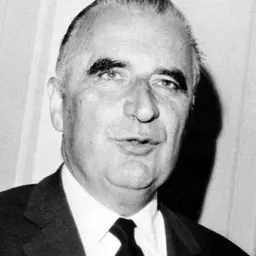

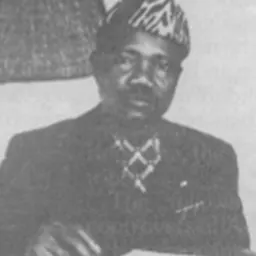
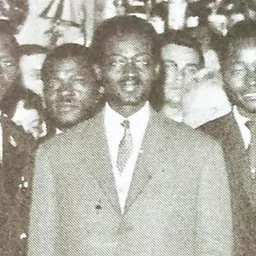
Related people
Same field, nearest in time


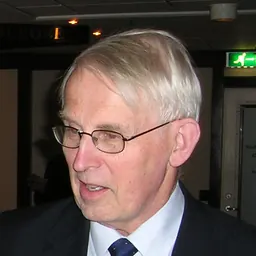


Contemporaries
People whose lives overlapped Alexandre Banza's


Frequently asked questions
Who was Alexandre Banza?
African army officer and politician (1932–1969)
When was Alexandre Banza born?
Alexandre Banza was born on 10 October 1932 in Carnot.
When did Alexandre Banza die?
Alexandre Banza died on 12 April 1969 in Central African Republic.
What was Alexandre Banza's occupation?
Alexandre Banza was a politician, military personnel, military officer and minister (government).
What nationality was Alexandre Banza?
Alexandre Banza's recorded nationality: Central African Republic.
Sources & further reading
Cite this page
APA: Biography.guide. (2026). Alexandre Banza. https://biography.guide/alexandre-banza/
MLA: "Alexandre Banza." Biography.guide, https://biography.guide/alexandre-banza/.
Chicago: "Alexandre Banza." Biography.guide. https://biography.guide/alexandre-banza/.
Data last updated: 2026-09-20 · Spot an error? Report a correction.
Page generated 2026-09-27 05:21 UTC