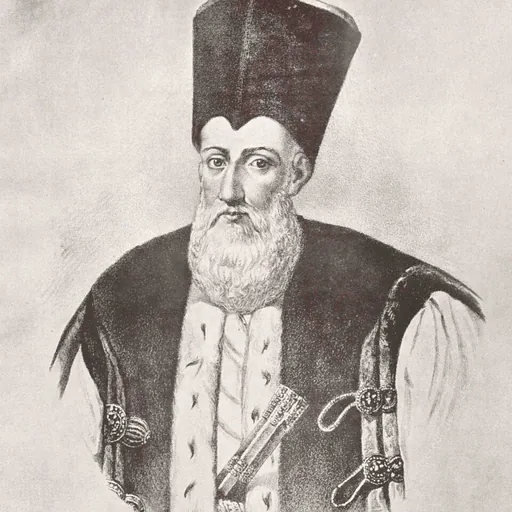
Alexander Ypsilantis
Greek Voivode of Wallachia and of Moldavia
About Alexander Ypsilantis
Lived 1726 – 1807 (aged 80–81). Alexander Ypsilantis was a Romanian diplomat, voivode and politician.
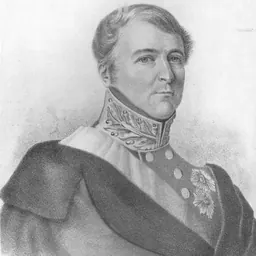
Alexander Ypsilantis ( Alexandros Ypsilantis, ; 1726 – 13 January 1807) was a Greek Voivode (Prince) of Wallachia from 1774 to 1782, and again from 1796 to 1797, and also Voivode of Moldavia from 1786 to 1788. He bears the same name as, but should not be confused with, his grandson, the Greek War of Independence hero of the early 19th century. The Ypsilantis were a prominent family of Phanariotes.
Reign In 1774, as a diplomat in service to the Porte, Ypsilanti took part in the signing of the Treaty of Kuchuk-Kainarji with Russia; a year later, he was rewarded for this and other services by being appointed Dragoman of the Porte. Still in 1775, he was awarded the throne of Wallachia. This could only happen as the Russian troops were ending their occupation of Bucharest, begun in 1771. The throne had been vacant throughout this period, a hiatus provoked by Emanuel Giani Ruset's agreement with Catherine II at the start of the war.
As principal acts of his reign in Wallachia, Ypsilanti enforced a series of reforms. Several laws are grouped in the Pravilniceasca condică, called "Syntagmation nomikon" in its Greek version (roughly: "The Code of Byzantine customary laws"). Issued in 1780, the Code sought to amend fiscal, administrative, judicial and political flaws. During his judicial reform, Ypsilanti created civil courts in each Wallachian county. What was in fact a radical redefinition of legal boundaries had to make occasional reference to Byzantine norms (the traditional laws in the two Principalities), due to resistance from conservative boyars in the Assembly (the Sfat). Most notably, the new laws tried to impose salaries for public offices, a measure intended to reduce fiscal burdens on the taxed social categories (that had been supposed to provide revenues for the fiscal agents, usually boyars, in an economy in which land ownership had become less of an asset than holding office) and ensure a more professional administrative structure.
Ypsilanti's reigns coincide with a critical moment in Ottoman history. In August 1787, Russia resumed hostilities (see Russo-Turkish War (1787–1792)), and the Porte faced a large-scale invasion of its Danubian territories as the Habsburg Empire joined the fighting (9 February 1788). A secondary effect of this event was the granting of military command over Turkish troops in the region to Ypsilanti: the gesture is also significant as a temporary re-shaping of status in the relations between Prince and Sultan for the context of Phanariote rule.
Sources suggest that Ypsilanti was considering an alliance with Austria, and had been negotiating with emissaries of Emperor Joseph II. However, as the Austrians occupied Iaşi in April, all contacts ceased and the Prince was kept in custody in Brno up to the signing of the peace treaty at Sistowa (autumn of 1791).
Don’t just read it —
keep it.
Full-length biographies made to live with: read them, listen on the way to work, watch them tonight.
- E-book
- Audio
- Video
Instant download · yours to keep · every purchase keeps this site free
Important facts
Family & relationships
People in Alexander Ypsilantis's life
Named in this biography and alive at the same time

Related people
Same field, nearest in time

Contemporaries
People whose lives overlapped Alexander Ypsilantis's





Frequently asked questions
Who was Alexander Ypsilantis?
Greek Voivode of Wallachia and of Moldavia
When was Alexander Ypsilantis born?
Alexander Ypsilantis was born in 1726 in Constantinople.
When did Alexander Ypsilantis die?
Alexander Ypsilantis died on 13 January 1807 in Constantinople.
What was Alexander Ypsilantis's occupation?
Alexander Ypsilantis was a diplomat, voivode and politician.
What nationality was Alexander Ypsilantis?
Alexander Ypsilantis was Romanian.
Sources & further reading
· Wikipedia: Alexander Ypsilantis
· DBpedia: Alexander Ypsilantis (1725–1805)
Cite this page
APA: Biography.guide. (2026). Alexander Ypsilantis. https://biography.guide/alexander-ypsilantis-diplomat/
MLA: "Alexander Ypsilantis." Biography.guide, https://biography.guide/alexander-ypsilantis-diplomat/.
Chicago: "Alexander Ypsilantis." Biography.guide. https://biography.guide/alexander-ypsilantis-diplomat/.
Data last updated: 2026-09-22 · Spot an error? Report a correction.
Portrait: Wikimedia Commons · author & licence
Page generated 2026-09-27 05:02 UTC