
About Alexander White
Lived 1738 – 1804 (aged 66). Alexander White was an American politician and lawyer.
Alexander White (June 17, 1738 – October 9, 1804) was an early American lawyer and politician in Virginia. He served in the House of Burgesses (representing Hampshire County), the Virginia House of Delegates (representing Frederick County and later Berkeley County. During the American Revolutionary War, White facilitated the release of Quaker and Hessian civilian prisoners held by patriots. White also participated in the Virginia Ratifying Convention (in which Virginia ratified the United States Constitution in 1788) and became the northwestern Virginia district's inaugural member in the United States House of Representatives (1789 to 1793). United States President George Washington appointed White one of the commissioners responsible for the planning and construction of Washington, D.C. (1795 to 1802).
The son of Virginia pioneer settler and physician Dr. Robert White (1688–1752); White was a member of the prominent White political family of Virginia and West Virginia. His nephew became Virginia judge Robert White (1759–1831), another nephew became United States Congressman Francis White (1761–1826), and his brother-in-law was Virginia Governor James Wood (1741–1813).
Early life and education Alexander White was born in 1738 to Dr. Robert White (1688–1752) and his wife, Margaret Hoge, at "White Hall" in the Colony of Virginia, near present-day Hayfield then in vast Orange County (later part of Frederick County, which was created later that year). White's father, Dr. Robert White, had served as a surgeon in the Royal Navy of the Kingdom of Great Britain. Between 1732 and 1735, Dr. White became a "pioneer settler" and one of two practicing physicians in what became Frederick County. Through his father, White was of Scottish descent and raised in the Presbyterian faith.
Dr. White sent his son to Scotland, where he studied jurisprudence at the University of Edinburgh. White continued his law studies in London, England, where he was admitted to the Inner Temple on January 15, 1762, and matriculated at Gray's Inn on January 22, 1763. White remained in Britain and completed his law studies during what Virginians called the French and Indian War.
Lawyer and politician White returned to Virginia in 1765, where he was admitted to the bar, began practicing law and became a prominent lawyer in the Shenandoah Valley region with a "national reputation". White became deputy King's attorney for Frederick County in 1772.
House of Burgesses Hampshire County voters elected as one of their two (part-time) representatives to the House of Burgesses in Williamsburg in 1772, but he only served a year of what became a two-year term, resigning in 1773 in order to accept a position as deputy king's attorney, and replaced by Joseph Neville. James Mercer was Hampshire County's other representative; although he lived near Fredericksburg, his family owned land in Hampshire County. White resigned from the House of Burgesses upon being appointed the deputy King's attorney for the Colony of Virginia in 1773. The Quakers and Hessians were imprisoned under the suspicion of their perceived support of British forces. White served another term in the Virginia House of Delegates in 1788 alongside John Shearman Woodcock.
In 1788, White and Woodcock also participated in the Virginia Ratifying Convention, in which Virginia ratified the United States Constitution. The essays were published in the January 18 and 25, 1788, issues of the Winchester Virginia Gazette newspaper. As he was previously known in the House of Burgesses, White was reportedly one of the more eloquently spoken members in the first Congress and also known for his "remarkable punctuality". Three days after the Residence Act became law, the United States House of Representatives agreed upon the Funding Act as part of the Compromise of 1790, to address the issue of funding domestic debt. On August 9, 1790, the Funding Act became law.
White was re-elected to his seat in 1791 after defeating his opponents, William Darke and General James Wood. White's voting participation was higher than the median of 14.6% among the lifetime records of representatives serving in March 1793. White had been selected to replace Daniel Carroll on the board following Carroll's resignation. Colonel Wood was also the father of James Wood, an officer in the Continental Army during the American Revolutionary War and the 11th governor of Virginia. McMachen sold the property to White for 500 pounds following his relocation to Hampshire County. White also owned a significant amount of land in Berkeley County, which he represented in the Virginia House of Delegates. In October 1786, White was also appointed a trustee for Charles Town.
Death and legacy White died on October 9, 1804, at his "Woodville" estate in Frederick County, Virginia. He died without children, thus leaving no descendants. White was interred at the Wood family's "Glen Burnie" estate in Winchester, Virginia. In his will, White left the bulk of his property and assets to his nephews and nieces. and owned six enslaved adults and 7 enslaved children in 1787, the will also manumitted his slaves. was laid down on October 11, 1942, and launched on December 7, 1942. It was scrapped in 1964.
Don’t just read it —
keep it.
Full-length biographies made to live with: read them, listen on the way to work, watch them tonight.
- E-book
- Audio
- Video
Instant download · yours to keep · every purchase keeps this site free
Important facts
People in Alexander White's life
Named in this biography and alive at the same time
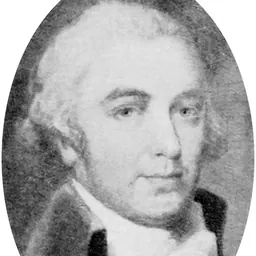

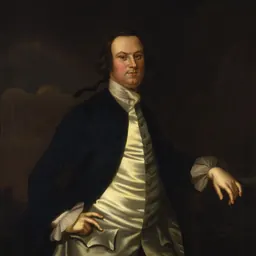
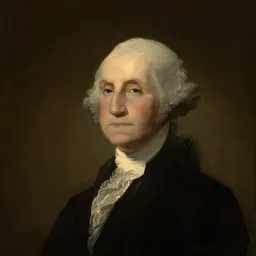
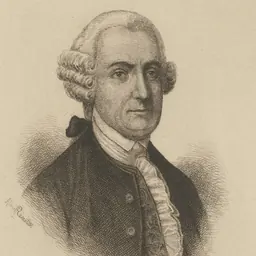


Related people
Same field, nearest in time



Contemporaries
People whose lives overlapped Alexander White's






Frequently asked questions
Who was Alexander White?
American politician, lawyer
When was Alexander White born?
Alexander White was born on 17 June 1738 in Frederick County.
When did Alexander White die?
Alexander White died on 19 September 1804 in Frederick County.
What was Alexander White's occupation?
Alexander White was a politician and lawyer.
What nationality was Alexander White?
Alexander White was American.
Sources & further reading
· DBpedia: Alexander White (Virginia politician)
Cite this page
APA: Biography.guide. (2026). Alexander White. https://biography.guide/alexander-white-politician-1738/
MLA: "Alexander White." Biography.guide, https://biography.guide/alexander-white-politician-1738/.
Chicago: "Alexander White." Biography.guide. https://biography.guide/alexander-white-politician-1738/.
Data last updated: 2026-09-20 · Spot an error? Report a correction.
Page generated 2026-09-27 05:33 UTC