
Alexander Tait
Poet
About Alexander Tait
Lived 1720 – 1800.
Alexander Tait, Sawney Tait or Saunders Tait was a tailor, a published poet and also an associate of Robert Burns, whom he knew well. Tait was also well acquainted with the published poet and close friend of Burns, David Sillar. Tait spent much of his life in Tarbolton where he was an active member of the community. His poems were exhibited in the 1896 Burns Exhibition, a copy being loaned by the Mitchell Library. He was generally known locally as 'Whip-the-cat', an old expression that referred to itinerant tailors, etc. who went from door to door to do work for others.
Life and background
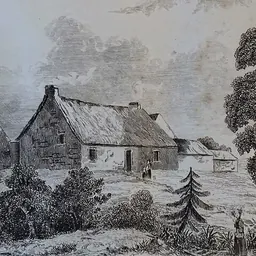
A lifelong bachelor, Tait is said to have lived in a small two-storied cottage on the west side of Montgomerie Street near the entrance to the school, occupying the garret of the building with only a large tame rat for company. His friend came to an untimely end when a female visitor encountered his pet and a male friend killed the unsuspecting rodent. He travelled a great deal in the South of Scotland in his early years as a pedlar, then he worked at mantua-making, selling gown-pieces to ladies and then making up the dress in the customer's home. Eventually he settled down in Tarbolton and established himself as a respected figure. He is described as "stout, well formed man of middle stature."
As a tailor he did not claim any particular skill and despite once making a coat in only one day he usually dismissed the vagaries of fashion and worked for 6d a day when the going rate was 8d.
For a time he worked in Paisley as a journeyman for Daniel Mitchell in John Street and during this phase he entertained his colleagues with his rhyming skills, "the smoothest doggrel". It is likely that during his time in Paisley his publication was being prepared for printing.
At the annual June Fair Tait set up an unofficial pub in his house that was well frequented by all, especially younger countryfolk who were attracted by his eccentric behaviour. Selling for 1s. 6d. the book was octavo, in half-sheets; 16 x 9.7 cm., trimmed and bound, 304 pages long, copies being privately printed for, and sold by the author only. MDCCXC. The signatures ran from A-Pp4 and the contents were : (i) Title-page; (ii) List of Errata; (iii - vi) Table of Contents; (7 - 304) Text.
His poem and song titles include a version of Burns's "The Kirk's Alarm" under the title "Composed by Plotcock, the Foul Thief's Exciseman." with some original content: "Sillar and Tait; or, Tit for Tat"; "The Author's Nativity"; "The Lady Ballochmyle's Chariot"; "Illumination of Tarbolton on the Recovery of his Majesty"; "Battle of the Largs"; and "The Burial of Lord Abercorn".
Robert Burns, David Sillar, Claud Alexander of Ballochmyle, his wife Helenora and several others feature in his poems.
As related in the first line above he had the ceremonial rank of 'Colonel' in the Universal Friendly Society of Tarbolton, leading the Society's procession through the village that aimed to raise funds to reduce distress and poverty amongst agricultural workers. Shortly after, being ill and feeling that his end was nigh he was taken in by William Wallace of Millburn near Tarbolton and died shortly after.
David Sillar had compared Tait's poetic muse to ".. a tumbling cart, wantin' shoon'". This refers to a type of cart with an ungreased tree axle and no iron tyres, infamous for the almost intolerable screeching sound they made. Tait wrote of Sillar that "There's nane can sound the bawdy horn, like you and Burns." This highlighted the pairs mutual enjoyment of bawdry pursuits. Tait was a much older than either Burns or Sillars and may have been doubly insulted by these young poets usurping his position as the local bard.
Tait undertook to "..trace his pedigree, Because he made a sang on me". This suggests that Burns had written cutting verses regarding his poetic efforts, but they have not survived.
Not satisfied with this diatribe Tait dedicated a poem entitled "A Compliment" to James Grieve, the unofficial provost of Tarbolton:
Sir, for M'Lure he fought so fair 'Gainst Burns and Lawyers in Air, He trimm'd their jacket to a hair So wantonlie, No toil nor travel he did spare To win the plea.
In "A Journey to Destruction" he mentions the feud between Burns and McLure:
Like Catholic country's scarlet whore, The wat that Burns play'd wi' McLure, Who then had money was na sure.
Jean Armour's second confinement gave Tait another opportunity to deepen his feud with Burns:
The wives they up their coats did kilt, And through the streets so clean did stilt, Some at the door fell wi' a pelt Maist broke their leg, To see the hen, poor wanton jilt! Lay her fourth egg.
Burns had failed to ingratiate himself into the company of the Alexander's of Ballochmyle, however Tait wrote a song that was not only popular locally, but caught the ear of Mrs Helenora Alexander of Ballochmyle and he was invited to visit and to present the piece to the family. Tait was well rewarded for the composition and unlike Burns he became a ".. privileged frequenter of the hall".
Tait's historical significance lies in his association and interactions with the genius of Robert Burns, his verses otherwise would have become forgotten and his publication is a great rarity.
Don’t just read it —
keep it.
Full-length biographies made to live with: read them, listen on the way to work, watch them tonight.
- E-book
- Audio
- Video
Instant download · yours to keep · every purchase keeps this site free
Important facts
People in Alexander Tait's life
Named in this biography and alive at the same time

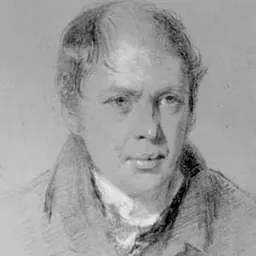

Contemporaries
People whose lives overlapped Alexander Tait's
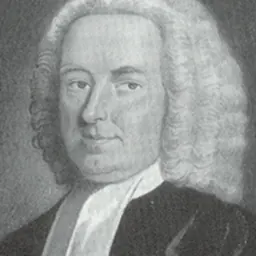


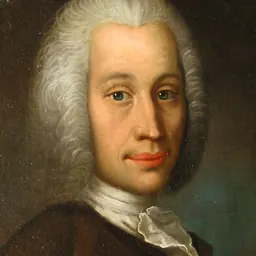
Frequently asked questions
Who was Alexander Tait?
poet (1720-)
When was Alexander Tait born?
Alexander Tait was born on 14 August 1720 in Innerleithen.
When did Alexander Tait die?
Alexander Tait died in 1800 in Tarbolton.
Sources & further reading
· DBpedia: Alexander Tait (poet)
Cite this page
APA: Biography.guide. (2026). Alexander Tait. https://biography.guide/alexander-tait/
MLA: "Alexander Tait." Biography.guide, https://biography.guide/alexander-tait/.
Chicago: "Alexander Tait." Biography.guide. https://biography.guide/alexander-tait/.
Data last updated: 2026-09-22 · Spot an error? Report a correction.
Page generated 2026-09-27 05:23 UTC