
About Alexander Sokurov
Born 1951. Alexander Sokurov is a Russian film director, screenwriter, writer and director.
Alexander Nikolayevich Sokurov, PAR (; born 14 June 1951) is a Russian filmmaker. His most significant works include a feature film, Russian Ark, filmed in a single unedited shot, and Faust (2011), which was honoured with the Golden Lion, the highest prize for the best film at the Venice Film Festival.
Life and work Sokurov was born in Podorvikha, Irkutsky District, in Siberia, into a military officer's family. He graduated from the History Department of the Nizhny Novgorod University in 1974 and entered one of the VGIK studios the following year. There he became friends with Tarkovsky and was deeply influenced by his film Mirror. Most of Sokurov's early features were banned by Soviet authorities. During his early period, he produced numerous documentaries, including The Dialogues with Solzhenitsyn and a reportage about Grigori Kozintsev's flat in Saint Petersburg. His film Mournful Unconcern was nominated for the Golden Bear at the 37th Berlin International Film Festival in 1987.
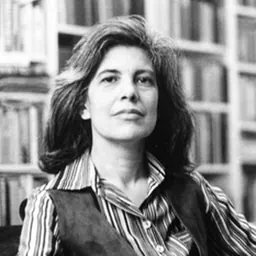
Mother and Son (1997) was his first internationally acclaimed feature film. It was entered into the 20th Moscow International Film Festival where it won the Special Silver St. George. It was mirrored by Father and Son (2003), which baffled the critics with its implicit homoeroticism (though Sokurov himself has criticized this particular interpretation). Susan Sontag included two Sokurov features among her ten favorite films of the 1990s, saying: "There’s no director active today whose films I admire as much." In 2006, he received the Master of Cinema Award of the International Filmfestival Mannheim-Heidelberg.
Sokurov is a Cannes Film Festival regular, with four of his movies having debuted there. However, until 2011, Sokurov didn't win top awards at major international festivals. For a long time, his most commercially and critically successful film was the semi-documentary Russian Ark (2002), acclaimed primarily for its visually hypnotic images and single unedited shot.
Sokurov has filmed a tetralogy exploring the corrupting effects of power. The first three installments were dedicated to prominent 20th-century rulers: Moloch (1999), about Hitler, Taurus (2001), about Lenin, and The Sun (2005) about Hirohito. In 2011, Sokurov shot the last part of the series, Faust, a retelling of Goethe's tragedy. The film, depicting instincts and schemes of Faust in his lust for power, premiered on 8 September 2011 in competition at the 68th Venice International Film Festival. The film won the Golden Lion, the highest award of the Venice Festival.
The military world of the former USSR is one of Sokurov's ongoing interests, because of his personal connections to the subject and because the military marked the lives of a large part of population of the USSR. Three of his works, Spiritual Voices: From the Diaries of a War, Confession, From the Commander’s Diary and Soldier’s Dream revolve around military life. Confession has been screened at several independent film festivals, while the other two are virtually unknown.
He suffers from severe eyesight problems.
Studio
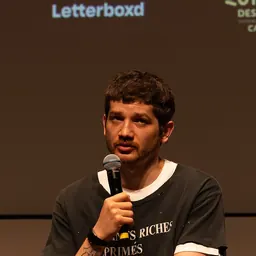
In 2010 Sokurov launched his personal course at the Kabardino-Balkarian State University in Nalchik. In 2015, 12 students graduated from his course; among them were such rising stars of cinema, as Kantemir Balagov, Vladimir Bitokov, Kira Kovalenko, and Alexander Zolotukhin.
Political stance
During a December 2016 meeting of the Council for Culture and Arts, Sokurov appealed to President Vladimir Putin to reconsider the verdict against filmmaker Oleg Sentsov (which Putin refused).
In 2022, Sokurov criticized the Kremlin and opposed the Russian invasion of Ukraine. For this, in June 2022 he was denied the right to leave Russia.
Sokurov's film Fairytale was banned in Russia. No specific reason was given, only subparagraph “zh” of the rules on the issuance of release certificates was cited: “in other cases determined by federal laws.” Sokurov emphasized that censorship is prohibited in Russia and no one has the right to restrict the Russian audience’s access to works of art. “Because the movie has already been shown and is being shown all over the world,” he said.
Filmography
Feature films Year English Title Original Title Credited as Notes Director Writer 1987 Mournful UnconcernСкорбное бесчувствие produced in 1983 1987 The Lonely Voice of ManОдинокий голос человека produced in 1979 1988 Days of EclipseДни затмения 1989 Save and ProtectSpasi i sokhrani 1990 The Second CircleКруг второй 1992 The Stone 1994 Whispering PagesТихие страницы 1997 Mother and SonМать и сын 1999 MolochМолох 2001 TaurusТелец also cinematographer 2002 Russian ArkРусский ковчег 2003 Father and SonОтец и сын 2005 The SunСолнце also cinematographer 2007 AlexandraАлександра 2011 FaustФауст Golden Lion winner 2022 FairytaleСказка
Documentaries
Short films The Degraded (Разжалованный, 1980) Empire (Ампир, 1986)
Awards Locarno International Film Festival, Bronze Leopard (The Lonely Voice of Man, 1987) Moscow International Film Festival, FIPRESCI Award (out of competition, The Lonely Voice of Man, 1987) Berlin International Film Festival, Award of the Forum special programme (Days of Eclipse, 1989) International Film Festival Rotterdam, FIPRESCI Award, KNF Award (Elegy, A Simple Elegy, 1991) State Prize of the Russian Federation (Mother and Son, 1997) State Prize of the Russian Federation (Moloch, Taurus, 2001) Russian Guild of Film Critics Prize for Best Director (Taurus, 2001) Nika Award for Best Director and Best Picture (Taurus, 2001) Toronto International Film Festival, IFC Vision Award (Russian Ark, 2002) São Paulo International Film Festival, Special Award for Lifetime Achievements (2002) Cannes Film Festival, FIPRESCI Award (Father and Son, 2003) Argentine Film Critics Association, The Silver Condor Award (Russian Ark, 2004) Yerevan International Film Festival, Golden Apricot for Best Picture (The Sun, 2005) Locarno International Film Festival, Leopard of Honour for Lifetime Achievements (2006) Venice Film Festival, Robert Bresson Award for spiritual search and promotion of human culture (2007) Venice Film Festival, Golden Lion for Best Picture (Faust, 2011) FEST, Belgrade Winner Award for his lifetime contribution to the art of film (2015) International Film Festival of Kerala, Lifetime Achievement Award for his lifetime contribution to world cinema (2017) International Commemorative Medal Vadda Cross / Vadda Rissi, Alexander Sokurov was awarded the by the Sihtasutus Traderson Foundation (Estonia) for his contribution to the preservation of the small indigenous people of Ingria (Russian Federation) Vadda(2025)
Don’t just read it —
keep it.
Full-length biographies made to live with: read them, listen on the way to work, watch them tonight.
- E-book
- Audio
- Video
Instant download · yours to keep · every purchase keeps this site free
Important facts
People in Alexander Sokurov's life
Named in this biography and alive at the same time





Related people
Same field, nearest in time

Contemporaries
People whose lives overlapped Alexander Sokurov's

Frequently asked questions
Who is Alexander Sokurov?
Russian film director (born 1951)
When was Alexander Sokurov born?
Alexander Sokurov was born on 14 June 1951 in Podorvikha.
What is Alexander Sokurov's occupation?
Alexander Sokurov is a film director, screenwriter, writer and director.
What nationality is Alexander Sokurov?
Alexander Sokurov is Russian.
Sources & further reading
· Wikipedia: Alexander Sokurov
Cite this page
APA: Biography.guide. (2026). Alexander Sokurov. https://biography.guide/alexander-sokurov/
MLA: "Alexander Sokurov." Biography.guide, https://biography.guide/alexander-sokurov/.
Chicago: "Alexander Sokurov." Biography.guide. https://biography.guide/alexander-sokurov/.
Data last updated: 2026-09-26 · Spot an error? Report a correction.
Page generated 2026-09-27 05:15 UTC