
About Alexander Robert Johnston
Lived 1812 – 1888 (aged 75). Alexander Robert Johnston was a British politician.
Alexander Robert Johnston, FRS (formerly Campbell-Johnston, 14 June 1812 – 21 January 1888) was a British colonial official who served twice as Acting Administrator of Hong Kong from 1841 to 1842. He also served in the Executive and Legislative Councils of Hong Kong. He became a Fellow of the Royal Society in 1845 for his work on the natural history of China.
Early life Johnston was born on 14 June 1812 in Colombo, Ceylon, as the third son of Sir Alexander Johnston, who was Chief Justice of Ceylon. He began his career in the Colonial Office as a writer in Mauritius in 1828, He remained in the Mauritius civil service until 1833, In 1833, Johnston became Private Secretary to his cousin Lord Napier, who was sent to Canton as Chief Superintendent of Trade after the abolition of the East India Company's monopoly of the China Trade. On 22 June, when Elliot prepared to join the British expeditionary force in the north during the war, he appointed Johnston as acting Administrator of Hong Kong. On 10 August, Sir Henry Pottinger arrived in China to replace Elliot as plenipotentiary. Pottinger, who arrived in Hong Kong on 22 August while on his way to the expedition, kept Johnston as acting administrator. Acting on Elliot's policy of encouraging a growing settlement, Johnston disposed land lots for development, which he classified into marine, town, and suburban. In November 1841, he sent Pottinger an account of the settlement's progress, such as the development of Queen's Road, the Magistracy, the Record Office, and a prison. Barracks were built in Stanley and a bridle path was laid towards Aberdeen. He reported that houses were being built and that many people were making applications for land. However, Pottinger criticised Johnston for granting land without elaboration of Hong Kong's future from the British government. He returned to Hong Kong on 1 February 1842. Historian Frank Welsh wrote, "He got few thanks for it, then or later, but it is largely due to Johnston's initiative that Hong Kong was allowed to develop".
When Pottinger left Hong Kong on 13 June to rejoin the expedition, Johnston was again left in charge and was told not to grant land except for barracks and the troops' families who began to arrive from Britain. In October 1842, he informed Pottinger of the crime and disorder in the colony. Piracy was frequent and isolated houses were attacked, often by gangs who landed from boats. The jail was full, but Johnston said he lacked the authority to impose sentences on the inmates awaiting trial. Such conditions helped the Colonial Office be aware of the importance of establishing full control of law and order, and the danger of allowing the Chinese to share this responsibility. After Pottinger became the first Governor of Hong Kong on 26 June 1843, he appointed Johnston as a member of the Executive and Legislative Councils on 21 August.
Johnston returned to England on sick leave in October 1843. He received a medal for his services on board the Nemesis during the war. He returned to Hong Kong in September 1845 as Secretary and Registrar to the Superintendent of Trade. After the abolition of the office of Secretary and Registrar on 25 September 1852, he obtained a compensation allowance, They had eight sons and two daughters, including Conway Campbell-Johnston (1859–1915), who died with his wife in the sinking of the Lusitania, and Malcolm Campbell-Johnston, who was Conservative Member of Parliament for East Ham South. Johnston resided in Suffolk, where he was a justice of the peace, and in London. They returned to England while their sons operated the ranch and then visited again in 1888. The ranch was used for cattle grazing and many buildings were constructed. Built in 1889, it became a registered historic landmark in Pasadena. It is the most prominent remaining structure from the Campbell-Johnston Ranch. Johnston Road, Wan Chai, Hong Kong Mount Johnston, Ap Lei Chau, Hong Kong Johnston Lake, Pasadena, California, United States
Don’t just read it —
keep it.
Full-length biographies made to live with: read them, listen on the way to work, watch them tonight.
- E-book
- Audio
- Video
Instant download · yours to keep · every purchase keeps this site free
Important facts
People in Alexander Robert Johnston's life
Named in this biography and alive at the same time

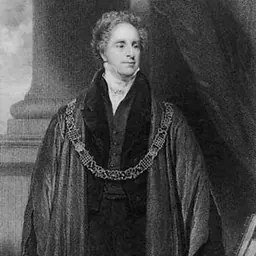
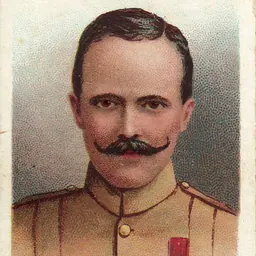


Related people
Same field, nearest in time


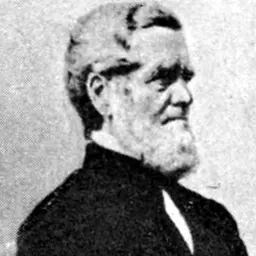



Contemporaries
People whose lives overlapped Alexander Robert Johnston's





Frequently asked questions
Who was Alexander Robert Johnston?
Hong Kong politician (1812-1888)
When was Alexander Robert Johnston born?
Alexander Robert Johnston was born on 14 June 1812 in Colombo.
When did Alexander Robert Johnston die?
Alexander Robert Johnston died on 21 January 1888 in Pasadena.
What was Alexander Robert Johnston's occupation?
Alexander Robert Johnston was a politician.
What nationality was Alexander Robert Johnston?
Alexander Robert Johnston was British.
Sources & further reading
· Wikipedia: Alexander Robert Johnston
· DBpedia: Alexander Robert Johnston
Cite this page
APA: Biography.guide. (2026). Alexander Robert Johnston. https://biography.guide/alexander-robert-johnston/
MLA: "Alexander Robert Johnston." Biography.guide, https://biography.guide/alexander-robert-johnston/.
Chicago: "Alexander Robert Johnston." Biography.guide. https://biography.guide/alexander-robert-johnston/.
Data last updated: 2026-09-20 · Spot an error? Report a correction.
Page generated 2026-09-27 05:25 UTC