
About Alexander Ratiu
Lived 1916 – 2002 (aged 86). Alexander Ratiu was a Romanian and American writer, human rights defender, politician, catholic priest, author and priesthood (Catholic Church).
Father Alexander Ratiu (; 4 May 1916 – 25 July 2002) was a Romanian-American priest of the Romanian Greek-Catholic Church. While serving in his family's country of origin, he became a political prisoner, and later, after his release, an author.
Ratiu served as a pastor in both Giurtelecu Șimleului, Romania, and in Plainfield, Illinois, in the United States.
Early life Ratiu was born on 4 May 1916, in Scalp Level, Pennsylvania, in the United States, one of the four sons of Elisabeta Chindriș and Grigore Rațiu, immigrants from Romania. His brothers were named Grigore, Ioan and Emilian. In 1921, his family moved back to Romania where he was raised in Moftinu Mic, Sălaj County (now Satu Mare County). In Carei, Ratiu attended "Vasile Lucaciu" State High School. Then he studied philosophy at Oradea, where he was a schoolmate with Coriolan Tămâian, who later became a noted prelate of the diocese. Following his university studies, in preparation for the priesthood, he studied theology at the seminary in Blaj.
Ratiu then went to Rome, where he attended the Pio Romano Seminary and the Pontifical Urbaniana University, where he received a doctorate in theology. Ratiu was a classmate for seven years with Virgil Maxim (1923–1997), who was also a noted prisoner of the Romanian communist government for his religious beliefs.
Ministry in Romania Ratiu was ordained a priest of the Romanian Greek-Catholic Church in Rome on 20 July 1941, by Bishop Alexander Evreinov, for the Greek Catholic Diocese of Oradea Mare in the region of Transylvania in Romania.
Ratiu worked as a volunteer for the National Peasants' Party, for which, in 1946, he worked to organize the country's general election. In May 1947, he served as a priest in Giurtelecu Șimleului. Between May 1947 and July 1948, Ratiu was arrested and imprisoned for his political activity against the Romanian Communist Party.
After his release, Ratiu taught at the Greek-Catholic seminary in Oradea. A few months later, in October 1948, the Romanian government dissolved the Greek-Catholic Church in the country, declaring that the will of the people was to join the Romanian Orthodox Church. They seized all its churches and institutions and gave them to the Orthodox Church. The government then arrested the six bishops of the Church, along with many priests and lay leaders, and attempted to convince them to declare publicly their allegiance to the Orthodox Church. Refusal led to torture and often death. Ratiu refused, however, to renounce his faith.
Political prisoner
"In prison one either goes mad or becomes a saint."
Ratiu was generous in his friendship and financial support for countless persons in Romania seeking to emigrate to the United States. He helped establish a Romanian Greek-Catholic Mission of Saints Peter and Paul in Chicago in December 1994. Ratiu spoke eight languages fluently, and this aptitude for languages led him to learn Spanish to celebrate Mass for Mexican migrant workers.
In 1996, following the collapse of Communist rule in Romania, Rațiu returned for a visit to witness the rebirth of the Greek Catholic Church. He preached to large crowds of the faithful as parishes reopened, and attended the consecration of several new bishops for the Byzantine Rite.
Awards In 1983, the Polish Freedom Fighters bestowed upon Alexander Ratiu the Solidarity Freedom Award.
Death Rațiu died on 25 July 2002, at his home in Plainfield, Illinois, at the age of 86. On his deathbed Rațiu said, "Spiritual freedom gives us courage, the courage to preach. So I preached freely and defended the faith when the persecution began, and I rejoiced when I was arrested." His funeral took place at the Romanian Greek Catholic Church "Sf. Gheorghe", in Aurora, Illinois, on the morning of 27 July 2002. Ratiu was interred in Plainfield, Illinois.
Legacy Alexander Rațiu remarked that prison had an unexpected effect on priests and other believers, as well as former atheists: "In prison one either goes mad or becomes a saint." For many who suffered imprisonment, it was the first time in their lives that they were led to pray and to look for God's support:
Works Alexander Ratiu and William Virtue, Stolen Church: Martyrdom in Communist Romania (Huntington, Indiana: Our Sunday Visitor, Inc., 1979). Alexandru Rațiu, Biserica Furată (Cluj-Napoca: Ed. Argus, 1990). Alexandru Rațiu, Persecuția Bisericii Române Unite [The Persecution of the Romanian Greek-Catholic Church] (Oradea: Imprimeria de Vest Publishing House, 1994). Alexandru Rațiu, Memoria închisorii Sighet, Editor Romulus Rusan (București, Ed. Fundației Academia Civică, 1999). .
Don’t just read it —
keep it.
Full-length biographies made to live with: read them, listen on the way to work, watch them tonight.
- E-book
- Audio
- Video
Instant download · yours to keep · every purchase keeps this site free
Important facts
People in Alexander Ratiu's life
Named in this biography and alive at the same time
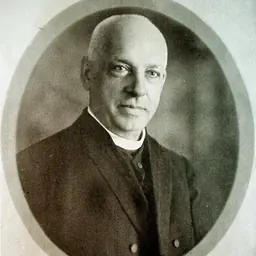


Related people
Same field, nearest in time
Contemporaries
People whose lives overlapped Alexander Ratiu's



Frequently asked questions
Who was Alexander Ratiu?
Romanian Greek-Catholic priest (1916-2002)
When was Alexander Ratiu born?
Alexander Ratiu was born on 4 May 1916 in Scalp Level.
When did Alexander Ratiu die?
Alexander Ratiu died on 25 July 2002 in Aurora.
What was Alexander Ratiu's occupation?
Alexander Ratiu was a writer, human rights defender, politician, catholic priest, author and priesthood (Catholic Church).
What nationality was Alexander Ratiu?
Alexander Ratiu was Romanian and American.
Sources & further reading
Cite this page
APA: Biography.guide. (2026). Alexander Ratiu. https://biography.guide/alexander-ratiu/
MLA: "Alexander Ratiu." Biography.guide, https://biography.guide/alexander-ratiu/.
Chicago: "Alexander Ratiu." Biography.guide. https://biography.guide/alexander-ratiu/.
Data last updated: 2026-09-20 · Spot an error? Report a correction.
Page generated 2026-09-27 05:17 UTC