
About Alexander Rankine
Lived 1881 – 1956 (aged 74). Alexander Rankine was a physicist, known for Trouton–Rankine experiment.
Career Rankine carried out government research during both World Wars, working on anti-submarine technology and on fog dispersal systems. He studied and worked at University College London, and was a professor of physics at Imperial College London.
Rankine is most associated with the Trouton–Rankine experiment of 1908, but he also worked on early devices for the optical transmission of sound, and improved gravimeter and magnetometer designs. The latter part of his career was spent working for the Anglo-Iranian Oil Company. He also served in a range of positions with many learned societies, including periods as president of the Physical Society and secretary to the Royal Institution.
Early years Alexander Oliver Rankine was born on 8 December 1881 in Guildford, Surrey, England. The son of the Reverend John Rankine, a Baptist minister of Scottish descent, Like his father, his mother was also of Scottish ancestry. This experiment was among a number being carried out at the time, and was intended as a test of aether theory and Einstein's special relativity, with Trouton and Rankine's null result providing support for the latter theory.
Two years later, in 1910, Rankine obtained his D.Sc in Physics (awarded by the University of London). A further two years after that, in 1912, he was elected a fellow of University College.
During World War I, many scientists were seconded to conduct wartime research for the government. Rankine's wartime research took place in 1917 and 1918. He worked under recently appointed UCL professor William Henry Bragg and British-born Canadian physicist Arthur Stewart Eve. The device was similar to the photophone constructed by US inventor Alexander Graham Bell in the 1880s, and the system being developed by the Polish engineer Joseph Tykociński-Tykociner from 1918. Rankine's work in this area was mentioned in Popular Science in 1922, and has been described as an "effective technique for the transmission of speech by sunlight".
For his government research work during World War I, Rankine was made an OBE in 1919.
Imperial College and geophysics By the time the war had ended, Rankine had added to the distinguished reputation he had gained from work in fields such as molecular dynamics, acoustics and electromagnetics.
From 1925 to 1931, Rankine was additionally Director of the Technical Optics Department at Imperial College. He was the second holder of this post, succeeding Frederic John Cheshire, and the department name was changed at his request (it had previously been the Optical Design Department). His work in this area included improving the gravimeter invented by Loránd Eötvös (the Eötvös gravimeter) and constructing a magnetometer "of great sensitivity". in which role he made several visits to Persia (Iran). He was also involved with the British Association for the Advancement of Science (BAAS), serving as the Recorder for Section A (Mathematics and Physics) from 1921 to 1924, and President of Section A in 1932. It was in this role that he became a key player in the opposition to the Andrade reforms, a power struggle that led to a 1952 vote of no confidence in Edward Andrade as Director of the Royal Institution.
Awards and honours As well as his OBE, Rankine was accorded other honours for his work. These included being asked to present the 1932 Royal Institution Christmas Lecture, which he gave under the title: 'The Round of the Waters'. In 1934 he was elected a Fellow of the Royal Society.
World War II and later years During World War II, Rankine again worked for the government, this time on the development of the FIDO system for clearing fog from military runways. His obituary was published in The Times and in Nature.
Personal life Rankine was married with four children, David (b. 1911), Peter (b. 1911), (Jean b. 1917) and Betty (date of birth unknown), and died in 1956 at the age of 74.
Selected works Discussion on vision (A.O. Rankine, Allan Ferguson; The University Press, 1932) F.I.D.O. investigation wind tunnel experiments (A. O. Rankine, Petroleum Warfare Department, 1945)
Don’t just read it —
keep it.
Full-length biographies made to live with: read them, listen on the way to work, watch them tonight.
- E-book
- Audio
- Video
Instant download · yours to keep · every purchase keeps this site free
Important facts
People in Alexander Rankine's life
Named in this biography and alive at the same time




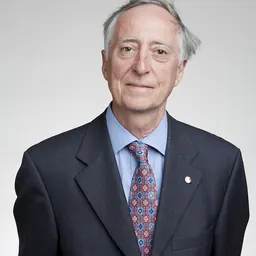


Related people
Same field, nearest in time

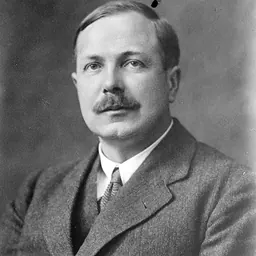
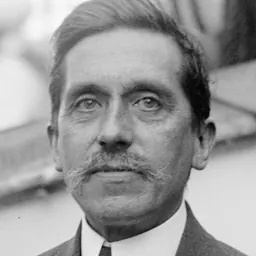

Contemporaries
People whose lives overlapped Alexander Rankine's


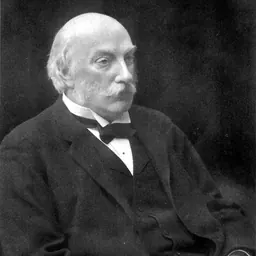



Frequently asked questions
Who was Alexander Rankine?
British physicist
When was Alexander Rankine born?
Alexander Rankine was born on 8 December 1881.
When did Alexander Rankine die?
Alexander Rankine died on 20 January 1956 in Hampton.
What was Alexander Rankine's occupation?
Alexander Rankine was a physicist.
What was Alexander Rankine known for?
Alexander Rankine was known for Trouton–Rankine experiment.
Sources & further reading
· Wikipedia: Alexander Rankine
Cite this page
APA: Biography.guide. (2026). Alexander Rankine. https://biography.guide/alexander-rankine/
MLA: "Alexander Rankine." Biography.guide, https://biography.guide/alexander-rankine/.
Chicago: "Alexander Rankine." Biography.guide. https://biography.guide/alexander-rankine/.
Data last updated: 2026-09-20 · Spot an error? Report a correction.
Page generated 2026-09-27 05:01 UTC