
About Alexander Poskrebyshev
Lived 1891 – 1965 (aged 73). Alexander Poskrebyshev was a Russian politician and general secretary.
Alexander Nikolaevich Poskrebyshev (; 7 August 1891 – 3 January 1965) was a Soviet politician and a state and Communist Party functionary. A member of the Communist Party of the Soviet Union since March 1917, he was chief of the special department of the Central Committee of the Communist Party (personal chancellery of Joseph Stalin, 1928–1953).
Early life
Poskrebyshev was born on 7 August 1891, in the village of Uspenskoe near the city of Vyatka in the Russian Empire, the son of a shoemaker. His mother was Nadezhda Efimovna. He had one brother, Ivan, and two sisters, Olga and Alexandra. graduating in 1918.
Political career
Poskrebyshev was involved at an early stage in the activities of the Communist Party. He was elected secretary of the local division of the Bolshevik party (1917–1918) soon after joining the Russian Social Democratic Labour Party (Bolsheviks) (RSDLP(b), March 1917). He was a member of the political committee of the Special Turkestan Army (1918–1919), chairman of the regional Military Revolutionary Committee and regional Council of Workers and Peasants Deputies (Zlatoust, 1919–1921) and worked for the Bolshevik party in Ufa (1921–1922). He moved to Moscow in 1922 within the Central Committee of the CPSU and by 1923 he had become Director of the Administrative Bureau of the . He became an administrator in the Secret Section of the Central Committee shortly thereafter, which would later become the Special Section. Between 1924 and 1929 he was a Manager of the office of General Secretary of Central Committee of Communist Party of the Soviet Union (CPSU).
In 1927 Poskrebyshev graduated in Law and Economics from the Department of Administration and Law of Moscow State University.
On the basis of Stalin's short thesis, Poskrebyshev wrote texts called "the Constitution of Soviet Union" (1936) and "Short course of CPSU history" (1938).
Since 1938 he was elected as a delegate to the first, and later of the second (1946) and third (1952) Supreme Soviet of the USSR. However, a few months later Lavrentiy Beria accused Poskrebyshev of losing secret documents, and he was removed from the position by Stalin. Although these documents were later found, Poskrebyshev was not reinstated in this position due to Stalin's death. In this position, all of Stalin's documents passed through his hands. This was a position of considerable trust and importance. Nicolaevsky believes that Poskrebyshev was given a rubber stamp with which he could affix Stalin's signature to documents.
The Special Section received information from the NKVD and supervised a pyramid of district Special Sections which reported Party information. It was fundamentally responsible for secret communications and security issues within the Party, and was therefore a position of considerable importance.
Purges According to investigations of the Russian opposition group "Memorial", the lists of convicted were not managed by Special Sector of Central Committee. The "Memorial" Group says that Nikolai Yezhov personally visited all members of the Politburo to get their endorsement of the lists of convicted.
Nikolaevsky suggested that Poskrebyshev had been responsible for "liaison with Stalin and supervising the removal of top figures whom Stalin, for one reason or another, did not want openly arrested", and for "surveillance of the Party Secretariat"; At this time Poskrebyshev, much like other prominent members of the Communist Party (for example, Vyacheslav Molotov and Mikhail Kalinin) was not able to help his wife. She was accused by Lavrenty Beria of counter-revolutionary liaisons with Leon Trotsky, and was executed in 1941. Such cases are unlikely to have arisen in the case of individuals who were playing a leading role in the conduct of the purges. In contrast, the leading role of Beria in the purges is more evident. The arrest of Poskrebyshev's wife might have allowed him to remove Poskrebyshev from Stalin's inner circle and replace him with an individual controlled by Beria. In this scenario the next step would have been total control of Stalin by Beria.
Poskrebyshev was not an ally of Nikolai Yezhov but some collaborative government business was to be expected due to the membership of Nikolai Yezhov in the Secretariat of the Central Committee. Probably he had garnered the animosity of Beria by spearheading corruption investigations in the Georgian apparatus of the NKVD—then controlled by Beria—in 1938.
The involvement of Poskrebyshev in the prosecution of Party officials was assumed by Parrish based on case of M.P. Mager. "On 6 June 1941, Poskrebyshev wrote a report to the Central Committee indicting M. P. Mager, the Chief of Staff of the Leningrad Military District, who had already been arrested once in 1938." However, the role of Poskrebyshev in this case is not clear. According to records of commission of Presidium of Central Committee of Communist Party Mager was arrested under resolution of the Ministry of Defense of the USSR, affirmed by Semyon Timoshenko (March 1941). He was accused of military conspiracy against the Soviet Union. On 15 May 1941, he wrote a letter to Stalin with a statement of his innocence. On June 6, 1941, the letter was directed to the attention of Poskrebyshev and most probably delivered to Stalin. However, in spite of this, on 20 July 1941, the Supreme Military Court of USSR did make a decision regarding the Mager case: the death sentence (he was rehabilitated in 1955).
Noticeably, Alexander N. Poskrebyshev did help many artists and scientists of USSR to avoid being purged or executed. is not supported by other sources. The origin of Parrish's claim is also unclear, since he does not refer to official documents. Poskrebyshev did participate in a January 1947 discussion of the publication of Georgi Fedorovich Aleksandrov's History of Western Philosophy. The conclusions of the first discussion were criticized by Andrei Zhdanov in April 1947, introduced a Court of Honor in the USSR. Zhdanov, dissatisfied with the first discussion's conclusions, organized a second discussion (16–25 June 1947). Poskrebyshev is not mentioned in the second discussion, whose conclusions were more radical.
Poskrebyshev is also mentioned in connection with the works of Soviet scientists N. G. Klueva and G. I. Roskin, who participated in one of the first USSR Court of Honor cases (June 1947). In April 1946, Poskrebyshev focused Joseph Stalin's attention on technical problems in the research of an anti-cancer drug mentioned by Klueva and Roskin. A laboratory for studying anti-cancer drugs was created on 22 April 1946, and it ordered equipment though the Council of Ministers of the Soviet Union.
Personal life Poskrebyshev is reported to have worked sixteen to eighteen hours a day. He organized Stalin's activities and accompanied him.
According to his daughter Natalia: This led to his third marriage (1942). In this marriage he fathered his third daughter, Elena.
Personality When Stalin first hired Poskrebyshev, he reputedly told him: "Poskrebyshev you have a frightful look about you. You'll terrify people." But according to Lavrentiy Beria's son Sergo, "Actually this man's appearance was more comical than frightening. He was a narrow-shouldered dwarf. When he sat at the table you could only see his head. Dreadfully ugly, he resembled a monkey." Alexander Barmine, who first met Poskrebyshev in 1923, described him as "a roly-poly, red-cheeked baldish little man ... (who) grew in importance and pomposity during the fifteen years that I knew him." Khrushchev called Poskrebyshev "Stalin's faithful dog", and wrote that by 1952:
In literature Poskrebyshev appears as a character in Aleksandr Solzhenitsyn's novel, In the First Circle, where he is described as "having the soul of an officer's batman", and wrote that:
There is also a sarcastic portrayal of him in the story Stalin's Smile by N. Karaguzhin about the time when his second wife was arrested that was written in 1961 and distributed illegally by samizdat.
Relationship with Stalin
He enjoyed a very close relationship with Stalin—according to Harford Montgomery Hyde, "if Stalin ever trusted anyone, it was Poskrebyshev". According to the evidence of Natalia Poskrebysheva (daughter) the relations between Stalin and her father were friendly outside of work. In work they were respectful and collaborative. concerning routine humiliation of Poskrebyshev by Stalin must be considered as simple gossip.
According to Poskrebyshev, Stalin ordered Lenin's widow, Nadezhda Krupskaya’s poisoning during her birthday celebration, her ashes were buried in the Kremlin Wall Necropolis.
Awards Poskrebyshev was awarded the Order of Lenin in March 1939, for "many years of exemplary service". He also contributed to the Constitution of USSR of 1936 and the History of CPSU of 1938. He received the Order of Lenin a second and third time in 1944 and 1945 for services rendered during the War.
After the deaths of Stalin and Beria, Poskrebyshev was rehabilitated and given a post in the Presidium of the Central Committee, Poskrebyshev retired permanently and lived out the remainder of his days in Moscow, dying there in 1965. He received an entry in the First and Second Great Soviet Encyclopedia, but was not included in the Third Edition.
Don’t just read it —
keep it.
Full-length biographies made to live with: read them, listen on the way to work, watch them tonight.
- E-book
- Audio
- Video
Instant download · yours to keep · every purchase keeps this site free
Important facts
Family & relationships
People in Alexander Poskrebyshev's life
Named in this biography and alive at the same time
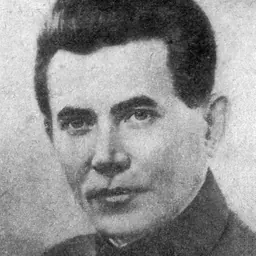




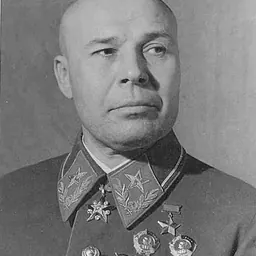


Related people
Same field, nearest in time




Contemporaries
People whose lives overlapped Alexander Poskrebyshev's


Frequently asked questions
Who was Alexander Poskrebyshev?
Soviet politician (1891-1965)
When was Alexander Poskrebyshev born?
Alexander Poskrebyshev was born on 7 August 1891 in Russian Empire.
When did Alexander Poskrebyshev die?
Alexander Poskrebyshev died on 3 January 1965 in Moscow.
What was Alexander Poskrebyshev's occupation?
Alexander Poskrebyshev was a politician and general secretary.
What nationality was Alexander Poskrebyshev?
Alexander Poskrebyshev was Russian.
Sources & further reading
· Wikipedia: Alexander Poskrebyshev
· DBpedia: Alexander Poskrebyshev
Cite this page
APA: Biography.guide. (2026). Alexander Poskrebyshev. https://biography.guide/alexander-poskrebyshev/
MLA: "Alexander Poskrebyshev." Biography.guide, https://biography.guide/alexander-poskrebyshev/.
Chicago: "Alexander Poskrebyshev." Biography.guide. https://biography.guide/alexander-poskrebyshev/.
Data last updated: 2026-09-20 · Spot an error? Report a correction.
Page generated 2026-09-27 05:25 UTC