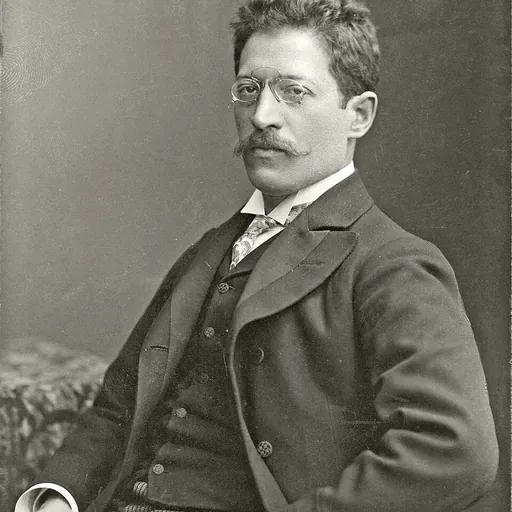
About Alexander Marmorek
Lived 1865 – 1923 (aged 58). Alexander Marmorek was an Austrian bacteriologist and physician.
Alexander Marmorek (; February 19, 1865 – July 12, 1923) was a Galician-born French bacteriologist and Zionist leader.
Early life Marmorek was born on February 19, 1865, in Mielnica, Galicia, Austria-Hungary, the son of physician Josef Marmorek and Friederike Jacobson. His brothers were architect and fellow Zionist leader Oskar Marmorek, lawyer Isidor Marmorek, and writer Schiller Marmorek.
Marmorek attended a gymnasium. He then went to the University of Vienna, graduating from there with an M.D. in 1887. He then went to Paris, France, and went to the Pasteur Institute as a student. He later became an assistant there.
Career In 1894, he wrote Versuch einer Theorie der Septischen Krankheiten in Vienna. Initially an obstetrician, he turned to bacteriology and first attracted Pasteur's attention with his investigations into the role lymphatic glands in the body's defense against bacteria. He was considered for the position of assistant at the University of Vienna's medical faculty, but was rejected because he was a Jew. He left for Paris in 1893, and he became research director (chef des travaux) of the Pasteur Institute laboratory.
Marmorek discovered an antidote for puerperal fever, antistreptococcus, early in his studies. In 1903, he addressed the Académie Nationale de Médecine and announced the discovery of the toxin of the tubercle-bacillus and of the antituberculosis vaccine. His discovery was debated in expert circles before it was accepted as a successful cure if taken up to a certain stage of the disease. He also initiated a serum study that led to later treatments for typhus and diabetes. In 1911, his anti-consumption cure was used on the Russian Minister of Foreign Affairs Sergey Sazonov, for which Sazanov sent a letter thanking Marmorek. When World War I began in 1914, he volunteered his services for the French Army. But due to his nationality, he was made a prisoner of war and detained for two months, at which point he was released and went to Vienna. He spent the war serving as a physician in Eastern Europe. After the war, he returned to France and continued his research, especially on typhus and diabetes. He was an elected member of the Zionist General Council of the first eleven World Zionist Congress, from 1897 to 1913. He and his brothers Oscar and Isidor were in a circle of Theodor Herzl's closest friends, and following Herzl's death remained an adherent of Herzl's Political Zionism. When the Practical Zionists took over the movement's leadership in 1911, he and Max Nordau were the foremost spokesmen of the opposition. After World War I, he opposed Chaim Weizmann's policies and refused to participate in the 12th Zionist Congress in 1921. He emphasized in articles and speeches that Mandatory Palestine was not the fulfillment of Herzl's ideas of a Jewish state. In 1900, he was appointed a Chevalier of the Legion of Honour. In 1910, he married Rachel Steinberg, a doctor who served as director of the orthopedic department in Paris' largest children's hospital. at his home. No eulogy was delivered at his funeral. Félix Mesnil of the Pasteur Institute, Leo Motzkin of the World Zionist Organization, M. Sliosberg, Hillel Zlatopolski, M. Allienkoff, M. Fischer of Holland and M. Ornstein of Belgium were among those who attended the funeral. He was buried in Cimetière parisien de Bagneux, although in 1954 French Zionists approached the Israeli government have his remains reburied in Israel.
In 1930, a Yemenite settlement was established one and a half kilometers from Rehovot by the Jewish National Fund and named after Marmorek.
Don’t just read it —
keep it.
Full-length biographies made to live with: read them, listen on the way to work, watch them tonight.
- E-book
- Audio
- Video
Instant download · yours to keep · every purchase keeps this site free
Important facts
People in Alexander Marmorek's life
Named in this biography and alive at the same time
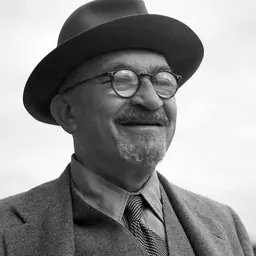

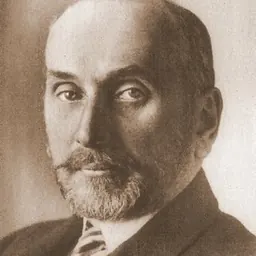

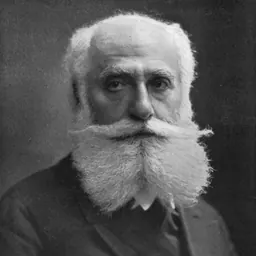
Related people
Same field, nearest in time


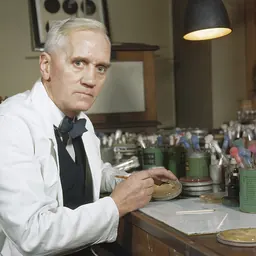

Contemporaries
People whose lives overlapped Alexander Marmorek's
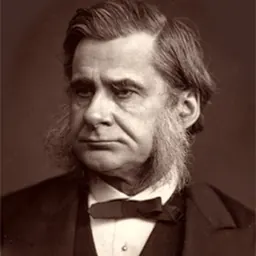

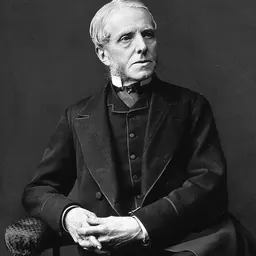
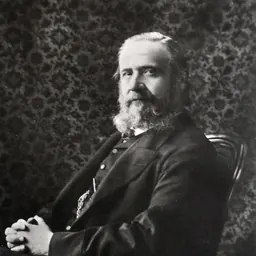

Frequently asked questions
Who was Alexander Marmorek?
Jewish bacteriologist and Zionist leader (1865–1923)
When was Alexander Marmorek born?
Alexander Marmorek was born on 19 February 1865 in Melnytsia-Podilska.
When did Alexander Marmorek die?
Alexander Marmorek died on 14 July 1923 in Paris.
What was Alexander Marmorek's occupation?
Alexander Marmorek was a bacteriologist and physician.
What nationality was Alexander Marmorek?
Alexander Marmorek was Austrian.
Sources & further reading
· Wikipedia: Alexander Marmorek
Cite this page
APA: Biography.guide. (2026). Alexander Marmorek. https://biography.guide/alexander-marmorek/
MLA: "Alexander Marmorek." Biography.guide, https://biography.guide/alexander-marmorek/.
Chicago: "Alexander Marmorek." Biography.guide. https://biography.guide/alexander-marmorek/.
Data last updated: 2026-09-22 · Spot an error? Report a correction.
Portrait: Wikimedia Commons · author & licence
Page generated 2026-09-27 05:02 UTC