
About Alexander Lanskoy
Lived 1758 – 1784 (aged 26). Alexander Lanskoy was a Russian military personnel and military officer.
Alexander Dmitrievich Lanskoy, also called Sashin'ka or Sasha, ( – ) was a Russian general, favourite and lover of Catherine the Great between 1780 and 1784. It has been said that " look at [her] correspondence with her favorites gives the impression she only had tender feelings for one, Alexander Lanskoi."
Biography
Family Lanskoy was born to "a Smolensk military officer" in "an impecunious family of the provincial nobility", where he received a modest education and later became a Horse Guards officer. Sarah Jaques notes that "Lanskoy had grown up at court as a playmate and schoolmate of Catherine's children—Grand Duke Paul and Alexei Bobrinsky, her son with Gregory Orlov." and have been described as "greedy," were showered with gifts, all with Grigory Potemkin's approval. Lanskoy's male relatives, which consisted of "his cousins Stepan and Paul, were [promoted] to ensign rank in the Preobrazhensky Guards" with Potemkin's approval, while his sisters, Elizaveta, Advot'ia and Varvara, the first of which was given a house at Saint Petersburg, were appointed maids of honor, married high-ranking husbands at ceremonies in court Vasily Lanskoy, a contemporary statesman four years older than Lanskoy, has been erroneously identified as his brother, however he was his cousin, as his only male sibling was Yakov Dmitrievich, who was older than him. It has been speculated that Petr Lavinskii (1776–1844), a governor general of Eastern Sibera, may have been his nephew through one of his five sisters. Additionally, Lanskoy's cousin, Vasily Lanskoy, was appointed president of the Provisional Highest Council, a temporary government, of the Duchy of Warsaw in 1813, while Vasily's brother, Dmitrii, served as governor of Vilno between 1802 and 1804. For her part, his niece, Varvara Yakovlevna Lanskaya, married Paisi Kaysarov.
Introduction to Catherine At age 22, Lanskoy had requested his transfer to a provincial garrison since he "lacked sufficient funds to keep pace with his brother officers" and doing so would entail lower expenses. However, "is application was rejected at the College of War by [Grigory] Potemkin himself, who then, surprisingly, appointed the young man his personal aide-de-camp." It was Potemkin, who benefitted from Catherine's stable relationship with Lanskoy by having more time to annex Crimea and build the Black Sea Fleet, His tenure as favourite caused "he parade [of favorites to] slow slightly" until his death, becoming the only one to serve till death, and the longest tenure since Orlov. Virginia Rounding calls him "one of the most successful [choices] Catherine ever made," and mentions that "he seemed to love and respect the Empress as much as she loved him." Massie expands that "his devotion to Catherine was based on her role as his teacher as much as her position as empress." As with most of her favorites, Lanskoy was beneficiary of her "strongly pedagogical streak in seeking to cultivate promising young noblemen of mediocre background,"
As Catherine's favourite Unlike other favourites, Lanskoy did not, or at least attempted to not, involve himself in politics, and "encouraged him to correspond in French with Baron Grimm," Massie posits that, just as his successor Mamonov, Lanskoy was "one of the favourites "who showed interest in her intellectual and artistic pursuits [which made them] likely to last longer."
He was made a chamberlain and promoted to general, however he did aid Catherine in overcoming her subsequent depression. Catherine grieved by "[taking] refuge in her apartments, disappearing from public view for months, until she emerged, with Prince Potemkin's help, in September," during which time government activity had ceased. Though, Rounding points out that "he nevertheless continued to carry out the most urgent business of the Empire, giving the necessary orders when required." Alexander Vorontsov, "who had no connection with Lanskoy [regretted] his passing when [he] learned of its impact on Catherine [writing to his brother, Semyon Vorontsov] 'The preservation of the empress is too interesting to us all.'" Rounding considers that his death was the "first time in her life, [she] was incapacitated by grief," while Sebag Montefiore states that "er courtiers had never seen her in such a state." This was made worse by the fact that during the previous winter her beloved Greyhound, Sir Tom Anderson, died However, "he personally wrote [to Lanskoy's] mother the day after his death." The first three weeks of her grieving, she did not leave her bed, and after that she did not go out, nor were there any entertainments. She was not seen for a month and a half by the court or in public, only Bezborodko and Potemkin, whose initial sympathy was perceived initially as insulting by Catherine, at the beginning, and then by Fyodor Orlov. She "continually [asked] about her lover's body, perhaps hoping his death would prove a lie." Dixon mentions that Lanskoy's corpse was taken from "Tsarskoye Selo to the house Quarenghi had designed for him in Sofia." Then the body was taken "'with due honour' to [Charles] Cameron's new cathedral on the morning of Thursday[,] 27 June and immediately interred in the neighbouring cemetery following a funeral service [which Catherine did not attend] Another author whom gives a different date for Lanskoy's death is E. F. Petinova, however, John T. Alexander considers it part of a series of "slips in dates" from Petinova's part.
Posthumous events Catherine left Tsasrkoye Selo on 5 September, however, her grief prevented her from staying at her apartments, wishing to reside at the Hermitage. her court medalist, design and engrave the 'On the Death of General Alexander Lanskoy' medal struck, which was a silver medal with a "reddish-golden patina" bearing his wigged likeness facing left on the obverse and on the reverse "our trees surrounding a memorial obelisk [with the inscription "From Catherine, to friendship]," Additionally, Catherine had a plaque, with Lanskoy's gilded coat of arms above, an inscription that read "What great pleasure for noble souls to see virtue and merit crowned by praise form all", and "a large version of Lebrecht's medal" However, Jaques asserts that Cameron erected the monument, that if she died at Tsarskoye Selo she wished to be interred by Lanskoy's side at the cemetery at Sofia.
On the occasion of his death, Catherine wrote, in a letter "too personal to have been written by a secretary" and which has been considered "a masterpiece, a truly pre-romantic expression of existential void and pessimism",
After Lanskoy's death, Catherine "immersed herself in work on her universal etymological dictionary," To aid her in her grief, the private physician of George III in Hanover, Johann Georg Ritter von Zimmermann, whom Catherine had previously invited in vain to Russia, sent her his Solitude considered with respect to its influence upon the mind and the heart. Catherine's journey to Crimea was partly put in doubt by Lanskoy's death, however, it was postponed and eventually carried out in 1787.
The position of favourite was vacant for a whole year after his death, After Yermolov tried to orchestrate Potemkin's downfall, and brought about his own because of it, Catherine replaced him with "someone she believed was another Lanskoy[,] Alexander Mamonov." However, he did not provide the same care as Lanskoy and carried out a clandestine affair and impregnated Princess Darya Scherbatova.
As with all her favorites, she gifted him vast amounts of land and money, the latter amounting to an alleged "tune of several million rubles." the estate Catherine had bought for him in Pskov province" and had her gardener, the Scotsman James Meader, go "there to plan the park." Nevertheless, he willed the whole of his fortune that he had acquired as favorite "which included artworks and library to Catherine", and added them to the Hermitage Library.
Of the gifts he received from Catherine one was a still extant table dessert service by Giuseppe Valadier. This "surtout de table," which she acquired, with Grimm's help, from Louis Auguste Le Tonnelier de Breteuil, is "ver several feet in length, the surtout feature Roman buildings and monuments in gilded bronze and gemstones." Jaques notes that Lanskoy possessed a "discerning eye and interest in art [proving] the perfect companion. This collection totalled "119 Flemish and Dutch pictures" one being the Portrait of Jeremias de Dekker and another Pallas Athene as well as six van Dycks. he was the other of her favourites she would spend hours with "[poring] over her collection of carved jewels" and when Lanskoy died "she packed the trinkets away, heartbroken, and wrote to her dealer, who happened to be Grimm: "As for carved stones, tell those who offer them to you that I never bought them for myself, and... I will not buy any more. My grief is extreme, such as I have never felt..."" This only lasted a year though, as the next year "[Catherine] acquired Lanskoy's collection from his heirs, including his gems and casts." When informing Grimm of his fall from a horse, Catherine mentioned that "hen...Lanskoy heard that you had let go of a collection of antique stones without buying them, he almost fainted, and was nearly suffocated by it." However, it has not been determined without a shadow of a doubt whether a specific specimen in the Hermitage, probably designed by James Wyatt and made by Samuel Roach or Roake of London, is one and the same.
In 1784, one of the first Neo-Gothic churches in Russia was built, the now-demolished St. Nicholas Church, in an estate gifted by Catherine to Lanskoy in Posadnikovo. It is possible the church was designed by Yury Felten, who as court architect was working on a building in St. Petersburg for Lanskoy. It was at this "[Felten]-designed residence on Palace Square facing the Winter Palace" that "Lanskoy displayed his new [collected] artworks." In 1786. Pyotr Sheremetev commissioned Ivan Argunov "to paint a portrait of his deceased friend Aleksandr Lanskoy using the most recent engraving of his likeness." Lanskoy's private collection was one of the earliest large, private art collections that "entered the Hermitage after the death of their owners," others of note being those owned by Potemkin and Grigory Teplov. Lanskoy's own brother, Yakov, commissioned a painting of the Last Judgement, where Lanskoy was portrayed "burning below in the fires of Gehenna," while the rest of the family was in heaven.
Personality Catherine considered that his "good humor...made Tsarskoe Selo 'into the most charming and pleasant of places where the days passed so quickly one did not know what had become of them.'" Sebag Montefiore called him "the companion she deserved", "her Holy Grail"
Jaques describes him "beautifully mannered" and describes "Catherine [falling] head-over-heels for her good-natured lover."
Massie describes him as "[having] an elegant bearing and a sensitive face"
For his part, Simon Dixon portrays a somewhat different Lanskoy than Massie's, which is more in line with Dashkova's encounters, however Dixon agrees that Catherine had relationship unlike any since Orlov and she was more maternal towards Lanskoy:
Dixon goes on, comparing life with Potemkin versus Lanskoy "– life with Sasha Lanskoy must have seemed reassuringly undemanding. It was certainly less competitive." Sebag Montefiore labelled him "the favourite who was happiest to join the broader Catherine-Potemkin family." He would call Potemkin a "father" or "dear uncle", Lanskoy's successor, Mamonov, would also carry on this tradition. The only time Lanskoy was cause for Potemkin's ire occurred on April 1780, when Potemkin was planning Catherine's meeting with Joseph II at Mogilev. Lanskoy wrote to Catherine that Potemkin's "soul is full of anxiety." Catherine wrote to Potemkin using "we" to refer to herself and at times, singularly Lanskoy, ending the letter with "ur only sorrow concerns you, that you're anxious." Potemkin's outburst caused Lanskoy to seek Catherine, who thought Lanskoy had irritated Potemkin and wrote "lease let me know if [he] annoyed you somehow and if you are angry with him and why exactly." Another supposed intrigue was the false allegation that Potemkin was the cause of a plague outbreak in 1783, in which "even Lanskoy [was] somehow involved," however there were no grounds to link him. Ludwig von Cobenzl, the Austrian ambassador to Russia, had reassured Joseph II on their meeting with Catherine, accompanied with Lanskoy, at Mogilev, that Lanskoy "is 'that species of favourite, who are frequently subject to change, have no influence on affairs, and who limit themselves to making their fortune and that of all those who belong to them'." Another ambassador, James Harris, said of him "e is neither jealous, inconstant nor overbearing; and even when he cannot be ignorant of his approaching fall, he preserves the same placid unexceptionable temper."
In popular culture Alexander Sergeyevich Stroganov, a contemporary Russian courtier and collector just like Catherine and Lanskoy, authored The Morning of the Curiosity Lover, a direct critique at obsessive collecting portrayed by a Count in the Hermitage.
A French translation by Petr Bugdanov of Matthew Guthrie's first published work, On the Anti-septic Regimen of the Natives of Russia, part of a letter to Joseph Priestley, published in 1784, was dedicated to Lanskoy.
John Parkinson, an Oxford don and clergyman, made a Grand Tour of Europe which he memorialized in A Tour of Russia, Siberia and the Crimea, 1792–1794 (published 1971) where he included a "Note on Lanskoy," after a dinner in 1792, mentioning the several rumours that abounded even in Catherine's late-reign on her sexual life and Lanskoy's death.
Lord Byron compared Don Juan in his eponymous work (1824), who himself became a favorite of Catherine, to Lanskoy and arrives after she "had just buried the fair-faced Lanskoi," and is said to resemble him. Byron's narrative voice also points out that "most of Catherine's innumerable lovers, with the exception of...Lanskoi, her favorite, were "mostly nervous six-foot fellows."" This work, and especially Don Juan as a favourite, "is unmistakably related to" the character of Vladimir Lensky in Alexander Pushkin's novel in verse Eugene Onegin.
In Tomoyoshi Murayama's puppet play A Nero in skirts (1927) a character by the name of Semyon Mikhailowitsch Lanskoi is a "flag bearer of the Simbirsk regiment, [who is later promoted to] captain" and is forced to become Catherine's favourite. He is sent to the battlefield, yet returns to the court dressed as a peasant due to the horrors of war. As the penalty for desertion is death, she puts him in prison and orders he be executed. However, Catherine informs him that it will all be staged, nonetheless he ends up beheaded under the czarina's orders, unbeknownst to him that she had lied to him.
Jayne Meadows, playing Catherine in the first part of a two-part episode, which aired as the Episode 5 of Season 4 (1981), of her husband's show Meeting of the Minds, commented in character, "Oh yes, Zavadovskii. Wonderful legs ... and Lanskoi, and one who got away, what was his name?—oh, yes, Ermolov, and Zorich and Mamonov, who died so young, Rimskii and my darling Zubov— dear Zubey—."
In Andreï Makine's novel A Woman Loved (2013), traces the journey that his protagonist, Russian screenwriter Oleg Erdman, embarks upon to produce a film based on Catherine's life. Erdman believes he has "[found] the soul of his subject" in her relationship with Lanskoy which "is the key to understanding the "hidden side to her that people try to obliterate.""
Ivan Korsak describes a fictional Lanskoy in his novel-essay The Last Lover of the Empress as "air[,] husky with clumsy manners and modesty of a teenage girl."
Leo Tolstoy's unfinished short story Posthumous notes of the hermit Fedor Kuzmích (1905), gives a fictional account of an entry from Feodor Kuzmich's diary, purporting the disaccredited legend that Alexander I faked his own death and continued to live as a hermit. In it, the fictitious Alexander comments on his grandmother's lover:
Honours
Domestic
Foreign 1783: Commander Grand Cross of the Order of the Polar Star
Don’t just read it —
keep it.
Full-length biographies made to live with: read them, listen on the way to work, watch them tonight.
- E-book
- Audio
- Video
Instant download · yours to keep · every purchase keeps this site free
Important facts
People in Alexander Lanskoy's life
Named in this biography and alive at the same time

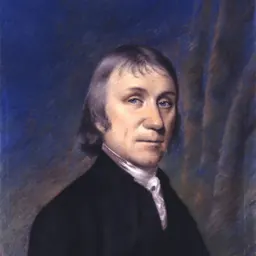
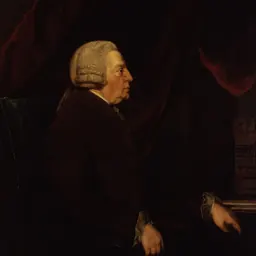
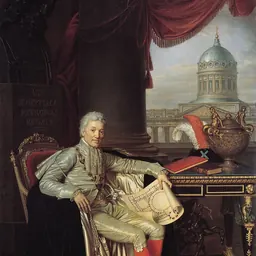




Related people
Same field, nearest in time
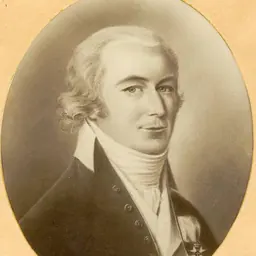



Contemporaries
People whose lives overlapped Alexander Lanskoy's




Frequently asked questions
Who was Alexander Lanskoy?
Russian favourite (1758-1784)
When was Alexander Lanskoy born?
Alexander Lanskoy was born on 8 March 1758 in Smolensk.
When did Alexander Lanskoy die?
Alexander Lanskoy died on 25 June 1784 in Pushkin.
What was Alexander Lanskoy's occupation?
Alexander Lanskoy was a military personnel and military officer.
What nationality was Alexander Lanskoy?
Alexander Lanskoy was Russian.
Sources & further reading
· Wikipedia: Alexander Lanskoy
Cite this page
APA: Biography.guide. (2026). Alexander Lanskoy. https://biography.guide/alexander-lanskoy/
MLA: "Alexander Lanskoy." Biography.guide, https://biography.guide/alexander-lanskoy/.
Chicago: "Alexander Lanskoy." Biography.guide. https://biography.guide/alexander-lanskoy/.
Data last updated: 2026-09-20 · Spot an error? Report a correction.
Page generated 2026-09-27 05:25 UTC