
Alexander Kennedy
British civil and electrical engineer
About Alexander Kennedy
Lived 1847 – 1928 (aged 81). Alexander Kennedy was a civil engineer, engineer and university teacher.
Sir Alexander Blackie William Kennedy FRS, FRGS (17 March 1847 – 1 November 1928), better known simply as Alexander Kennedy, was a leading British civil and electrical engineer and academic. A member of many institutions and the recipient of three honorary doctorates, Kennedy was also an avid mountaineer and a keen amateur photographer being one of the first to document the archaeological site of Petra in Jordan following the collapse of the Ottoman Empire.
Early life and works Kennedy was born in Stepney, London to Rev. John Kennedy, MA, and Helen Stodart Blackie, both from Aberdeen. His maternal uncle was John Stuart Blackie, a Scottish scholar. He received his early education at the City of London School, before taking a short course at the Royal School of Mines, Jermyn Street to give him a basic grounding in engineering. In 1864, he was apprenticed into the shipbuilding firm of J & W Dudgeon of Cubitt Town. He spent the next four years there working as a draughtsman and had a hand in the construction of the first ships with compound engines and twin screws. By the time he left in 1868 he was one of a few draughtsmen in the country with a thorough understanding of the workings of both systems. He put this understanding to good use when he joined Palmers' Engine Works of Jarrow on Tyne upon completion of his apprenticeship, he became the leading draughtsman and designed the first compound engine to be built in the north. Having spent three years with Palmers he worked for a short time for T.M. Tennant and Company of Leith as their chief draughtsman.
Partnership In 1871 at the young age of 24 he was invited to become a partner of H.O. Bennett in Edinburgh. Over the next three years Kennedy was heavily involved with boiler design, building and testing. In 1873 he visited the Vienna Exhibition to study the boiler and engine designs exhibited there. He wrote a series of articles on several designs for the journal Engineering which were later reprinted in the official report on the exhibition made by the British Royal Commission. This proposal met widespread support from the engineering profession and the presidents of the Institution of Civil Engineers and the Institution of Mechanical Engineers were among the leading figures who supported it. In 1878 the laboratory was built and put to use, it was the first of its kind in the world and proved so useful that over the next nine years ten other educational institutions followed Professor Kennedy's example and built their own.
Whilst working at the UCL he translated Franz Reuleaux's Theoretische Kinematik (1875, Vieweg und Sohn) into English for the first time in 1876 (with title The Kinematics of Machinery). In 1886, he published Mechanics of Machinery, the first time that a book based on Reuleaux's kinematic analysis had been published in English. He also used the laboratory to carry out experiments to determine the strength and elasticity of various materials and was elected as a fellow of the Royal Society for this work in 1887. There followed a series of other experiments in which he investigated the strength of riveted joints and the possibility of developing new electric turbines.
Consultancy Kennedy found time outside of his academic works to establish an extensive consultancy business. His designs include the steel arched pier at Trouville-sur-Mer, the concrete structure and steelwork of the rebuilt Alhambra Theatre and the steelwork of the first Hotel Cecil.
Electrical engineer In 1889, Kennedy resigned his professorship and left the University turning to electrical engineering, which he had researched during his academic career. That year he established a very thriving private practise as a consulting engineer at Westminster in partnership with Bernard Maxwell Jenkin, (son of Fleeming Jenkin) with the firm adopting the name of Kennedy & Jenkin. His consultancy soon became famous for its works in this field. His first major contract was to design the supply system for the Westminster Electric Supply Corporation and he was retained by that corporation as their consultant engineer for the rest of his life.
Kennedy also acted as a consultant to several railway companies in the London area, particularly in regard to electrification and tram systems. He advised the London County Council with regard to their tram network and instigated their use of unusual underground conduits for their electricity supply. In 1896 he was appointed engineer to the Waterloo and City Railway and the electrical systems were designed to his specifications. He held consultancy contracts with the London and Home Counties Electricity Authority, London Power Company, Edinburgh Corporation and the Calcutta Electric Supply Corporation. Kennedy hired as his Assistant Engineer at the firm another climber, Sydney Donkin, who was made a partner in the business in 1908 and became senior partner in 1934 upon the retirement of the son of the founder.
In 1932 the London Power Company commemorated Kennedy by naming a new 1,315 GRT coastal collier SS Alexander Kennedy.
Admiralty work In 1900 Kennedy was asked by The Admiralty to serve as a member of the Belleville Boiler Committee to investigate the installation of French designed Belleville boilers on Diadem class cruisers.
Photography, the Alps & Petra
Kennedy was a member of The Camera Club and served as their president in 1890. As part of his duties on the Committee on Ordnance and Ammunition and the Anti-Aircraft Sub-Committee during World War I he was required to visit the Western Front where he took many photographs of the effects of the war and later published these in his account of the war, Ypres to Verdun, in 1921. He maintained a keen interest in mountaineering, in particular the Alps mountain range, and was a member of the Alpine Club. He used his inaugural presidential address to the Institution of Civil Engineers to highlight the impact the profession had upon the environment. Kennedy edited a revised edition of A.W. Moore's Alps in 1864: A Private Journal in 1902, illustrated with photographs he had taken of the area.
Honorary awards Doctor of Laws, Glasgow University Doctor of Laws, Birmingham University Doctor of Engineering, Liverpool University Fellow of the Royal Society of Edinburgh Fellow of the Royal Society of New South Wales
Don’t just read it —
keep it.
Full-length biographies made to live with: read them, listen on the way to work, watch them tonight.
- E-book
- Audio
- Video
Instant download · yours to keep · every purchase keeps this site free
Important facts
People in Alexander Kennedy's life
Named in this biography and alive at the same time



Related people
Same field, nearest in time


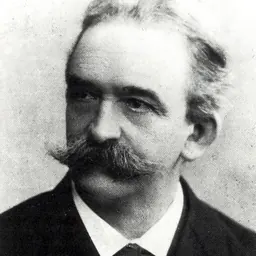
Contemporaries
People whose lives overlapped Alexander Kennedy's

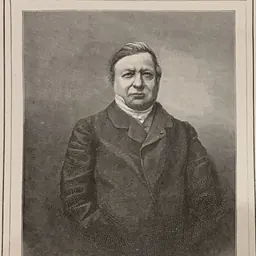
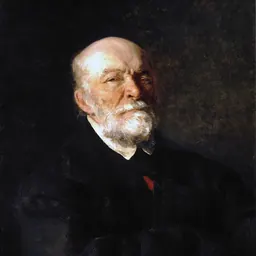



Frequently asked questions
Who was Alexander Kennedy?
British civil and electrical engineer (1847–1928)
When was Alexander Kennedy born?
Alexander Kennedy was born on 17 March 1847.
When did Alexander Kennedy die?
Alexander Kennedy died on 1 November 1928 in Greater London.
What was Alexander Kennedy's occupation?
Alexander Kennedy was a civil engineer, engineer and university teacher.
Sources & further reading
· Wikipedia: Alexander Kennedy
Cite this page
APA: Biography.guide. (2026). Alexander Kennedy. https://biography.guide/alexander-kennedy-civil-engineer/
MLA: "Alexander Kennedy." Biography.guide, https://biography.guide/alexander-kennedy-civil-engineer/.
Chicago: "Alexander Kennedy." Biography.guide. https://biography.guide/alexander-kennedy-civil-engineer/.
Data last updated: 2026-09-20 · Spot an error? Report a correction.
Page generated 2026-09-27 05:25 UTC