
About Alexander Keith McClung
Lived 1811 – 1855 (aged 43). Alexander Keith McClung was an American diplomat and poet.
Politics McClung was noted for his editorial attacks on the Martin Van Buren presidential administration of 1836 to 1840; Van Buren was Jackson's hand-picked successor and was considered by the Whigs to be a dependent tool of his predecessor. McClung was named editor of the Southern Sun newspaper in 1840. From 1841 to 1845, McClung was U.S. marshal for the United States District Court for the Northern District of Mississippi. She said yes, made him drive her home, told him the next day that her "yes" was made under duress, and "fearful...fled by stagecoach to Tuscaloosa," and never saw him again, marrying Clay shortly thereafter. Some 40 years after the fact a New York newspaper told a possibly apocryphal proto-Old West story about McClung, which may have had its origins in his marshal days: Originally captain of the Tombigbee Volunteers, Company K, which was named for the Tombigbee River, the company was organized at Columbus, Mississippi, and included soldiers recruited from Monroe and Lowdnes Counties. He was elected to be lieutenant colonel, second in command, defeating major general of the 3rd division of the Mississippi militia John M. Duffield, and the captain of Raymond Fencibles (Company G) Reuben E. Downing. William P. Rogers took over as captain of Company K.
McClung's soldiers were frustrated by his decision-making on a steamboat trip up the Rio Grande in August–September 1846. Having one soldier go missing (he was picked up later) during what was supposed to be a brief stop at a woodlot for steamboat fuel, "McClung posted a guard whenever the Colonel Cross docked and forbade the men to leave the boat. On one occasion McClung even armed himself with a brace of pistols and threatened to shoot several volunteers attempting to leave the vessel to find some food suitable for their sick friends on board. His reputation as a duelist made it unlikely anyone took up his challenge. Officers, on the other hand, could come and go freely. The sight of them and their servants going ashore at stops to buy food from the local inhabitants angered the enlisted men." Enlisted men, even the sick, were kept on the deck while officers and their slaves were permitted to enter the cabins. A soldier "N" from the Carroll County Volunteers (Company D) wrote of McClung, "He is the most heartless man I ever saw." The Mississippi Rifles arrived in Carmargo and camped there until September 7, leaving behind them McClung's trunk, which could not fit on the progressing baggage train, and a disorderly camp with abandoned "tents, kettles, and even newly issued rifles" as well as Lieutenant Bostick, who "had been left by himself to care for nearly 100 sick men without any arrangements made for their provisions."
McClung commanded the right wing of the Mississippi Rifles at the Battle of Monterey, which included companies C, E, G, and K (Vicksburg Southrons, State Fencibles, Raymond Fencibles, and Tombigbee Volunteers). McClung was said to be the first man over the wall at La Tenería (; also known the Black Fort), and "close behind McClung were Lts. William Purnell Townsend and William H. H. Patterson and Pvt. Edward Gregory, all members of the Tombigbee Volunteers." He and his men were assaulting the second Mexican defensive line when he was struck by an enemy minié ball that "had entered the left hip, after tearing away a portion of the hand which rested on his scabbard, and passed out near the region of the spine." McClung spent the rest of the day wounded in a ditch; his absence was recognized at dusk and a group of his men found him and carried him to safety under a combined fusillade of bullets and rain. He lost two fingers by surgical amputation, the other two were rendered useless by the wound through the hand, only his thumb remained useful.
The battle kicked off a long-running feud between McClung and Mississippi politician Jefferson Davis. In the retelling of one historian, "In February 1847, Davis became involved in a serious dispute with his second-in-command, Major Alexander McClung, and with Colonel William Campbell of the First Tennessee, over who really deserved credit for the success of the attack at Buena Vista. Beside the falling out with his second-in-command, Major McClung, several officers complained about Davis' imperious nature. Davis for his part was so concerned about his public image and so determined to promote himself as a war hero that while home on leave he wrote an angry letter to a Mississippi newspaper that demanded that the editor retract a story that gave credit for the victories to the First Tennessee and its commander, Colonel William Campbell."
Honors The 2nd Mississippi Rifles mustered for duty in 1847 at Camp McClung, named in honor of the wounded McClung, which was set up north of Vicksburg along the river below the Walnut Hills. In 1847, citizens of Columbus presented McClung with a ceremonial sword inscribed "'Presented to Lieut. Col. Alex'r. McClung, by the citizens of Lowndes County, Miss., for his gallantry at the battle of Monterey.' On the sword are the words uttered by the gallant Colonel, when making his charge on the Mexican defences, 'Tombigbee Volunteers, follow me.'" As of 1904 the sword was in the possession of Mrs. Harrison T. McClung of St. Paul, Minnesota.
Chargé d'affaires in Bolivia McClung was announced as a candidate for the U.S. Congress from Mississippi in 1847. In 1848 the Mississippi Free Trader criticized McClung's stump speaking style as mediocre. His writing, however, was said to be superlative.
According to "A Mississippian" in 1855, "The duties of his office were mainly confined to witnessing some stirring popular outbreaks and some political executions, exchanging conventional hospitalities with brother ambassadors, and paying a few stated visits to the trembling head of the government." He presented his credentials to the Bolivian government on July 3, 1850. In 1852 he was nominated, along with S. S. Boyd of Adams County, to serve as a Whig presidential elector, but refused to serve because he did not support Winfield Scott.
He was, however, notorious by this time for his bad credit, gambling, and drunkenness, had no remaining legal career to speak of, and had accumulated significant debts. On October 11, 1852, McClung delivered a eulogy for Henry Clay that was described as one of the greatest speeches ever made in Mississippidespite McClung having been in what was called a "beastly state of intoxication" the night before. According to local residents, by the 1850s McClung had become a hopeless alcoholic and would fall asleep on emptied shipping crates stacked behind shops in the Mississippi state capital of Jackson, unconscious yet clutching a Bowie knife in his hand. According to Mrs. Sidney Stevens of Jackson, Mississippi in 1929, "Most of McClung's quarrels and debauches either occurred or originated in the saloon...on the corner of East Capitol and North State street, across the street from the Old Capitol. That was a favorite hangout for him."
"As in the novels of Dickens, a sort of festal rill of liquors glides merrily through the pages, and the curse of the Anglo-Saxon race evidently lay heavy on those old Mississippians. Occasionally a glimpse of its deadly work is apparent. There is the story of McClung, a colonel of course, who, in the frenzy of delirium tremens, emptied a restaurant not only of guests but of attendants, and then seated himself in the banquet hall deserted, at the head of one of the long tables, with a bottle, a bowie-knife, and two dueling-pistols in quasi-military array before him. Unaware of this inconvenient status, Mr. Davis, Governor Clark, and Governor Alcorn entered, upon an innocent quest for oysters. A frightful scene ensued, and they narrowly escaped with their lives, and without the oysters. The exciting tale is most dramatically narrated, and it is with extreme regret that we find so racy and stirring an incident too long to be repeated. Certain it is that half a dozen skeletons at a feast would be more welcome than one McClung. It seems that the peril of the occasion was augmented by the memory of an occurrence at a ball-room, where Alcorn had kicked down-stairs a young man who had taken too much wine and was showing undue attention to a lady. McClung thought that the prior right to do this kicking inhered in him, and he never forgave Alcorn for getting ahead of him. Yet Davis liked McClung; the alcoholized colonel was a candidate for Congress and was defeated, and Davis tenderly says, 'Very possibly it is from this defeat, which he took much to heart, that we may date the first symptoms of that deep melancholy which afterwards clouded the noble spirit of McClung, and which culminated in the awful tragedy of his self-inflicted death'."
Legacy
A Smithsonian magazine article about American dueling described McClung as "a hard-drinking homicidal miscreant...[who] behaved like a character out of Gothic fiction." McClung lived at the intersection of an "elite male honor code" and a "poorly developed legal system" that "harbored some disturbed individuals." McClung's remarkable, troubled life and ultimate death by his own hand may have stemmed in part from a family history of untreated mood disorders and substance abuse. McClung's sister Charlotte McClung Woolfolk was remembered as a brilliant woman of "idiosyncrasies," who was possessed of a "delicate, quick and sensitive intuition, manifesting itself in prevision, bordering on prophesy," and who was "quite mad at the time of her early death in 1840." McClung's brother Rev. John A. McClung's death at Niagara Falls in 1859 was most likely a suicide. McClung's cousin, Thomas F. Marshall, also a duellist, drank himself to death in 1864. McClung's mother outlived her son by three years; in 1885, a nephew wrote of her, "Aunt McClung was, perhaps, the most intellectual of the daughters of Col. Thos. Marshall. Her mind possessed masculine powers, and she delighted to associate with people of culture. She combined intelligence with sweetness of temper, purity of thought and tenderness of heart. In the days of my childhood and orphanage, she was a mother to me. I delighted to read to her, and hear her comments. She was dignified and imposing in her manner; yet everybody loved her. Her reading was extensive, her information varied, and her conversation exceedingly interesting. When, in 1831 and 1832, I lived at the old haunted Orr mansion, perched on the Ohio bluff, with its solitary halls, lofty ceilings, and spacious corridors, she kindly took me to her room of nights, to allay my boyish fears of ghosts. In her long widowhood of 47 years, she was a welcome and honored visitor among her kindred."
Alexander McClung never married but according to a 1948 article in a Mississippi paper, "For many years the name McClung became an alibi for the spinsters of Columbus, who nimbly excused their single blessedness by remarking, 'You must realize, my dear, the reason I never married is because I loved Alexander McClung.'"
The nickname Black Knight of the South seems to have been developed posthumously, and may have been popularized by the title of a 1936 article by Craddock Goins in Esquire magazine. McClung reportedly referred to himself in letters as "Death's Ramrod." Regarding the longevity and persistence of McClung's legend, one Mississippi narrative about his life and death seemed to him imbue him with all of the original sins of the antebellum Southern white man: "Highly bred like the thoroughbred horses of his boyhood home, sensitive, intelligent, quick-tempered, ambitious, combatative and frustrated, Keith McClung grew up to acquire most of the virtues and nearly all the vices of the traditional Southern gentleman of his day. He was controversial and vain, with an exaggerated sense of chivalry and an adolescent notion that he must prove himself in the world by fighting continually." His well-known rivalry with Confederate President Jefferson Davis may have also contributed to the construction of his reputation in the Lost Cause-venerating post-war white South. The McClung family historian deemed him a victim of his time, writing, "Adherence to the false 'code of honor' which prevailed in his day was deemed more essential than brains and moral character for one who sought political preferment. McClung possessed a temperament which made him an easy victim of this heathenish and barbarous code."
Don’t just read it —
keep it.
Full-length biographies made to live with: read them, listen on the way to work, watch them tonight.
- E-book
- Audio
- Video
Instant download · yours to keep · every purchase keeps this site free
Important facts
People in Alexander Keith McClung's life
Named in this biography and alive at the same time
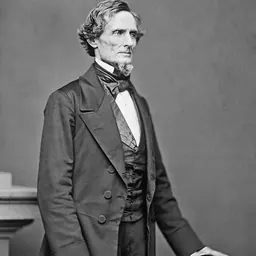
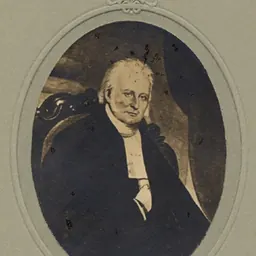



Related people
Same field, nearest in time




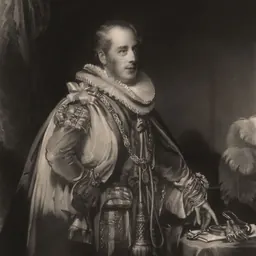
Contemporaries
People whose lives overlapped Alexander Keith McClung's





Frequently asked questions
Who was Alexander Keith McClung?
American diplomat (1811–1855)
When was Alexander Keith McClung born?
Alexander Keith McClung was born on 14 June 1811 in Virginia.
When did Alexander Keith McClung die?
Alexander Keith McClung died on 25 March 1855.
What was Alexander Keith McClung's occupation?
Alexander Keith McClung was a diplomat and poet.
What nationality was Alexander Keith McClung?
Alexander Keith McClung was American.
Sources & further reading
· Wikipedia: Alexander Keith McClung
· DBpedia: Alexander Keith McClung
Cite this page
APA: Biography.guide. (2026). Alexander Keith McClung. https://biography.guide/alexander-keith-mcclung/
MLA: "Alexander Keith McClung." Biography.guide, https://biography.guide/alexander-keith-mcclung/.
Chicago: "Alexander Keith McClung." Biography.guide. https://biography.guide/alexander-keith-mcclung/.
Data last updated: 2026-09-20 · Spot an error? Report a correction.
Page generated 2026-09-27 05:22 UTC