
About Alexander Hare
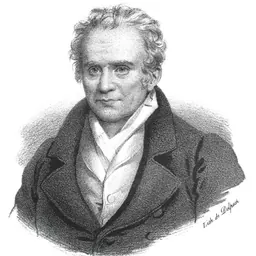
Lived 1780 – 1834 (aged 53–54). Alexander Hare was a British merchant and slave trader.
Alexander Hare (1775–1834) was an English colonialist merchant and politician, infamous for his polygamy.
According to British anthropologist Nigel Barley, Hare's "enduring notoriety" is due to his "large, multi-ethnic harem of [enslaved] women."
Hare is also known for his attempts at founding settlements in Maluka near Banjarmasin on the island of Borneo and the Cocos-Keeling Islands. Following "his brief appointment as the Commissioner of Borneo," he had a harem of 40, sometimes reported as 100, enslaved women, mostly of Malay ancestry. Alexander joined a trading company in Portugal around 1800.
He moved to Calcutta, and settled as a merchant in Malacca in 1807. Among the places he traded to was Banjarmasin, on the southern coast of Borneo. Banjarmasin had a Dutch trading post, but it was abandoned in 1809 due to British naval hostilities. The Sultan, seeking a replacement for the Dutch, and having developed a good relationship with Hare, asked him to establish a British trading post. But Hare was cautious and waited until his own interests converged with the rising star of Stamford Raffles of the British East India Company (EIC) before acting. Hare had first met Raffles when the latter stopped in Malacca in 1807 and 1808 on sick-leave from Penang. A few years later, when Dutch control briefly passed to Britain (1811–16) and the EIC, Raffles, as the newly appointed Lieutenant Governor of Java, acting on Hare's request made him Resident of Banjarmasin and Commissioner of the Island of Borneo.
Banjarmasin Eventually arriving in Banjarmasin in 1812, Hare negotiated a treaty with the Sultan on behalf of the Company. The Sultan also granted him 1,400 square miles of land for his own use. This grant stretched along the coast from the mouth of the Barito River to Tanjong Selatan and inland to the north up to the Sungei Matapura. This was mostly marshland mixed with areas of grassland and some forest. A number of villages sheltered on or near the coast. Although both Raffles and his successor as Lieutenant General, John Fendall, resisted Dutch requests for the Borneo colonies to be returned as they considered them deserted by the Dutch rather than conquered by the British and hence not falling under the terms of the treaty, this was not the position of the EIC as a whole. In January 1817, a Dutch representative signed a treaty giving them control of much territory around Banjarmasin in return for supporting the Sultan against his local and regional enemies. It is likely that Hare could have kept his estate despite this change of authority, but he antagonized the Dutch, making them feel that he was interested in using the estate as a springboard for further British intrusions on what they saw as their political and economic interests in the region. As a result in 1818 the new Dutch government declared that Hare had no legal right to the property (the Sultan having conveniently lost the earlier treaty he had signed with Hare), ordering the local Dutch contingent to take control of the land, by force if necessary. This was done in July 1818. What is certain is that Hare faced a labour shortage that unless overcome would have made the development of his colony impossible. To overcome this obstacle, in 1812 he asked Raffles to have convicts from Java transported to Banjarmasin as part of their sentences as well as to encourage destitute individuals to migrate. The latter group was to be provided with assistance. Both could take their families, if they wished. However, the majority of both groups were single males and so, in order to rectify the imbalance, the authorities were enjoined to encourage female migration by offering a sum of money or release from debt. were traders in colonial goods in London. The English censuses of 1851 and 1861 show Fatimah, Joseph's niece born in the East Indies, living in his London house: as she appears to have been born in 1837 she was presumably David's daughter. She married James Graham at St Peter's, Pimlico 22 May 1862 and died at London 1874.
Hare's story features in the novel The Daughter of the Pangaran by David Divine, published in 1963. Alexander Hare is central to the novel The Man Who Collected Women by Nigel Barley, published in 2020 by Monsoon Books.
He was a character in the 1940 radio play John Ross, King of Cocos Islands.
Don’t just read it —
keep it.
Full-length biographies made to live with: read them, listen on the way to work, watch them tonight.
- E-book
- Audio
- Video
Instant download · yours to keep · every purchase keeps this site free
Important facts
People in Alexander Hare's life
Named in this biography and alive at the same time

Related people
Same field, nearest in time

Contemporaries
People whose lives overlapped Alexander Hare's


Frequently asked questions
Who was Alexander Hare?
English merchant
When was Alexander Hare born?
Alexander Hare was born in 1780 in London.
When did Alexander Hare die?
Alexander Hare died on 2 November 1834 in Bengkulu (city).
What was Alexander Hare's occupation?
Alexander Hare was a merchant and slave trader.
What nationality was Alexander Hare?
Alexander Hare was British.
Sources & further reading
Cite this page
APA: Biography.guide. (2026). Alexander Hare. https://biography.guide/alexander-hare/
MLA: "Alexander Hare." Biography.guide, https://biography.guide/alexander-hare/.
Chicago: "Alexander Hare." Biography.guide. https://biography.guide/alexander-hare/.
Data last updated: 2026-09-22 · Spot an error? Report a correction.
Page generated 2026-09-27 05:26 UTC