
About Alexander Gordon
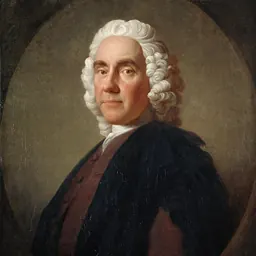
Lived 1752 – 1799 (aged 47). Alexander Gordon was a British physician, obstetrician and gynecologist.
Alexander Gordon MA, MD (20 May 175219 October 1799) was a Scottish obstetrician best known for clearly demonstrating the contagious nature of puerperal sepsis (childbirth fever). By systematically recording details of all visits to women with the condition, he concluded that it was spread from patient to patient by the attending midwife or doctor, and he published these findings in his 1795 paper "Treatise on the Epidemic Puerperal Fever of Aberdeen". On the basis of these conclusions, he advised that the spread could be limited by fumigation of the clothing and burning of the bed linen used by women with the condition and by cleanliness of her medical and midwife attendants. He also recognised a connection between puerperal fever and erysipelas, a skin infection later shown to be caused by the bacterium Streptococcus pyogenes, the same organism that causes puerperal fever. His paper gave insights into the contagious nature of puerperal sepsis around half a century before the better-known publications of Ignaz Semmelweis and Oliver Wendell Holmes and some eighty years before the role of bacteria as infecting agents was clearly understood. Gordon's textbook The Practice of Physik gives valuable insights into medical practice in the later years of the Enlightenment. He advised that clinical decisions be based on personal observations and experience rather than ancient aphorisms. some nine miles to the west of Aberdeen city centre. Alexander's twin brother James achieved a degree of local fame for his role in developing the swede, which would go on to become a staple of the Scottish diet. Between 1771 and 1775 Alexander Gordon studied for an arts degree at the University of Aberdeen's Marischal College, graduating Master of Arts (MA). Intent on a career in medicine he received some clinical teaching by 'walking the wards' at Aberdeen Infirmary. Because Aberdeen at that time did not have regular undergraduate classes in medicine and the university did not award medical degrees, he enrolled in medical classes in Leyden, Holland, one of the leading medical schools in Europe and a favourite destination for Scots to study medicine. In 1779–80 he attended the lectures of the anatomist Alexander Monro secundus in Edinburgh, and the notes which he made of those lectures are retained in the library of the University of Aberdeen. He did not graduate in medicine at either Leiden or Edinburgh but acquired sufficient knowledge to sit and pass the examination at the Company of Surgeons (later the Royal College of Surgeons) and earn a Certificate of Proficiency. and gained practical experience by attending deliveries. He also attended the Middlesex Lying-in Hospital. For further experience in surgery he attended dissections and lectures at the Westminster Hospital.
Aware that there was no practising obstetrician in Aberdeen he returned there in 1785, taking the post of physician to the Aberdeen Dispensary in February 1786. This post involved seeing patients in the Dispensary and in their homes.
Aberdeen puerperal fever epidemics Between 1789 and 1792 Aberdeen witnessed two epidemics, of erysipelas and of puerperal fever, both of which started and ended within the same time period. Puerperal fever had not previously been recognised in the city, but it was a condition with which Gordon was familiar through his experience in London. Meticulous note-keeping was a feature of the Scottish Enlightenment, and Gordon kept careful notes of all his medical visits. By recording the names of the midwives and doctors who had attended affected women and their dates of attendance, he concluded that the medical attendants were the carriers of the disease. He localised as the carriers of the illness a small number of midwives and also demonstrated that he himself had been a carrier of it. He confessed that "It is a disagreeable declaration for me to mention that I myself was the means of carrying the disease to a great number of women." Holmes quoted from and gave generous credit to Gordon. Ignaz Semmelweiss published his seminal work Die Aetilogie der Begriff und die Prophylaxis des Kindbettfiebers 66 years after Gordon's Treatise, and it made no mention of Gordon or his work.
The Practice of Physik Gordon's textbook of medicine was written between 1786 and 1795 and remained in possession of his family until 1913, when it was donated to the Library of Aberdeen University.
Family and later life On 5 February 1784 Gordon married Elizabeth Harvie. They had two daughters, Elizabeth, who died young, and Mary, who married one of Gordon's pupils, Robert Harvey of Braco. Gordon's grandson Alexander Harvey (1811–1889) was Professor of Materia Medica at the University of Aberdeen.
Gordon left Aberdeen in 1795 when he was recalled to the Royal Navy, serving as surgeon on HMS Adamant from January to April 1796 and on HMS Overyssel until August 1799.
He contracted pulmonary tuberculosis and returned to the farm of his brother James in Logie, Aberdeenshire, where he died in 1799.
Selected publications Observations of the Efficacy of Cold-Bathing in the Prevention and Cure of Diseases. (1786) Aberdeen. J Chalmers & Co. Treatise on the Epidemic Puerperal Fever of Aberdeen (1795) London, G. G. and J. Robinson The practice of Physick (2011) (Transcribed with Glossary and Notes by P Bennett). Milton Keynes: AuthorHouse.
Don’t just read it —
keep it.
Full-length biographies made to live with: read them, listen on the way to work, watch them tonight.
- E-book
- Audio
- Video
Instant download · yours to keep · every purchase keeps this site free
Important facts
People in Alexander Gordon's life
Named in this biography and alive at the same time
Related people
Same field, nearest in time




Contemporaries
People whose lives overlapped Alexander Gordon's





Frequently asked questions
Who was Alexander Gordon?
Scottish physician
When was Alexander Gordon born?
Alexander Gordon was born on 20 May 1752 in Aberdeenshire.
When did Alexander Gordon die?
Alexander Gordon died on 19 October 1799 in Aberdeenshire.
What was Alexander Gordon's occupation?
Alexander Gordon was a physician, obstetrician and gynecologist.
What nationality was Alexander Gordon?
Alexander Gordon was British.
Sources & further reading
· DBpedia: Alexander Gordon (physician)
Cite this page
APA: Biography.guide. (2026). Alexander Gordon. https://biography.guide/alexander-gordon-physician/
MLA: "Alexander Gordon." Biography.guide, https://biography.guide/alexander-gordon-physician/.
Chicago: "Alexander Gordon." Biography.guide. https://biography.guide/alexander-gordon-physician/.
Data last updated: 2026-09-20 · Spot an error? Report a correction.
Page generated 2026-09-27 05:20 UTC