
About Alexander Glazer
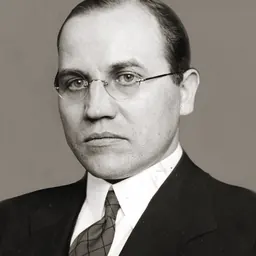
Lived 1935 – 2021 (aged 86). Alexander Glazer was an American microbiologist and molecular biologist.
Alexander Namiot Glazer (7 July 1935 – 18 July 2021) was a Polish-born American professor of the Graduate School in the Department of Molecular and Cell Biology at the University of California, Berkeley. He had a passion for protein chemistry and structure function relationships. He also had a longstanding interest in light-harvesting complexes in cyanobacteria and red algae called phycobilisomes. He had also spent more than 10 years working on the human genome project where he has investigated methods for DNA detection and sequencing which most notably includes the development of fluorescent reagents involved in cell labeling. Most recently, he had focused his studies on issues in environmental sciences.
Early life Glazer was born in Lodz, Poland in 1935 and then moved to Australia where he earned his bachelor's and master's degrees from the University of Sydney in 1957 and 1958, respectively. His master's thesis at the University of Sydney was based on the physiochemical studies of proteins. At the University of Sydney, Glazer saw a lecture by Emil Smith on the proteolytic enzyme papain. This lecture was so inspiring for Glazer that after it, he went to the University of Utah to continue studying with Smith. He earned his Ph.D. from the University of Utah in 1960.
Research on cyanobacteria and red algae The light reactions in photosynthesis start with an antenna complex absorbing a photon. This excitation energy is transferred from one chromophore to another and ends at a pair of chlorophyll molecules in a transmembrane reaction center complex. Each transmembrane reaction center complex is associated with an antenna complex that has hundreds of light-harvesting pigment molecules. In fact, a common feature of all photosynthetic machinery in bacteria, algae and plants is the existence of many antenna complexes that can absorb the light and transfer it to a transmembrane reaction center complex. The light-harvesting pigment molecules are made of proteins that are covalently attached to open chain tetrapyrrole prosthetic groups called bilins that can absorb light. This study determined the distribution of the chromophores in the blue-green algae phycocyanin.
Glazer also investigated the structural and molecular organization of the photosynthetic accessory pigments in Cyanobacteria, which are the blue-green algae, and in Rhodophyta, which are the red algae. Both of these algae have high levels of photosynthetic accessory pigments, called phycobiliproteins, which collect light energy around 525 nm. The phycobiliproteins are easy to study because they are soluble in aqueous solution, can be easily isolated and crystallize readily. Thus, this allows them to be examined easily through X-ray diffraction and electron microscopy. In vivo, these phycobiliproteins were able to be organized onto the surface of photosynthetic lamellae to investigate the specific pathway of energy transfer. The following pathway was discovered: Phycoerythrin → Phycocyanin → (λmax ~ 560 nm) (λmax ~ 620 nm) Allophycocyanin → Allophycocyanin B → (λmax 650 nm)(λmax 671 nm) Chlorophyll a (λmax 680 nm). Overall, his work showed that the phycobilisomes have a specific directional pathway for energy transfer towards the reaction center regardless of where this light harvesting complex is located. This was significant because it showed that it was possible to produce these proteins in situ where they could be used as fluorescent protein probes in living cells. Glazer also examined the physical and spectroscopic properties of phycobiliproteins. Due to their brightly colored nature, he noted how they could be used in flow cytometry and in the detection of reactive oxygen species.
Research on environmental science Most recently, Glazer has shifted his attention to focus on diverse issues in environmental science, such as the impact of anthropogenic fixed nitrogen, the lack of and contamination of freshwater sources, and the impacts of natural gas and oil production.
Glazer also investigated the depletion and contamination of freshwater resources in detail. Overly dry land and semi dry land are home to over 38% of the world's population and has become a limiting resource here. Withdrawal of groundwater, which is freshwater in the soil that is stored in pores between rocks and soil particles, has severely impacted the groundwater dependent ecosystems. Glazer has focused on the challenges involved with replacing groundwater and analyzes if the costs of these groundwater withdrawals are being recognized.
Glazer has also analyzed the importance of natural reserves. These areas help protect wilderness and biodiversity, are important for scientific research, maintain traditions and can be used for educational purposes. Over 12.5% of earth's surface is covered in natural reserves but there are currently many threats to them that are leading to an uncertain future.
Furthermore, Glazer analyzed the conserved amino acid sequence features in MoFe, VFe, and FeFe alpha subunits to determine if there is an evolutionary trend flowing from one type of nitrogenase to another. Finally, Glazer explored the occurrence of lateral gene transfer by using nitrogen fixation genes. This investigation sought to determine the occurrence of lateral gene transfer in the context of prokaryotic nitrogen fixation.
Memberships
1998-2009: Director of the University of California Natural Reserve System 1997-2005: University of California System representative on the California Biodiversity Council
Awards and honors
1955: British Association for the Advancement of Science's Endeavour Prize 1970-1971: Guggenheim fellowship 1980: Botanical Society of America's Darbaker Prize 1982-1983: Guggenheim fellowship 1991: National Academy of Sciences Award for Excellence in Scientific Reviewing
Don’t just read it —
keep it.
Full-length biographies made to live with: read them, listen on the way to work, watch them tonight.
- E-book
- Audio
- Video
Instant download · yours to keep · every purchase keeps this site free
Important facts
Related people
Same field, nearest in time



Contemporaries
People whose lives overlapped Alexander Glazer's




Frequently asked questions
Who was Alexander Glazer?
Polish-American biologist
When was Alexander Glazer born?
Alexander Glazer was born on 7 July 1935.
When did Alexander Glazer die?
Alexander Glazer died on 18 July 2021.
What was Alexander Glazer's occupation?
Alexander Glazer was a microbiologist and molecular biologist.
What nationality was Alexander Glazer?
Alexander Glazer was American.
Sources & further reading
Cite this page
APA: Biography.guide. (2026). Alexander Glazer. https://biography.guide/alexander-glazer/
MLA: "Alexander Glazer." Biography.guide, https://biography.guide/alexander-glazer/.
Chicago: "Alexander Glazer." Biography.guide. https://biography.guide/alexander-glazer/.
Data last updated: 2026-09-20 · Spot an error? Report a correction.
Page generated 2026-09-27 05:30 UTC