
About Alexander Frick
Lived 1910 – 1991 (aged 81). Alexander Frick was a Liechtensteiner lawyer, teacher, politician and head of government.
Alexander Frick (, ; 18 February 1910 – 31 October 1991) was a politician from Liechtenstein who served as Prime Minister of Liechtenstein from 1945 to 1962. He later went on to serve in the Landtag of Liechtenstein from 1966 to 1974 and as the President of the Landtag of Liechtenstein from 1966 to 1969.
Initially a civil servant in the Liechtenstein fiscal administration, Frick was involved in the founding of the Scouts of Liechtenstein in 1931 and was the president of the Liechtenstein Olympic Committee at its first appearance at the 1936 Summer Olympics. Frick was appointed prime minister in 1945 following the resignation of Josef Hoop. His first years in office included domestic challenges, particularly that of pressure to repatriate the soldiers of the First Russian National Army and to cede the Ellhorn mountain to Switzerland. His premiership oversaw an economic boom in the Liechtenstein economy, and the transformation of the country into a modern welfare state. He resigned for health reasons in 1962.
Frick returned to politics when he was elected to the Landtag of Liechtenstein in 1966, where he served until 1974. He was the president of the Landtag from 1966 to 1969.
Early life and career
Frick was born on 18 February 1910 in Schaan as the son of his father by the same name and Theresia Wanger as one of 10 children, including his brother Georg Frick. From 1925 to 1929 he attended a teacher's training college, where he received a certificate. He succeeded Josef Hoop after his resignation on 3 September 1945. The government coalition established in 1938 continued throughout his premiership. They were cared for by the Liechtenstein Red Cross. On 16 August 1945, the Soviet Union sent a delegation to Liechtenstein in an attempt to repatriate the Russians, which was refused despite increasing Soviet pressure to participate in the repatriation program. Eventually the government of Argentina offered the Russians asylum, and about a hundred people left. Liechtenstein was the only country that did not participate in the Soviet repatriation program. In 1949, he oversaw Liechtenstein ceding the Ellhorn mountain to Switzerland as a result of Swiss demands and threats to, among other things, cease end the customs union between the two countries. Despite the local community in Balzers previously refusing to do so in November 1948, the transfer was approved by the Landtag of Liechtenstein the following month. In exchange to the transfer, Switzerland agreed to forgive much of Liechtenstein's debt that it had acquired to the country throughout World War II.
Domestic and economic policy Frick advocated for the reconciliation of relations between Liechtenstein's political parties and pro-German elements during World War II, including the social re-integration of former members of the VBDL. Other figures were charged for illegal intelligence providence, notably former Prime Minister Gustav Schädler who was sentenced to 6 months imprisonment, but did not serve the sentence for health reasons.
During Frick's premiership, he pioneered the transformation of Liechtenstein into a modern welfare state. In 1952 his government succeeded introducing pensions and survivors insurance via a referendum on the subject despite resistance from local businesses and agricultural establishments, followed by the introduction of family compensation in 1958 and disability insurance in 1959. From 1945 to 1981, Frick was a board member of the Historical Association for the Principality of Liechtenstein and was also a contributor to the Liechtensteiner Volksblatt.
Later life
In 1961 he was awarded a doctorate honoris causa from the University of Fribourg. He was president of the Liechtenstein-Switzerland society from 1972 to 1974. He was made an honorary member of the Historical Association for the Principality of Liechtenstein in 1981, the Liechtenstein-Switzerland society in 1986 and then in the Scouts of Liechtenstein in 1990. He served as the President of the Landtag from January 1966 to December 1969. After the Progressive Citizens' Party lost in the 1970 Liechtenstein general election and Alfred Hilbe became Prime Minister, he was a proponent of continuing the coalition between the party and the Patriotic Union.
Personal life
Frick married Hildegard Kranz (23 December 1917 – 29 April 1993) on 5 October 1939 and they had nine children together.
Frick died on 31 October 1991 in Schaan, aged 81 years old.
Honours Grand Decoration of Honour in Silver with Sash for Services to the Republic of Austria (1957) Grand Cordon of the Order of Leopold Grand Cross with Diamonds of the Order of Merit of the Principality of Liechtenstein (1967) Knight's Cross of the Order of St. Gregory the Great
Don’t just read it —
keep it.
Full-length biographies made to live with: read them, listen on the way to work, watch them tonight.
- E-book
- Audio
- Video
Instant download · yours to keep · every purchase keeps this site free
Important facts
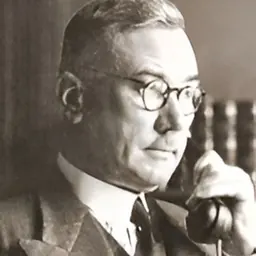
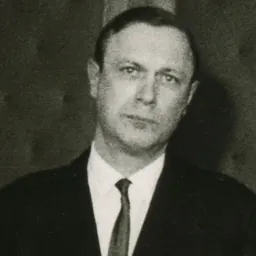
People in Alexander Frick's life
Named in this biography and alive at the same time


Related people
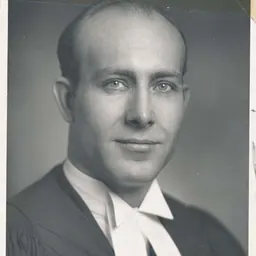
Same field, nearest in time



Contemporaries
People whose lives overlapped Alexander Frick's






Frequently asked questions
Who was Alexander Frick?
Prime Minister of Liechtenstein (1910-1991)
When was Alexander Frick born?
Alexander Frick was born on 18 February 1910 in Schaan.
When did Alexander Frick die?
Alexander Frick died on 31 October 1991 in Schaan.
What was Alexander Frick's occupation?
Alexander Frick was a lawyer, teacher, politician and head of government.
What nationality was Alexander Frick?
Alexander Frick was Liechtensteiner.
Sources & further reading
Cite this page
APA: Biography.guide. (2026). Alexander Frick. https://biography.guide/alexander-frick/
MLA: "Alexander Frick." Biography.guide, https://biography.guide/alexander-frick/.
Chicago: "Alexander Frick." Biography.guide. https://biography.guide/alexander-frick/.
Data last updated: 2026-09-26 · Spot an error? Report a correction.
Page generated 2026-09-27 05:15 UTC