
Alexander Dukhnovich
Ruthenian national revivalist, writer, educator and Greek Catholic priest
About Alexander Dukhnovich
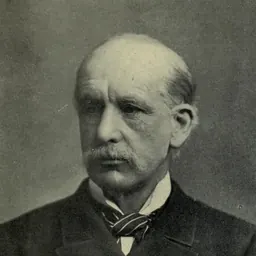
Lived 1802 – 1865 (aged 62). Alexander Dukhnovich was a Hungarian and Austrian poet, writer, catholic priest, pedagogue, patron of the arts and social activist.
Alexander Vasilyevich Dukhnovych (24 April 1803 – 30 March 1865) was an Transcarpathian Ruthenian priest, poet, writer, pedagogue, and social activist of the Russophile orientation. He is considered as the awakener (Rusyn: Будитель, Budytel’) of the Rusyns.
Life Alexander Dukhnovych was born in the village of Topolya, Kingdom of Hungary (now Topoľa in Eastern Slovakia). The son of a Greek Catholic priest, he went to a Hungarian school in Ungvár (now Uzhhorod) (1816 to 1821). Later Alexander studied philosophy at an academy in Kassa (now Košice) (1821–1823), and theology at the Theological Seminary in Ungvár (Uzhhorod) (1824–1827).
In (1827–1830 and 1832), Dukhnovych worked as an archivist and a teacher. Later, in 1833-1838, he worked as a Greek Catholic priest in remote villages of Carpathian Ruthenia (present-day Zakarpattia oblast of Ukraine) and as a notary in Ungvár (Uzhhorod) (1838–1844). Dukhnovych started to write poems in his early years. He wrote in the Ruthenian, Russian, and Hungarian languages. His early works are said to have been influenced by Hungarian Romanticism.
Dukhnovych supported education and cultural revival of Carpathian Ruthenians. He saw his role as a defender of Ruthenian culture against Magyarization. In 1850 Dukhnovych established the first Ruthenian cultural association, the Eperjes (now Prešov) Literary Society. Under his guidance, the society published a series of books. His most famous patriotic poem Ia rusyn byl, ies'm i budu (I Was, Am, and Will Be a Ruthenian) was published as part of an anthology in 1851. This poem would later become a popular hymn of Carpatho-Ruthenians. Dukhnovych also published a number of pedagogical and religious books, elementary school textbook and a Grammar. His most famous scholarly works were The History of the Eparchy of Prjašev (1877), originally published in Latin and later translated in Russian and English, and a History of Carpathian Ruthenians (1853).
His last years were devoted to development of education and schooling among local Ruthenians. In an effort to forestall the Magyarization of the Ruthenian population, Dukhnovych founded the St. John the Baptist Society in Eperjes (Prešov) with Adolf Dobryansky in 1862. Dukhnovych died in Eperjes (Prešov) on 30 March 1865.
Assessment Dukhnovych is regarded to be one of the outstanding Ruthenian humanists and educators. In the words of Ivan Franko "he made everything so that forgotten Ruthenians revived spiritually". His views were based on Christian principles and idealism.
Dukhnovych also actively participated in the Russophile movement in the territory of today's Western Ukraine at the end of the 19th century. Even though Dukhnovych wrote in the local language, he did not believe it to be a separate language nor did he wish to contribute to a creation of a literary language of Carpathian Ruthenians. Instead Dukhnovych wrote his scholarly works in a peculiar dialect called iazychie made up of Church-Slavonic and local Lemko-Rusyn.
Don’t just read it —
keep it.
Full-length biographies made to live with: read them, listen on the way to work, watch them tonight.
- E-book
- Audio
- Video
Instant download · yours to keep · every purchase keeps this site free
Important facts
People in Alexander Dukhnovich's life
Named in this biography and alive at the same time
Related people
Same field, nearest in time

Contemporaries
People whose lives overlapped Alexander Dukhnovich's





Frequently asked questions
Who was Alexander Dukhnovich?
Ruthenian national revivalist, writer, educator and Greek Catholic priest (1802–1865)
When was Alexander Dukhnovich born?
Alexander Dukhnovich was born on 24 April 1802 in Topoľa.
When did Alexander Dukhnovich die?
Alexander Dukhnovich died on 30 March 1865 in Prešov.
What was Alexander Dukhnovich's occupation?
Alexander Dukhnovich was a poet, writer, catholic priest, pedagogue, patron of the arts and social activist.
What nationality was Alexander Dukhnovich?
Alexander Dukhnovich was Hungarian and Austrian.
Sources & further reading
· Wikipedia: Alexander Dukhnovich
· DBpedia: Alexander Dukhnovych
Cite this page
APA: Biography.guide. (2026). Alexander Dukhnovich. https://biography.guide/alexander-dukhnovich/
MLA: "Alexander Dukhnovich." Biography.guide, https://biography.guide/alexander-dukhnovich/.
Chicago: "Alexander Dukhnovich." Biography.guide. https://biography.guide/alexander-dukhnovich/.
Data last updated: 2026-09-25 · Spot an error? Report a correction.
Page generated 2026-09-27 05:11 UTC