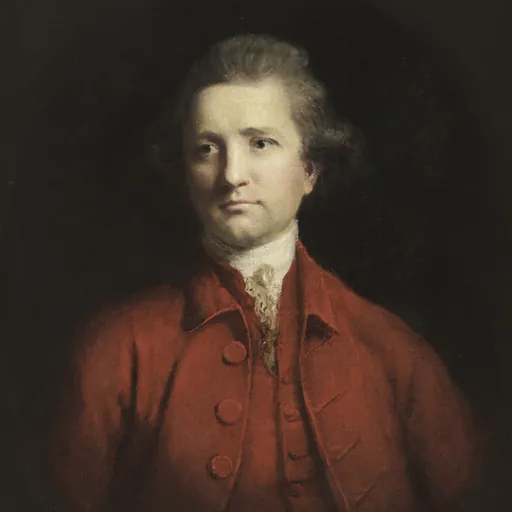
About Alexander Dow
Lived 1735 – 1779 (aged 43–44). Alexander Dow was a linguist, translator, playwright, military officer and writer.
Alexander Dow (1735 or 1736 – 31 July 1779) was a Scottish Orientalist, writer, playwright and army officer in the East India Company.
Life He was a native of Crieff, Perthshire. Alexander Dow's father worked at the Customs at Dunbar. The younger Dow was educated in Dunbar for a time, and, in conjunction with his father's job, this would suggest that he lived in the area for a time. Dow was in the process of being educated for a mercantile career in Eyemouth, when he abruptly left aboard the King of Prussia as a midshipman. The reason for this turn of events is not known, but one reason posited for this was that he was involved in a fatal duel. Dow then worked his way to Bencoolen. There he became secretary to the Governor, and was commended to the patronage of the officials of the East India Company at Calcutta. He joined the army there as an ensign in the Bengal infantry on 14 September 1760, and was rapidly promoted lieutenant on 23 August 1763, and then captain on 16 April 1764.
He returned to Britain on leave in 1768, and published in that year two translations, Tales Translated from the Persian of Inatulla of Delhi, and the History of Hindostan, Translated from the Persian of Ferishta. Both works had a great success, and in the following year Dow had a five-act tragedy on Genghis Khan, Zingis, which was acted with some success at Drury Lane.
He then returned to India, and was promoted lieutenant-colonel on 25 February 1769, and in 1772 published the continuation of his history of Hindostan to the death of Aurungzeb, with two dissertations, 'On the Origin and Nature of Despotism in Hindostan,’ and 'An Enquiry into the State of Bengal.' In 1774, he again returned to England, and David Garrick produced his second tragedy in verse at Drury Lane, entitled 'Sethona', set in a mythic ancient Egypt. It was acted only for nine nights, and was said by David Erskine Baker in his Biographia Dramatica to be not really by Dow at all.
Dow returned once more to India, and died in Bhagalpur on 31 July 1779.
Works Tales Translated from the Persian of Inatulla of Delhi (1768) Zingis (1769) - 5-act tragedy Sethona (1774) - verse tragedy
Don’t just read it —
keep it.
Full-length biographies made to live with: read them, listen on the way to work, watch them tonight.
- E-book
- Audio
- Video
Instant download · yours to keep · every purchase keeps this site free
Important facts
People in Alexander Dow's life
Named in this biography and alive at the same time

Related people
Same field, nearest in time




Contemporaries
People whose lives overlapped Alexander Dow's




Frequently asked questions
Who was Alexander Dow?
British orientalist and writer; (1735-1779)
When was Alexander Dow born?
Alexander Dow was born in 1735 in Crieff.
When did Alexander Dow die?
Alexander Dow died on 31 July 1779 in Bhagalpur.
What was Alexander Dow's occupation?
Alexander Dow was a linguist, translator, playwright, military officer and writer.
Sources & further reading
Cite this page
APA: Biography.guide. (2026). Alexander Dow. https://biography.guide/alexander-dow/
MLA: "Alexander Dow." Biography.guide, https://biography.guide/alexander-dow/.
Chicago: "Alexander Dow." Biography.guide. https://biography.guide/alexander-dow/.
Data last updated: 2026-09-23 · Spot an error? Report a correction.
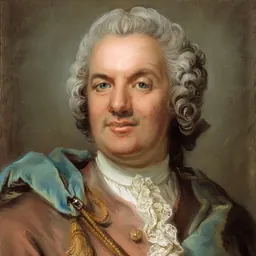
Portrait: Wikimedia Commons · author & licence
Page generated 2026-09-27 05:06 UTC