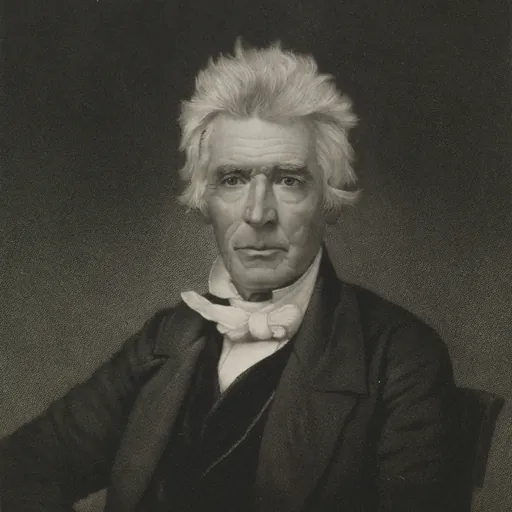
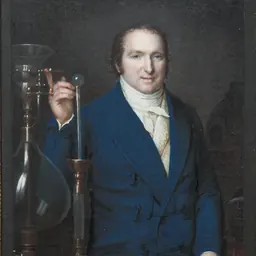
Alexander Campbell
Scots-Irish American ordained minister
About Alexander Campbell
Lived 1788 – 1866 (aged 77). Alexander Campbell was a British bible translator, writer, christian minister, theologian and priest, known for Restoration Movement.
Alexander Campbell (12 September 17884 March 1866) was an Ulster Scots immigrant who became an ordained minister in the United States and joined his father Thomas Campbell as a leader of a reform effort that is historically known as the Restoration Movement, and by some as the "Stone-Campbell Movement". It resulted in the development of non-denominational Christian churches, which stressed reliance on scripture and few essentials.
Campbell was influenced by similar efforts in Scotland, in particular, by James and Robert Haldane, who emphasized their interpretation of Christianity as found in the New Testament. In 1832, the group of reformers led by the Campbells merged with a similar movement that began under the leadership of Barton W. Stone in Kentucky. Their congregations identified as Disciples of Christ or Christian churches.
Several church groups have some historical ties with Campbell's efforts. The three main groups are the Churches of Christ, the Christian Church (Disciples of Christ), and the independent Christian churches and churches of Christ. Additionally, there are the International Churches of Christ, the International Christian Church, the Churches of Christ in Australia, the Churches of Christ in Europe, and the Evangelical Christian Church in Canada. Campbell also founded Bethany College in what became Bethany, West Virginia.
Early life and education
Alexander Campbell was born 12 September 1788 near Ballymena, in the parish of Broughshane, County Antrim, Ireland. Margaret's father John Brown owned a significant amount of land in the Bethany, Virginia, area (now in West Virginia).
Public life Old Bethany Church with Historical MarkerFrom 1815 to 1824, Campbell and his father kept the Brush Run Church affiliated with a local Baptist association. After disagreements over some issues, they allied with the Mahoning Baptist Association.
Campbell's only formal political service was as a delegate to the Virginia Constitutional Convention of 1829–1830, held in Richmond. He met some of the leading politicians of the day and was invited to preach in several churches in the capital city.
Campbell visited the United Kingdom in 1847. During the trip he gave public lectures in England and Scotland. He went to Ireland to deliver funds that U.S. Restoration Movement churches had raised for relief in the Great Famine. While at Glasgow, he was challenged by James Robertson to a debate on the subject of slavery, which the American South protected and Campbell defended as moral. As a result of the fierce exchange, Robertson sued Campbell for libel. The American denied the charge, but he was arrested and imprisoned for ten days. Campbell was released when the warrant for his arrest was declared to be illegal. The case was ultimately tried, and the jury decided in his favor. In 1820, his debate with the Presbyterian John Walker was published, reminding him of the efficacy of writing and publishing.
Campbell edited and published two journals. The first was the Christian Baptist, which he edited from 1823 through 1830. The second was The Millennial Harbinger, which he began in 1830 and continued to edit until his death in 1866. He became less active in it during the 1850s. In both, he advocated the reform of Christianity along the lines as it was practiced on the American frontier. He encouraged contributions by writers who thought differently from him, and the journals encouraged a lively dialogue about issues in the reform movement.
Campbell expanded his printing operation in 1830 for the Millennial Harbinger. Campbell compiled and published a translation of the New Testament under the title The Living Oracles. Published in 1826, it was based on an 1818 translation by George Campbell, James MacKnight and Philip Doddridge, and included edits and extensive notes by Campbell. In June 1820, he debated with Rev. John Walker, a Baptist preacher, at Mount Pleasant, Ohio, on baptism, and since then, regularly participated in debates. Some of them gained national and international attention after their transcripts were published. In 1823, he debated with Rev. William L. McCalla, a Presbyterian minister, on infant baptism; in April 1829, with Robert Owen on socialism and Christianity; in January 1837, with Archbishop of Cincinnati, John Baptist Purcell on Protestantism and Roman Catholicism; in September 1843, he defended the Restoration Movement in a debate with Rev. Nathan L. Rice, who represented traditional Presbyterianism.
Death, legacy, and honors Alexander Campbell, age 65Alexander Campbell died at the age of 77 on 4 March 1866 at Bethany, West Virginia. His widow died more than three decades later, on 28 June 1897.
Campbell was instrumental in the Restoration Movement, which resulted in a new direction for American Christians and founding of numerous new, non-denominational churches as well as the Christian Church (Disciples of Christ). His house in Bethany, West Virginia, the Alexander Campbell Mansion, was designated as a National Historic Landmark. The Alexander Campbell Auditorium at Culver–Stockton College is named in his honor. Campbell is known to have preached at the Slash Church, now on the National Register of Historic Places in rural Hanover County, Virginia and still used by a Disciples of Christ congregation.
Don’t just read it —
keep it.
Full-length biographies made to live with: read them, listen on the way to work, watch them tonight.
- E-book
- Audio
- Video
Instant download · yours to keep · every purchase keeps this site free
Important facts
Family & relationships
People in Alexander Campbell's life
Named in this biography and alive at the same time

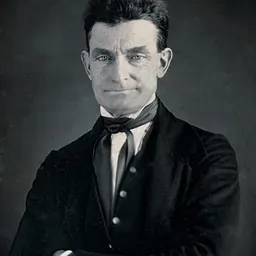


Related people
Same field, nearest in time
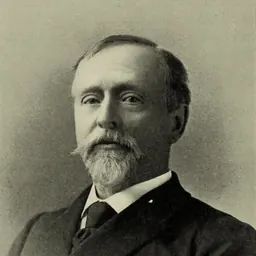
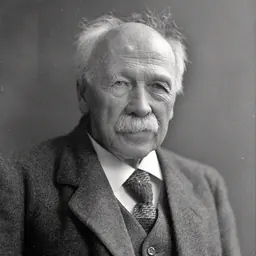

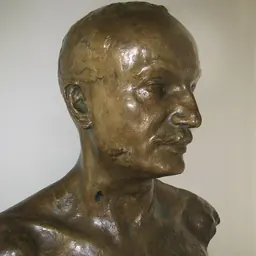
Contemporaries
People whose lives overlapped Alexander Campbell's

Frequently asked questions
Who was Alexander Campbell?
Scots-Irish American ordained minister (1788–1866)
When was Alexander Campbell born?
Alexander Campbell was born on 12 September 1788 in Broughshane.
When did Alexander Campbell die?
Alexander Campbell died on 4 March 1866 in Bethany.
What was Alexander Campbell's occupation?
Alexander Campbell was a bible translator, writer, christian minister, theologian and priest.
What was Alexander Campbell known for?
Alexander Campbell was known for Restoration Movement.
What nationality was Alexander Campbell?
Alexander Campbell was British.
Sources & further reading
· Wikipedia: Alexander Campbell
· DBpedia: Alexander Campbell (minister)
Cite this page
APA: Biography.guide. (2026). Alexander Campbell. https://biography.guide/alexander-campbell-bible-translator/
MLA: "Alexander Campbell." Biography.guide, https://biography.guide/alexander-campbell-bible-translator/.
Chicago: "Alexander Campbell." Biography.guide. https://biography.guide/alexander-campbell-bible-translator/.
Data last updated: 2026-09-22 · Spot an error? Report a correction.
Portrait: Wikimedia Commons · author & licence
Page generated 2026-09-27 05:03 UTC