
About Alexander Asboth
Lived 1811 – 1868 (aged 56). Alexander Asboth was a Hungarian and American military officer and diplomat.
Alexander "Sandor" Asboth (Hungarian: Asbóth Sándor, December 18, 1811 – January 21, 1868) was a Hungarian military leader best known for his victories as a Union general during the American Civil War. He also served as United States Ambassador to Argentina and as United States Ambassador to Uruguay.
Early life
Asboth was born in Keszthely, Hungary. When Asboth was 8, his family moved to Zombor (now Sombor in Serbia). Asboth wanted to be a soldier, like his elder brother Lajos, but instead his parents decided he should be an engineer. He studied at the Mining Academy of Selmecbánya and the Institutum Geometricum in Pest.
After graduation he worked on the construction of the Széchenyi Chain Bridge as a civilian engineer and later he had some part in the river regulation of the Lower-Danube. He joined with freedom-fighter Lajos Kossuth in the 1848 revolutionary movement. Asboth traveled with Kossuth to the Ottoman Empire and then to the United States in 1851, after the revolution failed.
United States and Civil War Asboth remained in the United States, becoming a U.S. citizen in 1852. He worked with Frederick Olmstead during the surveys of Central Park and the Upper West Side in New York City. Starting in July 1861, he served as chief of staff for General John C. Frémont. Asboth was nominated brigadier general by President Abraham Lincoln on December 26, 1861, and the U.S. Senate confirmed the promotion on March 24, 1862, as the President did not formally make the appointment until March 22, 1862. Asboth was assigned command of the 4th Division in Frémont's western campaign. Asboth later led a division under Samuel Curtis, and during the Arkansas campaign he occupied Bentonville and Fayetteville. He participated in the Battle of Pea Ridge, leading troops at the Little Sugar Creek position. His right arm was fractured by a musket ball while bringing reinforcements to support Colonel Eugene A. Carr. Reinforcements were transferred to Henry Halleck from the Army of the Southwest and during the Siege of Corinth, Asboth commanded a brigade in the Army of the Mississippi. On January 13, 1866, President Andrew Johnson nominated Asboth for the award of the brevet grade of major general to rank from March 13, 1865, and the U.S. Senate confirmed the award on March 12, 1866.
Later life and death In 1866, he was appointed U.S. Minister to Argentina and Uruguay. He died in Buenos Aires in 1868, likely due to his wounds received in Florida.
Don’t just read it —
keep it.
Full-length biographies made to live with: read them, listen on the way to work, watch them tonight.
- E-book
- Audio
- Video
Instant download · yours to keep · every purchase keeps this site free
Important facts
People in Alexander Asboth's life
Named in this biography and alive at the same time
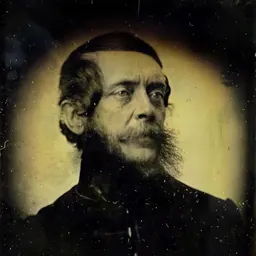

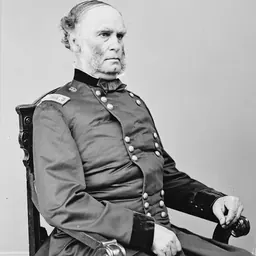
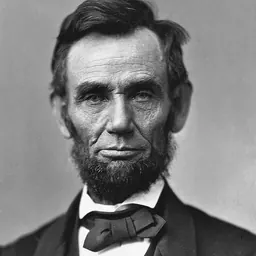

Related people
Same field, nearest in time
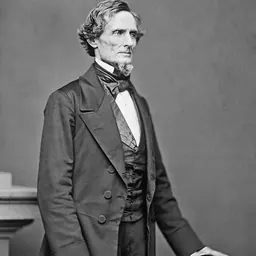

Contemporaries
People whose lives overlapped Alexander Asboth's





Frequently asked questions
Who was Alexander Asboth?
Hungarian-born American Union Army general (1811–1868)
When was Alexander Asboth born?
Alexander Asboth was born on 18 December 1811 in Keszthely.
When did Alexander Asboth die?
Alexander Asboth died on 21 January 1868 in Buenos Aires.
What was Alexander Asboth's occupation?
Alexander Asboth was a military officer and diplomat.
What nationality was Alexander Asboth?
Alexander Asboth was Hungarian and American.
Sources & further reading
Cite this page
APA: Biography.guide. (2026). Alexander Asboth. https://biography.guide/alexander-asboth/
MLA: "Alexander Asboth." Biography.guide, https://biography.guide/alexander-asboth/.
Chicago: "Alexander Asboth." Biography.guide. https://biography.guide/alexander-asboth/.
Data last updated: 2026-09-20 · Spot an error? Report a correction.
Page generated 2026-09-27 05:17 UTC