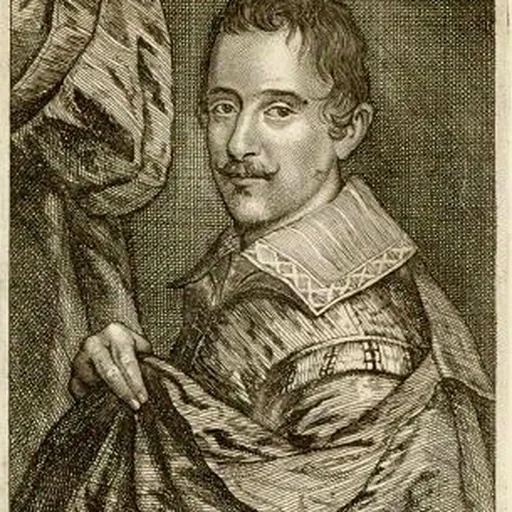
About Alessandro Varotari
Lived 1588 – 1649 (aged 61). Alessandro Varotari was an Italian painter.
Alessandro Leone Varotari (4 April 1588 – 20 July 1649), also commonly known as Il Padovanino, was a Venetian painter of the late-Mannerist and early-Baroque Venetian school, best known for having mentored Pietro Liberi, Giulio Carpioni, and Bartolommeo Scaligero. He was the son of Dario Varotari the Elder and the brother of painter Chiara Varotari, who accompanied him on his travels and assisted with his work.
Biography
Born in Padua, from which his nickname derives, he was the son of the local painter and architect Dario Varotari the Elder, who most probably provided his earliest training. Early paintings such as The incredulity of St. Thomas, Virgin and Child, and the Pentecost show the influence of Titian. Padovanino married Caterina Mesa 1612 in Padua. He moved to Venice in 1614. He is known to have traveled to Rome twice (in the mid-1610s and in 1625), where he was much employed in producing copies of major paintings by major Renaissance artists of the prior generation. In 1619, he worked on the mosaics of the Basilica of San Marco. In the following years he worked on decorating the interior of the Church of Santa Maria Maggiore. In 1625 he made another trip to Rome. He painted a major battle canvas entitled The victory of the Carnuti (Celts) over the Normans. His pupils included Pietro Liberi, Bartolommeo Scaligero, Pietro della Vecchia, Giulio Carpioni and his own son, Dario Varotari the Younger. His sister Chiara Varotari was a well known portraitist. Among his students was Caterina Tarabotti.
Style Padovanino was a highly respected artist in his time. Although he had earned much of his fame due to his talents as a copyist, he still deserves a place in the history of painting. He had learned painting in the style of Titian, to whose spirit and style he was faithful throughout his career. His career lasted well into the seventeenth century. His paintings are characterized for their narrative ability and their sensuality.
Don’t just read it —
keep it.
Full-length biographies made to live with: read them, listen on the way to work, watch them tonight.
- E-book
- Audio
- Video
Instant download · yours to keep · every purchase keeps this site free
Important facts
more
Padovanino, Padoanin, Alessandro Varotari Padovanino, Paduaneno, Pandonanino, Il Padovanini, Padoano, Padovano Vecchio, Padovannino, Paduvani, Padouanini, Padonanino, Paduanino, Padvanino, padovannino vechio, Alessandro, gen. Padovanino Varotari, Padovan, valotari, Alexandre Varotari, Patavin, detto Padovanino Alessandro Volladari, Varatori, le Padouanin, dit le Padouanino Alexandre Varotari, Padoanino, PaduanoPeople in Alessandro Varotari's life
Named in this biography and alive at the same time




Related people
Same field, nearest in time


Contemporaries
People whose lives overlapped Alessandro Varotari's



Frequently asked questions
Who was Alessandro Varotari?
painter from Italy (1588-1649)
When was Alessandro Varotari born?
Alessandro Varotari was born on 4 April 1588 in Padua.
When did Alessandro Varotari die?
Alessandro Varotari died on 20 July 1649 in Venice.
What was Alessandro Varotari's occupation?
Alessandro Varotari was a painter.
What nationality was Alessandro Varotari?
Alessandro Varotari was Italian.
Sources & further reading
· Wikipedia: Alessandro Varotari
Cite this page
APA: Biography.guide. (2026). Alessandro Varotari. https://biography.guide/alessandro-varotari/
MLA: "Alessandro Varotari." Biography.guide, https://biography.guide/alessandro-varotari/.
Chicago: "Alessandro Varotari." Biography.guide. https://biography.guide/alessandro-varotari/.
Data last updated: 2026-09-21 · Spot an error? Report a correction.
Portrait: Wikimedia Commons · author & licence
Page generated 2026-09-27 05:00 UTC