
Aleksei Severtsov
Russian paleontologist and zoologist
About Aleksei Severtsov
Lived 1866 – 1936 (aged 70). Aleksei Severtsov was a Russian paleontologist, zoologist, university teacher, biologist and scientist.
Alexei Nikolaevich Severtsov (; 11 September 1866 – 16 December 1936) was a Russian and Soviet evolutionary zoologist who worked on comparative anatomy and morphology. He was the son of the zoologist Nikolai Severtzov. He studied the evolution of vertebrates and established an institute for evolutionary morphology which is now named after him as the AN Severtsov Institute of Ecology and Evolution. He introduced various concepts of phyloembryology and evolutionary physiology.
Biography
Severtsov was born in Moscow where his father was the zoologist, Nikolai Severtzov. After private schooling in Petrov, Bobrovsky Uyezd in the Voronezh Governorate, he went to the Lomonosov University in 1885 and graduated in 1895. Influential teachers included P. P. Sushkin, M. A. Menzbir, I. M. Sechenov, K. A. Timiryazev, and V. V. Markovnikov. Menzbir advised that he learns drawing and he then took lessons from the famous artist N. A. Martynov. Severtsov used his artistic skill not only to make scientific illustrations but for artistic works as well including illustrations for scenes from Goethe's Faust and for his own fairy tales. He then worked at marine biology laboratories in Villefranche-sur-Mer, Naples, and Germany. He received a doctorate in 1898 for research on the metameres of the head of the torpedo ray and went to teach zoology from at the University of Dorpat (Tartu) and from 1902 at Kiev and then from 1911 at Moscow. His master's thesis was on the development of the occipital region of lower vertebrates. For his work on the evolution of the lower vertebrates he received the Karl Baer Prize of 1919. He studied the origin of the maxillary apparatus and the breathing organs of fish. He suggested that the five fingered tetrapod limb evolved from 7-10-ray limb of ancestors that included multi-ray fins of fish-like forms. In 1930 he established a laboratory for evolutionary anatomy and morphology. Severtsov followed on the theme of organ function change begun by St. George Mivart and Anton Dohrn. Severtsov developed the biogenetic law or recapitulation theory of Ernst Haeckel under the term that he coined, phyloembryologenesis, and attempted to explain evolution through morphological and developmental changes. He explained this in a book in German Morphologische Gesetzmäßigkeiten der Evolution published in 1931. His son Sergei Alekseevich Severtsov (1891-1947) became an ecologist.
Don’t just read it —
keep it.
Full-length biographies made to live with: read them, listen on the way to work, watch them tonight.
- E-book
- Audio
- Video
Instant download · yours to keep · every purchase keeps this site free
Important facts
People in Aleksei Severtsov's life
Named in this biography and alive at the same time
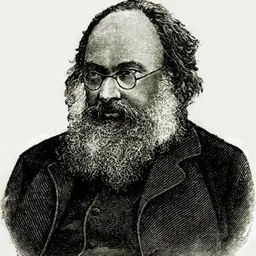
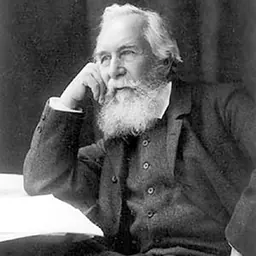

Related people
Same field, nearest in time
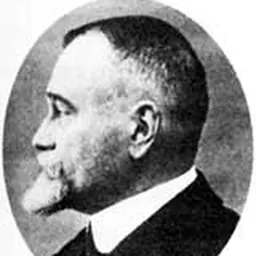
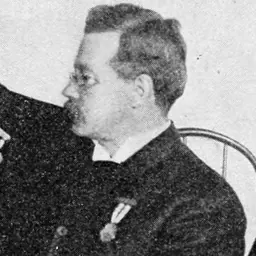

Contemporaries
People whose lives overlapped Aleksei Severtsov's


Frequently asked questions
Who was Aleksei Severtsov?
Russian paleontologist and zoologist (1866-1936)
When was Aleksei Severtsov born?
Aleksei Severtsov was born on 11 September 1866 in Moscow.
When did Aleksei Severtsov die?
Aleksei Severtsov died on 19 December 1936 in Moscow.
What was Aleksei Severtsov's occupation?
Aleksei Severtsov was a paleontologist, zoologist, university teacher, biologist and scientist.
What nationality was Aleksei Severtsov?
Aleksei Severtsov was Russian.
Sources & further reading
· Wikipedia: Aleksei Severtsov
Cite this page
APA: Biography.guide. (2026). Aleksei Severtsov. https://biography.guide/aleksei-severtsov/
MLA: "Aleksei Severtsov." Biography.guide, https://biography.guide/aleksei-severtsov/.
Chicago: "Aleksei Severtsov." Biography.guide. https://biography.guide/aleksei-severtsov/.
Data last updated: 2026-09-20 · Spot an error? Report a correction.
Page generated 2026-09-27 05:27 UTC