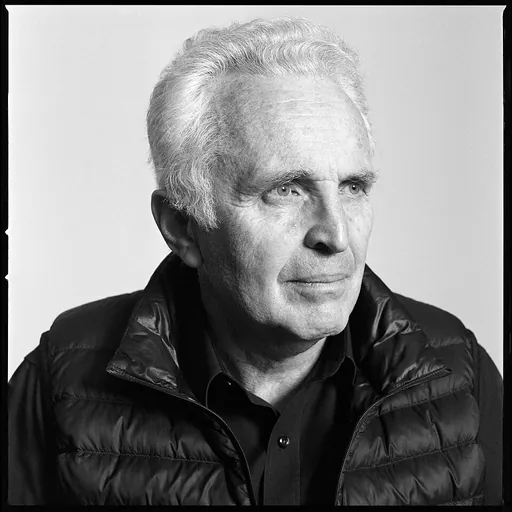
About Aleksandr Polyakov
Born 1945. Aleksandr Polyakov is a Russian and American physicist, professor and theoretical physicist.
Alexander Markovich Polyakov (; born 27 September 1945) is a Russian theoretical physicist, formerly at the Landau Institute in Moscow and, since 1989, at Princeton University, where he is the Joseph Henry Professor of Physics Emeritus.
Important discoveries Polyakov is known for a number of fundamental contributions to quantum field theory, including work on what is now called the 't Hooft–Polyakov monopole in non-Abelian gauge theory, independent from Gerard 't Hooft. Polyakov and coauthors discovered the so-called BPST instanton which, in turn, led to the discovery of the vacuum angle in QCD. His path integral formulation of string theory had profound and lasting impacts on the conceptual and mathematical understanding of the theory. His paper "Infinite conformal symmetry in two-dimensional quantum field theory" written with Alexander Belavin and Alexander Zamolodchikov laid down the foundations of two-dimensional conformal field theory and has classic status. from the publications of Peter Higgs and others. The paper was delayed by the Editorial Office of JETP, and was published only in 1966.
Honors and awards Alexander Polyakov was awarded the Dirac Medal of the ICTP and the Dannie Heineman Prize for Mathematical Physics in 1986, the Lorentz Medal in 1994, the Oskar Klein Medal in 1996, the Harvey Prize in 2010, the Lars Onsager Prize (together with A. Belavin and A. Zamolodchikov) in 2011 and the Breakthrough Prize in Fundamental Physics in 2013. On 19 November 2020 the German Physical Society announced it would award Alexander Polyakov the 2021 Max Planck Medal.
Polyakov was elected to the Soviet Academy of Sciences in 1984, to the French Academy of Sciences in 1998 and the U.S. National Academy of Sciences (NAS) in 2005.
Political positions In February-March 2022, he signed an open letter by Russian scientists condemning the 2022 Russian invasion of Ukraine, and another open letter by Breakthrough Prize laureates with the same message.
Famous quotes
“The garbage of the past often becomes the treasure of the present (and vice versa).” “There are no tables for path integrals.” (quoted in ) “I wanted to learn about elementary particles by studying boiling water.” (paraphrased in )
Don’t just read it —
keep it.
Full-length biographies made to live with: read them, listen on the way to work, watch them tonight.
- E-book
- Audio
- Video
Instant download · yours to keep · every purchase keeps this site free
Important facts
People in Aleksandr Polyakov's life
Named in this biography and alive at the same time


Related people
Same field, nearest in time

Contemporaries
People whose lives overlapped Aleksandr Polyakov's


Frequently asked questions
Who is Aleksandr Polyakov?
Russian physicist
When was Aleksandr Polyakov born?
Aleksandr Polyakov was born on 27 September 1945 in Moscow.
What is Aleksandr Polyakov's occupation?
Aleksandr Polyakov is a physicist, professor and theoretical physicist.
What nationality is Aleksandr Polyakov?
Aleksandr Polyakov is Russian and American.
Sources & further reading
· Wikipedia: Aleksandr Polyakov
· DBpedia: Alexander Polyakov (physicist)
Cite this page
APA: Biography.guide. (2026). Aleksandr Polyakov. https://biography.guide/aleksandr-polyakov/
MLA: "Aleksandr Polyakov." Biography.guide, https://biography.guide/aleksandr-polyakov/.
Chicago: "Aleksandr Polyakov." Biography.guide. https://biography.guide/aleksandr-polyakov/.
Data last updated: 2026-09-20 · Spot an error? Report a correction.
Page generated 2026-09-27 05:10 UTC