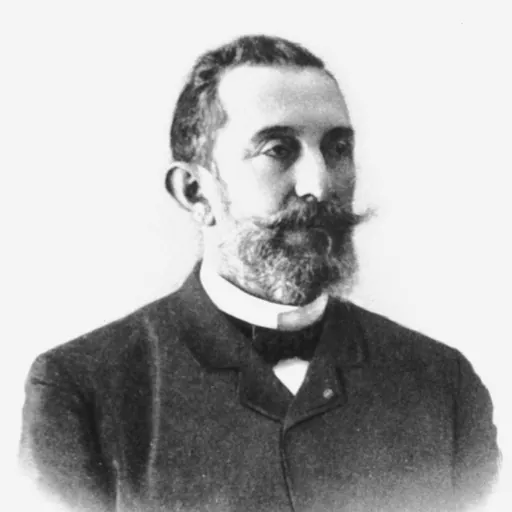
About Albert Pitres
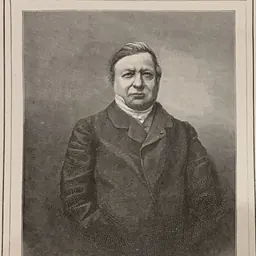
Lived 1848 – 1928 (aged 79). Albert Pitres was a French neurologist, physician, psychiatrist, dean, internist and neuropsychiatrist.
Jean Marie Marcel Albert Pitres (1848–1928) was a French medical doctor, professor of internal medicine at the Faculty of Medicine of Bordeaux, who founded the Bordeaux school of neuropsychiatry. As the student and collaborator of Jean Martin Charcot (1825–1893) at the Hôpital de la Salpêtrière in Paris, he contributed to research into cerebral localisation, language disorders, peripheral neuropathies and obsessions. As dean of the Faculty of Medicine and Pharmacy in Bordeaux for some twenty years, his contribution was key to the construction of a university campus dedicated to this faculty. The permanence of the military medical school in Bordeaux can be largely attributed to him. He established the first provincial chair of psychiatry in Bordeaux for his collaborator Emmanuel Régis (1855–1918).
Biography Pitres was born on 26 August 1848 at 13 Rue Traversière (now Rue Albert Pitres) in Bordeaux (Gironde). He died on 25 March 1928 in Bordeaux, where he lived at 119 Cours d’Alsace-Lorraine, at the age of 79, after falling down stairs. He was the son of Jean Adolphe Pitres, a landowner, and Madelaine Corali Rousseille, a grocer. As his father died when Pitres was eight years old, and his mother had few resources, he was the mainstay for his family. On 5 August 1880, he married Jeanne Trabut-Cussac (1860–1932), with whom he had five children. His first son, Jean Henri (1881–1881), died at the age of two months, his second, Jean Gustave (1882–1909), died at the age of 26 from pulmonary tuberculosis, and his youngest son, Edgard Jean Paul (1889–1971), became a bacteriologist.
Education
Albert Pitre began his medical studies in Bordeaux, in 1866 in Bordeaux at the St Côme School of Medicine and Surgery and at .
Albert Pitres served as an auxiliary doctor during the Franco-Prussian War of 1870. He then moved to Paris and, on the advice of Elie Gintrac, travelled throughout North America and the Mediterranean region for a year. In 1877, he defended his doctoral thesis supervised by Charcot.
In the late 1870s, together with his friend Charles-Émile François-Franck, who was also an intern, Albert Pitres trained in physiological research in the laboratory of Étienne-Jules Marey (1830–1904) at the Collège de France, where he performed studies on epilepsy and on the excitation of the cerebral cortex founder of the first Chair of histology at the Collège de France.
Hospital and academic career in Bordeaux
In 1878, Henri Gintrac, then Dean of the new Faculty of Medicine and Pharmacy, asked Albert Pitres to return to Bordeaux. Pitres felt duty bound to leave Paris because he needed a position that would enable him to provide for his family. In August 1914, they opened wards reserved for soldiers with psychiatric disorders at the Bordeaux asylum. Albert Pitres retired in 1919. Régis, who held the clinical Chair of mental diseases, died in 1918, so Pitres' student Jean Abadie succeeded him in the Chair.
Work and research
Research on cerebral localisations Albert Pitres's early research focus was on experimental physiology. and demonstrated that motor cortex lesions lead to degeneration of the pyramidal tracts. Pitres' interest in research on cerebral localisations is also manifest in his studies on the topography of the brain lesions implicated in Jacksonian epilepsy.
Research on language disorders and memory Albert Pitres is also known for his work on disorders of spoken and written language, and their connection to memory. He conducted studies on amnestic aphasia, aphasia in polyglots, and agraphia.
Research on other neurological disorders Albert Pitres' studies on peripheral nerve lesions were based on his observations of war injuries suffered by soldiers in the 1870 war and World War I. as well as the mechanisms of regeneration and compensation that counteract nerve severance. He also studied peripheral neuritis in diabetes with Louis Vaillard (1850–1935).
Pitres studied the neurological complications of syphilis, and, together with Jean Abadie, described the lack of sensitivity of the Achilles tendon to pressure exerted on the tabes, known as the "Abadie sign" but also sometimes called the "Pitres sign". Together with his student Jean-René Cruchet (1875–1959), whose thesis he supervised in 1902, he developed a method of respiratory gymnastics (the Brissaud method and the Pitres method) based on a ventilation technique designed to control motor tics, such as those occurring in Tourette's syndrome. Thanks to Pitres' clinical expertise in neurology, patients from all over the world were hospitalized in his department at . In them, he reproduced the staging of "hysterical" patients, as practised at Salpêtrière. and on obsessions and phobias. Pitres and Régis presented a Report on Obsessions and Fixed Ideas at the Moscow Congress in 1897, based on 250 personal observations. In 1902, they published a reference work on the same subject, illustrated with 110 clinical cases. Its title, Obsession and Impulses, was a direct reference to Freud's Obsessions and Phobias, published in 1895.
Research in pneumology Pitres is best known for his work in neurology and psychiatry, but he was also a specialist of internal medicine renowned for his studies on pleurisy.
Prevention of epidemics and access to healthcare for the "deprived" Albert Pitres was a pioneer in health care organisation and public health. Shocked upon his arrival in Bordeaux by the lack of organisation in the fight against infectious diseases, he was deeply committed to the prevention of epidemics and access to healthcare for the most deprived members of society. In 1903, Pitres was instrumental in the construction of the Foyer Dupreux, the first anti-tuberculosis dispensary in Bordeaux. He studied the transmission of tuberculosis among "deprived" families in the city of Bordeaux, and identified the link between poverty and the risk of infection. He was personally affected by the tuberculosis epidemic, as his second son died from the disease at the age of 26.
Development of the Faculty of Medicine and Pharmacy in Bordeaux
In his role as Dean of the Faculty, Albert Pitres followed in the footsteps of his mentor and predecessor, Henri Gintrac, and the latter's father.
Tributes
The Pitres Amphitheatre at the Victoire campus of the University of Bordeaux, in the historic premises of the Faculty of Medicine and Pharmacy, which was inaugurated in 1888. Street (rue) Albert Pitres in Bordeaux (formerly street Traversière, where Pitres's birthplace is located, renamed in his honour, in the Jardin Public district). Lane (allée) Albert Pitres in Lanton (Gironde), where Albert Pitres's house on the Arcachon Bay was located.
Don’t just read it —
keep it.
Full-length biographies made to live with: read them, listen on the way to work, watch them tonight.
- E-book
- Audio
- Video
Instant download · yours to keep · every purchase keeps this site free
Important facts
People in Albert Pitres's life
Named in this biography and alive at the same time

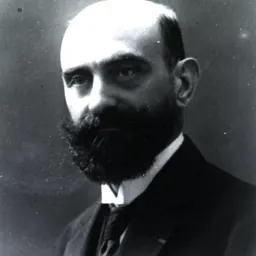

Related people
Same field, nearest in time
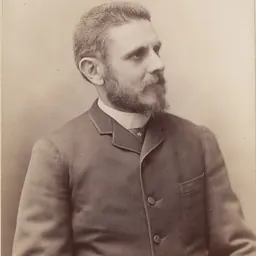
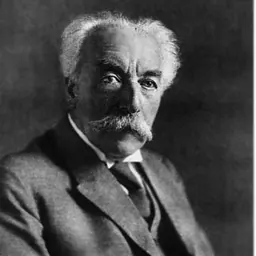


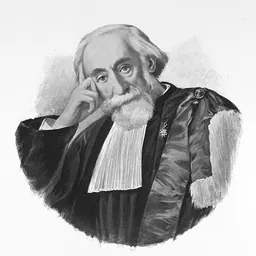

Contemporaries
People whose lives overlapped Albert Pitres's





Frequently asked questions
Who was Albert Pitres?
French neurological physician (1848–1928)
When was Albert Pitres born?
Albert Pitres was born on 26 August 1848 in Bordeaux.
When did Albert Pitres die?
Albert Pitres died on 25 March 1928 in Bordeaux.
What was Albert Pitres's occupation?
Albert Pitres was a neurologist, physician, psychiatrist, dean, internist and neuropsychiatrist.
What nationality was Albert Pitres?
Albert Pitres was French.
Sources & further reading
Cite this page
APA: Biography.guide. (2026). Albert Pitres. https://biography.guide/albert-pitres/
MLA: "Albert Pitres." Biography.guide, https://biography.guide/albert-pitres/.
Chicago: "Albert Pitres." Biography.guide. https://biography.guide/albert-pitres/.
Data last updated: 2026-09-23 · Spot an error? Report a correction.
Portrait: Wikimedia Commons · author & licence
Page generated 2026-09-27 05:05 UTC