
About Albert Maver Winn
Lived 1810 – 1883 (aged 72–73). Albert Maver Winn was an American military officer.
Albert Maver Winn (April 27, 1810 – August 26, 1883) was an American carpenter, military officer, politician, labor leader, Odd Fellow, Freemason and founder of the Native Sons of the Golden West.
Winn was born in Loudoun County, Virginia, came to California on May 28, 1849, and settled in Sacramento on June 25 of that year. He immediately became active in civic affairs and in the fall of 1849 was elected to Sacramento's first City Council in and selected as its President, he was ex-officio the first mayor of Sacramento. But unlike his successor, Hardin Bigelow, he was not elected directly to the office. He went on to be appointed the State Adjutant General and an early proponent of the small business community and labor reform movement. He remained in the state until his death and is remembered as one of the State's Founding Fathers.
General Winn not only made his contributions to the civil and military beginnings of Sacramento, he was a prime mover in the fraternal and religious life of his community as well. He founded the Sons of the Revolutionary Sires, later the Sons of the American Revolution, and was its first President. In 1851 he organized the Sacramento Odd Fellows General Relief Committee and he was elected its first president. He also was instrumental in the establishment of Grace Church (later St. Paul's), the first Episcopal church in Sacramento, of which he was both an officer and communicant. Winn was also a Mason. Indeed, his granddaughter wrote, "We are told that the general belonged to every fraternal society in Sacramento in the early days and it is quite probable that this is true." He founded the Native Sons of the Golden West (NSGW). General Winn died at Sonoma on August 26, 1883, and was buried in Sacramento.
Background
His family moved to Zanesville, Ohio, where he attended a one-room school and, at the age of 16, became a carpenter's apprentice. It was here that he began his interests in civic association which he later came to exemplify. In 1829 he married Catherine Gaffney in Zanesville, and they moved to Vicksburg, Mississippi, in 1832.
Career In keeping with conscription into the militia under state law, Albert attended military training. In light of his aptitude and education, Albert attended additional military schooling and was appointed a Lieutenant in the local militia in 1835. With his journeyman status and military rank, Albert was recommended for membership in the Fraternal order Independent Order of Odd Fellows. Here he met other ranking members of the local community and was introduced into political circles as a Jackson Democrat.
In 1836 he was promoted to the rank of Major in the militia and served as assistant quartermaster on the staff of Gov. Charles Lynch. Winn was appointed Drill Master in 1840, and on February 28, 1845, was made a Colonel in the First Regiment of the Mississippi Militia which became known as the Mississippi Rifles. He was one of the judges of an election board that elected Jefferson Davis as Colonel of the First Mississippi Regiment of Volunteers and with him later went on to serve in the Mexican War. It was at the Battle of Buena Vista when other American units began to be overrun by the Mexicans that Col. Davis gave the now-famous order, "Stand fast, Mississippians!" The regiment stood their ground and the battle was eventually won. Davis' order later became the regimental motto. The unit was instrumental in capturing Monterrey, and mustered for service in the Spanish–American War.
Winn was also the Secretary of the Phoenix Engine Fire Company and later President of the Master Carpenters and Joiners Society of Vicksburg. Under successive increasing grades of leadership, Winn was quickly noticed for his technical and leadership abilities. Under the auspices of these organizations, Winn was given authority to expand the networks and associations of these organizations into the growing American settlement in the West as part of the policy of Manifest Destiny.
On February 2, 1849, at the age of 38, Albert was ordered to establish and expand a new settlement in the recently organized state of California and help organize its civic and labor movement. Leaving his wife and son behind, he journeyed to New Orleans where he joined a Settlers and Explorers Company under Major Kinney. This company traveled by steamboat to Corpus Christi, Texas, and from there traveled overland to Durango, Mexico, where some members of the company split off to work on advance work with filibustering. Winn, however, continued to Mazatlán, from which Albert took a bark to San Francisco, arriving May 28, 1849. Winn then took a sailboat upriver to Freeport and walked from there to Sutter's Fort, where he arrived on June 15.
Work in California Proclamation to the people of Sacramento City, by order of the President and City Council. October 1, 1849 Arriving in Sacramento City on June 25, he immediately set up his carpenter's bench under the shade of an oak tree at the foot of K Street and commenced work on a coffin, which he immediately sold for $50. Organizing the various craftsmen of carpenters and craftsmen he soon had a large commercial enterprise which included a partnership with the Baker and McGhee General Store. On August 1 he was elected as a member of the Sacramento City Council and was chosen as its President on August 25.
To further cement the ties of the civic population in the growing town of Sacramento, Winn went about organizing the Independent Order of Odd Fellows. On August 20, for the purpose of providing assistance and relief to brother Odd Fellows who were suffering from illness and distress from their overland or ocean voyage, and to bury the dead, the first general meeting of the Odd Fellows was held at the general store. Winn's first order of business when he became President of the City Council was to ensure that the dead were provided a coffin for burial. Prior to then, the dead were buried in their blanket, in which they were sewn.
Sometime during Fall of 1849, Captain John Sutter gave Winn power of attorney to sell land and Winn, as Sutter's agent offered lots and farms on the Sacramento and Feather Rivers for sale. Winn also borrowed $5,000 in Sutter's name at 10% interest per month and failed to notify Sutter or furnish an accounting. Sutter learned of this indebtedness only when the Sheriff served an attachment on him. By that time the debt had grown to $35,000.
The following year, in honor of the centennial, he organized the descendants of the Revolutionary War to march in the Independence Day Parade at the Palace Hotel in San Francisco in 1876. After the march, he organized the body which went on to become the Sons of the American Revolution. This organization elected Winn as their first President, an office he held for five years.
Death A. M. Winn Grave Winn died in Sonoma, California, and his body was taken to Sacramento for the funeral. The Masons whose precepts he had so well adhered to, the Odd Fellows he had served so long and so faithfully, and the ministry of Grace Church he had helped to found might well have conducted his funeral, but this honor was given to the Native Sons of the Golden West who laid their Brother-Founder to rest under the ritual of the Order which gives back the body of the fallen son of California to the soil of his native state. Sacramento paid a high tribute to its first mayor, with courts and civic offices suspending business on the day of the funeral.
In 1887, the Grand Parlor voted to assess each member fifty cents to raise money for a monument on Winn's grave. The monument, erected in 1888 and restored in 2003 by Sunset Parlor #26, is a granite shaft fifteen feet high in the Pioneer Section of the Sacramento Historic City Cemetery. It is the tallest monument in the cemetery and a fitting tribute to the founder of the Native Sons of the Golden West.
Don’t just read it —
keep it.
Full-length biographies made to live with: read them, listen on the way to work, watch them tonight.
- E-book
- Audio
- Video
Instant download · yours to keep · every purchase keeps this site free
Important facts
People in Albert Maver Winn's life
Named in this biography and alive at the same time
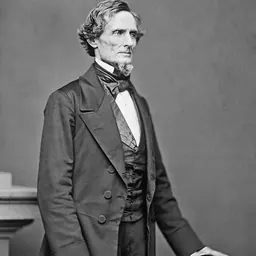

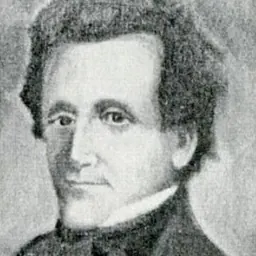
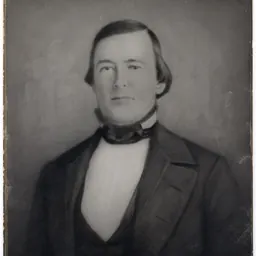

Related people
Same field, nearest in time

Contemporaries
People whose lives overlapped Albert Maver Winn's




Frequently asked questions
Who was Albert Maver Winn?
American military officer, politician, and freemason (1810–1883)
When was Albert Maver Winn born?
Albert Maver Winn was born in 1810.
When did Albert Maver Winn die?
Albert Maver Winn died on 26 August 1883.
What was Albert Maver Winn's occupation?
Albert Maver Winn was a military officer.
What nationality was Albert Maver Winn?
Albert Maver Winn was American.
Sources & further reading
· Wikipedia: Albert Maver Winn
Cite this page
APA: Biography.guide. (2026). Albert Maver Winn. https://biography.guide/albert-maver-winn/
MLA: "Albert Maver Winn." Biography.guide, https://biography.guide/albert-maver-winn/.
Chicago: "Albert Maver Winn." Biography.guide. https://biography.guide/albert-maver-winn/.
Data last updated: 2026-09-20 · Spot an error? Report a correction.
Page generated 2026-09-27 05:26 UTC