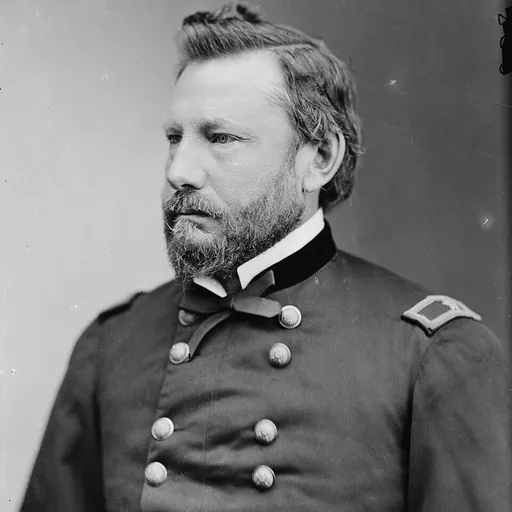
About Albert James Myer
Lived 1828 – 1880 (aged 51). Albert James Myer was an American military officer, surgeon and military personnel.
Albert James Myer (September 20, 1828 – August 24, 1880) was a surgeon and United States Army general. He is known as the father of the U.S. Army Signal Corps, as its first chief signal officer just prior to the American Civil War, the inventor of wigwag signaling, and also as the father of the U.S. Weather Bureau.
Early life Myer was born in Newburgh, New York, son of Henry Beekman Myer and Eleanor McClanahan Myer. The family moved to Western New York and after the death of his mother in 1834, he was raised primarily by his aunt in Buffalo.
Myer worked as a telegrapher before entering Geneva College (now Hobart College) in Geneva, New York, in 1842, at age 13, and from where he was graduated in 1847 as a member of The Kappa Alpha Society. He received his M.D. degree from Buffalo Medical College in 1851, while working part-time for the New York State Telegraph Company. His doctoral thesis, A New Sign Language for Deaf Mutes, showed concepts that he later used for his invention of aerial telegraphy.
He was ambitious and intellectually curious. It was said "that he was specially noted for the manner in which he would take hold of an idea or principle, and, following it to its length and breadth, develop all there was in it or of it." He inherited a large fortune from his family.
He engaged in private medical practice in Florida and then sought a commission as a U.S. Army assistant surgeon (lieutenant), entering service September 18, 1854, posted at Fort Duncan, Texas, and Fort Davis, Jeff Davis County, Texas.
In 1858, the Army expressed interest in Myer's invention and appointed a board to examine "the principles and plans of the signaling, mode of use in the field, and course to be pursued in introducing to the army." Myer appeared before the board, chaired by Lt. Col. Robert E. Lee, in 1859, and convinced them to authorize field testing of his invention. He conducted field tests starting in April of that year around New York Harbor. The tests were successful, and Secretary of War John B. Floyd recommended to Congress that the Army adopt Myer's system and that Myer be appointed as chief signal officer. Congress approved Myer's appointment as major and chief signal officer, and the Signal Corps was formed, despite opposition in the Senate by Jefferson Davis from Mississippi. Myer was sent to the Department of New Mexico for further field trials with the assistance of Samuel T. Cushing of his system in a campaign against the Navajos.
On August 24, 1857, he married Catherine Walden, daughter of a prominent Buffalo attorney, with whom he would have six children.
Ironically, the first use in combat of Myer's signaling system was by Confederate Captain Edward Porter Alexander at the First Battle of Bull Run. Alexander had been a subordinate of Myer's and assisted in the New York field trials.
In addition to his aerial signaling, Myer recognized the need for electrical telegraphy in field communications. He introduced a field telegraph train of wagons to support a device called the Beardslee telegraph, which used a dial instead of a key tapping Morse code, developed to require less training for its operators.
Myer's Signal Corps was actually a separate entity from the Military Telegraph Service, a War Department bureau staffed primarily by civilian telegraph operators. He had numerous organizational disputes with the Assistant Secretary of War over this function, attempting on several occasions to take control of all telegraphic operations. When he proposed to remove the less than dependable Beardslee device and recruit trained telegraphers into the Signal Corps, Secretary of War Edwin M. Stanton removed him from his post as chief signal officer He served as signal officer for the Department of the Gulf from August 1864 to 1865. Myer received the brevet grade in honor of his formation of the Signal Corps.
Postbellum career Albert J. Myer Memorial erected in 1931 for 50th anniversary of the 1881 renaming of Fort Myer at Whipple Field The U.S. Congress, on February 9, 1870, authorized "... meteorological observations at the military stations in the interior of the continent and at other points in the states and territories of the United States, and for giving notice on the northern lakes and seaboard by telegraph and signals of the approach and force of storms". This duty, previously conducted by the Smithsonian Institution, was assigned to General Myer's Signal Corps, due in part to his previous interests in storm telegraphy. It was the birth of the U.S. Weather Bureau, now the National Oceanic and Atmospheric Administration. In 1873 at the International Meteorological Congress of Vienna, he proposed a resolution for the establishment throughout the world of weather stations and daily exchange of simultaneous weather observations, the effective beginning of the World Meteorological Organization.
Myer was instrumental in the development of heliography in the U.S. Army. In 1877, he acquired heliograph instruments from the British Army for experimental purposes and sent them on to General Nelson A. Miles, at the Yellowstone Department in Montana. Miles developed expertise with the heliograph, which he used to great purpose in the Arizona Apache campaigns.
Myer headed the Signal Corps from August 21, 1867, until his death of nephritis at Buffalo, New York, in 1880. He is interred in the Walden-Myer Mausoleum at Forest Lawn Cemetery in Buffalo.
Legacy
Myer is honored by several entities: Fort Whipple, Virginia, was renamed Fort Myer in 1881; U.S. Army cable ship Albert J. Myer built in 1945 serving Army Signal Corps 1952–1966 then U.S. Navy service 1966–1994; the Albert J. Myer Center, the Signal Headquarters building of the U.S. Army Communication Electronics Command (CECOM) at Fort Monmouth, New Jersey; and the General Albert J. Myer Forecast Facility at the Buffalo Niagara International Airport. Hobart College awarded Myer an honorary LL.D. degree in 1872 and Union College conferred an honorary Ph.D. on him in 1875.
Don’t just read it —
keep it.
Full-length biographies made to live with: read them, listen on the way to work, watch them tonight.
- E-book
- Audio
- Video
Instant download · yours to keep · every purchase keeps this site free
Important facts
People in Albert James Myer's life
Named in this biography and alive at the same time

Related people
Same field, nearest in time

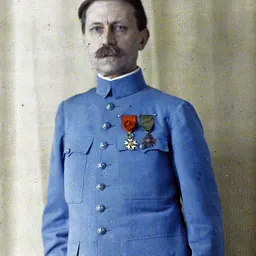
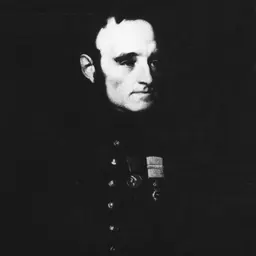
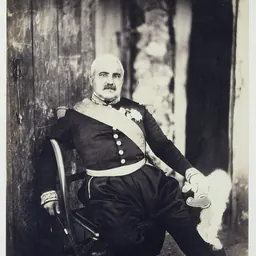
Contemporaries
People whose lives overlapped Albert James Myer's





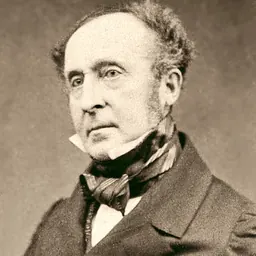
Frequently asked questions
Who was Albert James Myer?
Union Army general (1828-1880)
When was Albert James Myer born?
Albert James Myer was born on 20 September 1828 in Newburgh.
When did Albert James Myer die?
Albert James Myer died on 24 August 1880 in Buffalo.
What was Albert James Myer's occupation?
Albert James Myer was a military officer, surgeon and military personnel.
What nationality was Albert James Myer?
Albert James Myer was American.
Sources & further reading
· Wikipedia: Albert James Myer
Cite this page
APA: Biography.guide. (2026). Albert James Myer. https://biography.guide/albert-james-myer/
MLA: "Albert James Myer." Biography.guide, https://biography.guide/albert-james-myer/.
Chicago: "Albert James Myer." Biography.guide. https://biography.guide/albert-james-myer/.
Data last updated: 2026-09-20 · Spot an error? Report a correction.
Portrait: Wikimedia Commons · author & licence
Page generated 2026-09-27 04:58 UTC