
About Albert Inkpin
Lived 1884 – 1944 (aged 59). Albert Inkpin was a British general secretary, politician and clerk.
Albert Samuel Inkpin, (also written Inkpen) (16 June 1884 – 29 March 1944) was a British communist and the first General Secretary of the Communist Party of Great Britain (CPGB). He served several terms in prison for political offences. In 1929 he was replaced as head of the CPGB and made head of the party's Friends of Soviet Russia organisation, a position he retained until his death.
Biography Early years Albert Inkpin was born on 16 June 1884 in Haggerston, London. His father was a cabinet-maker, and his mother planned that he would attend theological college. Inkpin's brother, Harry, also went on to become a communist.
At the insistence of his mother, Inkpin became a clerk.
In 1913 Inkpin was elected General Secretary of the BSP. He was a committed internationalist and anti-militarist, an opponent of World War I, and a delegate to the Zimmerwald Conference. This placed him at odds with former SDF leader H. M. Hyndman's support of British participation in the conflict. This tension between the Left and Right the BSP ended in 1916 with Hyndman and his co-thinkers departing the group. Inkpin assumed editorship of the BSP's weekly newspaper, The Call, at this time. Inkpin's application in 1917 as a conscientious objector for exemption from military service was rejected by the Hornsey military service tribunal and the Middlesex Appeal Tribunal, but he was temporarily exempted as he was a leading figure in a political party and, ultimately, he did not serve. These delegates included Inkpin's wife, Julia, and brother, Harry.
Inkpin was named a member of the honorary presidium of the 3rd World Congress of the Communist International, held in Moscow during the summer of 1921. He returned from Soviet Russia to face more legal difficulties with British authorities. He was charged and convicted for printing and circulating Communist literature, serving a six-month term from January to June 1922. While in prison Inkpin stood as a candidate for London County Council. He was cremated at Golders Green Crematorium.
Publications by Albert Inkpin "Re-Establishing" the Second International: The Communist Party of Great Britain Replies to a Letter of Appeal Signed by Arthur Henderson (for the British Labour Party), J.H. Thomas and Harry Gosling (for the Trades Union Congress), and J. Ramsay MacDonald (for the Second International). London: Communist Party of Great Britain, n.d. [c. 1921]. The Glory of Stalingrad. London: Russia Today Society, 1942. Friends of the USSR: The Story of the Russia Today Society. London: Russia Today Society, n.d. .
Footnotes
Don’t just read it —
keep it.
Full-length biographies made to live with: read them, listen on the way to work, watch them tonight.
- E-book
- Audio
- Video
Instant download · yours to keep · every purchase keeps this site free
Important facts
People in Albert Inkpin's life
Named in this biography and alive at the same time
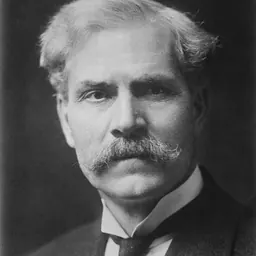

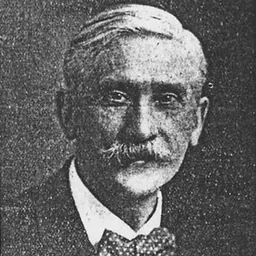
Related people
Same field, nearest in time





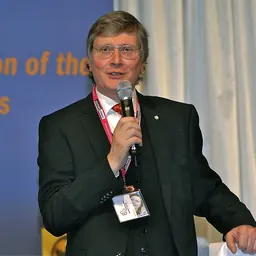
Contemporaries
People whose lives overlapped Albert Inkpin's
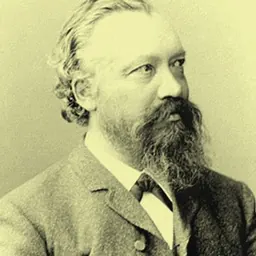

Frequently asked questions
Who was Albert Inkpin?
British communist politician (1884–1944)
When was Albert Inkpin born?
Albert Inkpin was born on 16 June 1884 in Haggerston.
When did Albert Inkpin die?
Albert Inkpin died on 29 March 1944 in Edmonton.
What was Albert Inkpin's occupation?
Albert Inkpin was a general secretary, politician and clerk.
What nationality was Albert Inkpin?
Albert Inkpin was British.
Sources & further reading
Cite this page
APA: Biography.guide. (2026). Albert Inkpin. https://biography.guide/albert-inkpin/
MLA: "Albert Inkpin." Biography.guide, https://biography.guide/albert-inkpin/.
Chicago: "Albert Inkpin." Biography.guide. https://biography.guide/albert-inkpin/.
Data last updated: 2026-09-20 · Spot an error? Report a correction.
Page generated 2026-09-27 05:19 UTC