
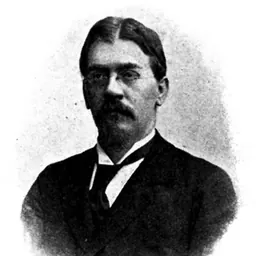
Albert Göring
German engineer, businessman, and the younger brother of Hermann Göring
About Albert Göring
Lived 1895 – 1966 (aged 71). Albert Göring was a German and Austrian mechanical engineer, resistance fighter and businessperson.
Anti-Nazi activity Göring seemed to have acquired his godfather's character as a bon vivant and looked set to lead an "unremarkable life" as a filmmaker, until the Nazis came to power in 1933. Unlike his elder brother Hermann, a leading party member, Albert Göring despised Nazism and the brutality involved.
Many anecdotal stories exist about Göring's resistance to the Nazi ideology and regime. For example, Albert is reported to have joined a group of Jewish women who had been forced to scrub the street. The SS officer in charge inspected his identification, and ordered the group's scrubbing activity to stop after realizing he could be held responsible for allowing Hermann Göring's brother to be publicly humiliated.
Albert Göring used his influence to get his Jewish former boss Oskar Pilzer freed after the Nazis arrested him. Göring then helped Pilzer and his family escape from Germany. He is reported to have done the same for numerous other German dissidents.
Göring intensified his anti-Nazi activity when he was made export director at the Škoda Works in the Protectorate of Bohemia and Moravia (occupied part of the former Czechoslovakia). He encouraged minor acts of sabotage and had contact with the Czech resistance. On many occasions, he forged his brother's signature on transit documents to enable dissidents to escape. When he was caught, he used his brother's influence to gain his release. Göring also sent trucks to Nazi concentration camps with requests for labourers. The trucks would stop in an isolated area, and their passengers were then allowed to escape.
After the war, Albert Göring was questioned during the Nuremberg trials. However, many of those he had helped testified in his defense, and he was released. Soon afterwards, Göring was arrested by Czechoslovak authorities, but again released when the full extent of his activities became known.
In 2010, Edda Göring, the daughter of Hermann, said of her uncle Albert in The Guardian:
Later life On his release, Göring returned to Germany, but was shunned because of his family name. He found occasional work as a writer and translator, and lived in a modest flat far from the baronial splendour of his childhood. Having known of his infidelities, his Czech wife Mila divorced him and migrated to Lima, Peru, with their daughter Elizabeth. In his last years, Göring lived on a pension from the government. He knew that if he married, on his death the pension payments would be transferred to his wife. As a sign of gratitude, he married his housekeeper in 1966 so she would receive his pension. One week later, Albert Göring died without his wartime anti-Nazi activities having been publicly acknowledged.
Although Göring lived out his last years in Munich in Bavaria, he died further away in a hospital in Neuenbürg in the neighbouring state of Baden-Württemberg.
Reception and popular culture Albert Göring's story remained largely unknown to the public even three decades after his death. While his brother Hermann Göring was the subject of many publications, Albert received little or no attention. One exception was a short article in German weekly magazine aktuell by writer Ernst Neubach in the early 1960s, when Göring was still alive. At the end of the 20th and beginning of the 21st century, Albert Göring and his work became the subject of several books and documentaries, in turn triggering a larger number of new publications.
Books In 2006, British author James Wyllie published a double biography The Warlord and the Renegade. Göring was also covered in the 2011 book (Resistance to save) by German historian and Holocaust survivor Arno Lustiger.
Göring's humanitarian efforts were recorded by William Hastings Burke in the book Thirty Four . A review of the 2009 book in The Jewish Chronicle concluded with a call for Albert Göring to be honoured at the Yad Vashem memorial; however, Yad Vashem subsequently announced that Göring would not be listed as Righteous Among the Nations, stating that although "here are indications that Albert Goering had a positive attitude to Jews and that he helped some people," there is not "sufficient proof, i.e., primary sources, showing that he took extraordinary risks to save Jews from danger of deportation and death."
Documentaries Göring was the subject of film documentaries, the first and most extensive being The Real Albert Goering, produced by 3BM TV and broadcast in the United Kingdom in 1998. The documentary was picked up by the History Channel for foreign distribution and made its way to other countries, notably the United States, during the early 2000s. Roughly a decade later, William Hastings Burke produced a documentary based on his book, and in 2014 Véronique Lhorme's was broadcast on French TV.
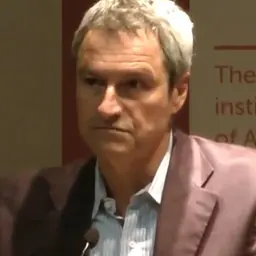
In January 2016, German TV channel Das Erste broadcast the docudrama (The Good Göring) with Barnaby Metschurat as Albert Göring and Francis Fulton-Smith as his brother Hermann. In 2018, Emmanuel Amara directed ("Göring's List") for . A BBC Radio 4 documentary entitled The Good Göring, also broadcast in January 2016, featured an investigation of the life of Albert Göring by British journalist and broadcaster Gavin Esler.
Don’t just read it —
keep it.
Full-length biographies made to live with: read them, listen on the way to work, watch them tonight.
- E-book
- Audio
- Video
Instant download · yours to keep · every purchase keeps this site free
Important facts
Family & relationships
People in Albert Göring's life
Named in this biography and alive at the same time



Related people
Same field, nearest in time



Contemporaries
People whose lives overlapped Albert Göring's

Frequently asked questions
Who was Albert Göring?
German engineer, businessman, and the younger brother of Hermann Göring (1895-1966)
When was Albert Göring born?
Albert Göring was born on 9 March 1895 in Friedenau.
When did Albert Göring die?
Albert Göring died on 20 December 1966 in Munich.
What was Albert Göring's occupation?
Albert Göring was a mechanical engineer, resistance fighter and businessperson.
What nationality was Albert Göring?
Albert Göring was German and Austrian.
Sources & further reading
Cite this page
APA: Biography.guide. (2026). Albert Göring. https://biography.guide/albert-goring/
MLA: "Albert Göring." Biography.guide, https://biography.guide/albert-goring/.
Chicago: "Albert Göring." Biography.guide. https://biography.guide/albert-goring/.
Data last updated: 2026-09-26 · Spot an error? Report a correction.
Page generated 2026-09-27 05:14 UTC