About Albert G. Brown
Lived 1813 – 1880 (aged 67). Albert G. Brown was an American politician, lawyer and judge.
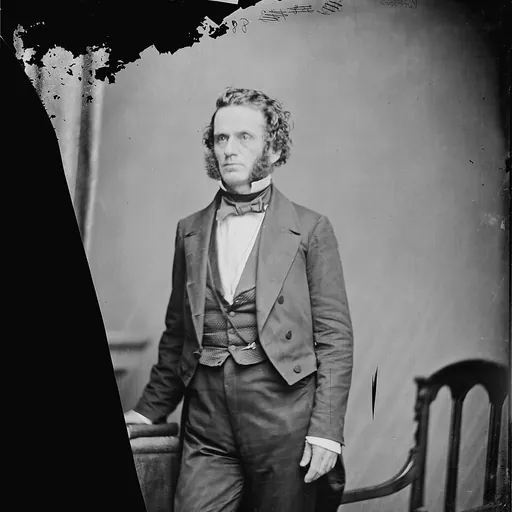
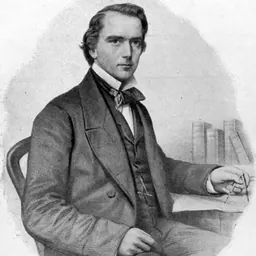
Albert Gallatin Brown (May 31, 1813 – June 12, 1880) was Governor of Mississippi from 1844 to 1848 and a Democratic United States senator from 1854 to 1861, when he withdrew during the secession crisis. A prominent Fire-Eater and advocate for the expansion of slavery, Brown served as a Confederate senator for Mississippi in the Confederate States Congress, then retired from public life after the American Civil War.
Early life He was born to Joseph and Elizabeth (Rice) Brown, a poor family of hog farmers, in the Chester District of South Carolina, at the foothills of the Appalachian Mountains in 1813. The family were farmers originally from Charlotte County, Virginia, from where Brown's grandfather had moved to South Carolina in the 1770s. The family can be tracked to Lincolnshire, England from where the first Brown ancestor arrived in Virginia in 1697, and moved to Charlotte County in the 1720s
Political career During his lifetime, Brown was one of the most popular and the most influential men in Mississippi. He is considered to be the father of the public school system and of the University of Mississippi. His rhetorical attacks on illiteracy are considered to have made a substantial contribution to the cause of education in Mississippi.
He was also a Fire-Eater and a strong advocate for the expansion of slavery. In 1858, he said: "I want a foothold in Central America... because I want to plant slavery there.... I want Cuba... Tamaulipas, Potosi, and one or two other Mexican States; and I want them all for the same reason - for the planting or spreading of slavery." Indeed, he went on to say, "I would spread the blessings of slavery, like the religion of our Divine Master, to the uttermost ends of the earth."
To those who agreed with such views, "Albert Gallatin Brown possessed magical powers. With many learnt spells, handsome countenance surrounded by a luxuriant, flowing beard and dark-curly hair, in every sense he looked distinguished. Courageous, he was void of vanity; animated, he was persuasive; his spirit, crackerish to the extreme." Reuben Davis, who knew him well, states in his book Reminiscences on Mississippi and Mississippians that Brown "was the best-balanced man I ever knew.... In politics, he had strategy with-out corruption, and handled all his opponents with skill but never descended to intrigue."
Brown began his political career in the Mississippi Legislature, winning an election in 1835 to represent Copiah County and serving as House speaker pro tempore. Brown then ran as a Democrat to represent Mississippi's single at-large district in the US House of Representatives, winning the seat in 1839. He declined to run for reelection to Congress and was elected as a circuit judge in 1841. He was elected governor of Mississippi in 1843, defeating his Whig opponent by a margin of nearly 10%, and winning reelection by a landslide in the 1845 election. Prevented by term limits from running for Governor again, he won an 1847 election to represent Mississippi's 4th congressional district. When one of Mississippi's US Senate seats became vacant in 1854, Brown's loyalists in the state legislature voted for him to become senator. Re-elected to the Senate in 1859, he then withdrew following Mississippi's secession from the United States in January, 1861.
At the start of the Civil War Brown raised a company of volunteer infantry, which entered service as Company H of the 18th Mississippi Infantry Regiment. Governor John J. Pettus offered Brown a position as a general in Mississippi's state army, but he declined, instead joining his regiment in Virginia as captain of the Confederate company he had recruited.
Brown left the army in 1862 when he was elected to serve as one of Mississippi's senators in the Confederate States Congress. He was reelected to that position and served in the Confederate Senate until the end of the war. During Reconstruction he advocated for reconciliation, which made him unpopular in his home state. Brown never resumed public office following the war. In Incidents in the Life of a Slave Girl, a narrative written by the escaped slave Harriet Jacobs, Brown is called out by Jacobs for supporting slavery in a speech to Congress despite the fact that he "could not be ignorant of [the wrongdoings perpetrated against slaves], for they are of frequent occurrence in every Southern State."
Brown County, Kansas, is named after him.
In popular culture In the 1992 alternate history/science fiction novel The Guns of the South by Harry Turtledove, Brown is an important supporting character.
Don’t just read it —
keep it.
Full-length biographies made to live with: read them, listen on the way to work, watch them tonight.
- E-book
- Audio
- Video
Instant download · yours to keep · every purchase keeps this site free
Important facts
People in Albert G. Brown's life
Named in this biography and alive at the same time

Related people
Same field, nearest in time




Contemporaries
People whose lives overlapped Albert G. Brown's





Frequently asked questions
Who was Albert G. Brown?
American politician (1813-1880)
When was Albert G. Brown born?
Albert G. Brown was born on 31 May 1813 in Chester County.
When did Albert G. Brown die?
Albert G. Brown died on 12 June 1880 in Terry.
What was Albert G. Brown's occupation?
Albert G. Brown was a politician, lawyer and judge.
What nationality was Albert G. Brown?
Albert G. Brown was American.
Sources & further reading
Cite this page
APA: Biography.guide. (2026). Albert G. Brown. https://biography.guide/albert-g-brown/
MLA: "Albert G. Brown." Biography.guide, https://biography.guide/albert-g-brown/.
Chicago: "Albert G. Brown." Biography.guide. https://biography.guide/albert-g-brown/.
Data last updated: 2026-09-23 · Spot an error? Report a correction.
Portrait: Wikimedia Commons · author & licence
Page generated 2026-09-27 05:06 UTC