
About Albert Coates
Lived 1895 – 1977 (aged 81–82). Albert Coates was an Australian neurosurgeon and surgeon.
Sir Albert Ernest Coates OBE, FRCS (1895–1977) was an Australian surgeon and soldier. He served as a medical orderly in World War I serving on Gallipoli, and as a senior surgeon for the Australian Army Medical Corps in World War II in Malaya. His primary school teacher, Mr Leslie Morshead, later Lt-Gen Sir Leslie Morshead, CO 9th Div AIF, offered to teach Albert at night school. He studied languages and sciences, and at 18 years sat the matriculation equivalent, receiving 5 distinctions. He left his apprenticeship and obtained work at the Melbourne and subsequently Wangaratta PO while he studied pre-med subjects to facilitate his enrollment in the University of Melbourne medical school.
First World War service In 1914 Coates enlisted in the 7th Battalion as a medical orderly and the following year served on Gallipoli. Coates was one of the last to leave the peninsula on the night of 19/20 December 1915. His battalion was then transferred to France in March 1916 and fought in the battle of the Somme. His skill as a linguist came to the attention of his superiors and in February 1917 he was attached to the intelligence staff, I Anzac Corps. Sir John Monash and British authorities recognised his ability and, at the end of the war, he was invited to apply for a commission in the British Army. Coates preferred, however, to go home to Australia where he found employment in the office of the Commonwealth censor in Melbourne.
POW Burma-Thailand Railway The operating theatre at the prisoner-of-war hospital, Nakom Paton, Thailand, where Coates was Chief Medical Officer. In May 1942 the Japanese moved Coates to Burma. At the Kilo-30 and Kilo-55 camps on the Burma-Thailand Railway he cared for hundreds of prisoners of war under deplorable conditions. Coates subsequently described his medical practice at Kilo-55 to the International Military Tribunal for the Far East: in a bamboo lean-to, with his only instruments a knife, two pairs of artery forceps and a saw (used by the camp butchers and carpenters), his daily work consisted of 'segregating the sick from the very sick . . . curetting seventy or eighty ulcers during the morning . . . and, in the afternoon, proceeding to amputate nine or ten legs'. He was knighted in 1955 and in 1981 was made a Member of the Order of the British Empire (Civil) for his "services to the handicapped and veterans".
A statue in honour of Sir Albert Ernest Coates is located in the main street of his home town of Ballarat. A laneway in the Queen Victoria Village is named Albert Coates Lane in his honour.
On 8 September 2006, the University of Ballarat renamed its student union building the Albert Coates Complex.
The Sir Albert Coates Oration is an annual event at the University of Ballarat. thumb
Don’t just read it —
keep it.
Full-length biographies made to live with: read them, listen on the way to work, watch them tonight.
- E-book
- Audio
- Video
Instant download · yours to keep · every purchase keeps this site free
Important facts
People in Albert Coates's life
Named in this biography and alive at the same time
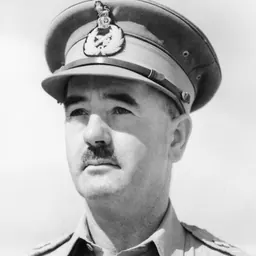


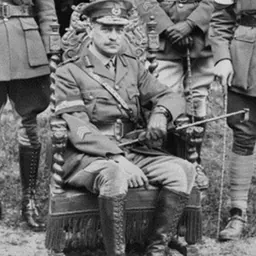
Related people
Same field, nearest in time


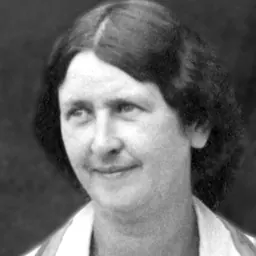

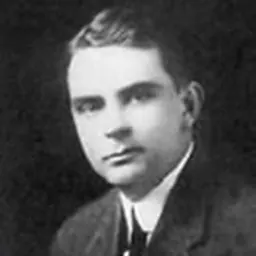
Contemporaries
People whose lives overlapped Albert Coates's


Frequently asked questions
Who was Albert Coates?
Australian surgeon (1895–1977)
When was Albert Coates born?
Albert Coates was born in 1895 in Ballarat.
When did Albert Coates die?
Albert Coates died in 1977.
What was Albert Coates's occupation?
Albert Coates was a neurosurgeon and surgeon.
What nationality was Albert Coates?
Albert Coates was Australian.
Sources & further reading
· DBpedia: Albert Coates (surgeon)
Cite this page
APA: Biography.guide. (2026). Albert Coates. https://biography.guide/albert-coates-neurosurgeon/
MLA: "Albert Coates." Biography.guide, https://biography.guide/albert-coates-neurosurgeon/.
Chicago: "Albert Coates." Biography.guide. https://biography.guide/albert-coates-neurosurgeon/.
Data last updated: 2026-09-20 · Spot an error? Report a correction.
Page generated 2026-09-27 05:27 UTC