
About Albert Chevalier
Lived 1861 – 1923 (aged 62). Albert Chevalier was a comedian, singer and actor.
Albert Chevalier (often listed as Albert Onésime Britannicus Gwathveoyd Louis Chevalier; 21 March 186110 July 1923) was an English music hall comedian, singer and musical theatre actor. He specialised in cockney related humour based on life as a costermonger in London during the Victorian era. Owing to this and his ability to write songs, he became known to his audiences as the "costers' laureate".
Born in London to a French father and Welsh mother, his name at birth was registered simply as "Albert Chevalier", but he gained the unusual middle names "Onésime Britannicus Gwathveoyd Louis" during his career. He showed an interest in entertainment from an early age through his private performances to family and friends. He made his debut on the amateur stage when he was eight, performing in Julius Caesar, at the local Cornwall Hall. Soon after, he joined a local amateur dramatics group before changing his stage name to "Albert Knight".
Chevalier joined the music hall circuit in the 1880s and over the decade became very successful. His success meant that from the early 1890s he was able to choose which theatres to perform in and often performed at three or four halls each night. Together with his brother Charles Ingle he wrote a number of highly successful coster songs to support his act including "Wot Cher! Knocked 'em in the Old Kent Road", "The Future Mrs. 'Awkins", "Appy 'Ampstead", and the melodrama "My Old Dutch". As well as in London, Chevalier became popular with audiences in the English provinces which he toured over the length of his career.
During the 1910s Chevalier moved from comedy into music composition for straight plays. With a deteriorating health his final appearance was in My Old Dutch at the Lyceum Theatre in 1920. The play was based on Chevalier's own song of the same name and had some success. The play ran for over a year and Chevalier completed his last performance in November 1922. He died aged 62 and was buried in Abney Park cemetery in the same plot as his son and father-in-law George Leybourne.
Biography
Early life
Chevalier was born at 17 St Ann's Villas, Royal Crescent, London. The son of Jean Onésime Chevalier, a French master at Kensington School, and his Welsh wife, Ellen Louisa Mathews; he had five siblings, two of whom died in infancy. His surviving brothers were Bertram, who in later life became a freelance photographer, and Auguste, who was better known as Charles Ingle, a composer of music hall songs. Chevalier was educated at Clanricarde College, Bayswater, and later, St Mary's College, Richmond.
In 1869 Chevalier made his amateur debut on the stage performing as Mark Anthony in Shakespeare's Julius Caesar, at Cornwall Hall in Notting Hill. A year later, on 17 August, and at the same venue, he performed some minor scenes from The September Gale, this time to a paying audience. where he adopted the stage name, Albert Knight. When he left education, and to pay his drama fees, Chevalier took up a position as a clerk in a newspaper office, and then as a pupil teacher. It was in that job that his father introduced him to the playwright Dion Boucicault who arranged for a friend to mentor Chevalier's start in the theatre.
Theatrical beginnings
In 1876 Chevalier organised two amateur performances of The Quack Doctor and Handy Andy both of which he produced and starred in. #tag:ref|Chevalier's brother Charles played Squire O' Grady in Handy Andy while Chevalier himself took the title role. In The Quack Doctor Chevalier played Victor Dubois. Chevalier's first professional appearance was alongside Madge Kendal and her husband William in An Unequal Match at the Prince of Wales's Theatre, London, on 29 September 1877; Chevalier appeared in the piece under his chosen stage name, Albert Knight. The following year the Kendals engaged him to play the part of "Sam Winkle" in the drama The Omadhaun Witness and then in a small role in the comic farce Checkmate.
The following January, and owing to Arthur Cecil's introduction of him to the Kendals, the show's producers, Chevalier toured for the first time in the highly successful melodrama Diplomacy in which he took the small role of "Antoine"; midway through the tour, Chevalier decided to change his stage name to his real moniker. The provincial press were complimentary of the show and singled out Chevalier in particular for his role. A critic for the Edinburgh Daily Review noted that although his part was small, "Mr. Chevalier's Antoine should be praised", while a theatre reviewer from the Liverpool Daily Post commented "The Parisian quaintness of Antoine, the "major domo of the Parisian ménage is exactly hit off by Mr. Chevalier."
Chevalier remained until the end of the tour, after which he was engaged to appear at the Court Theatre, London in the comedy A Scrap of Paper in which he played the role of "Jones". The show opened on 6 January 1879 and was, according to Chavalier's biographer Brian Daley, "met with unquestioned success". The following month he took a minor part in The Ladies Battle in which he took the role of "Montrichard", a characterisation which Daley describes as being "inimitable". Through the summer of 1879 he undertook a series of small roles for the Kendals in Liverpool. Towards the end of that year he was chosen by the Kendals to understudy for the main actors in the short plays M. le Duc, The Queen's Shilling and A Regular Fix.
1880s In February 1881 Chevalier was chosen to form part of a touring company headed by the cellist and composer Auguste van Biene on a provincial tour of England. The classical plays, La Somnambula and The Grand Duchess were unsuccessful and the company were forced to raise funds by staging small concerts in rundown theatres in nearby towns. It was Chevalier's job to sing comic-songs, accompanied by a backdrop of classical music. They were booed and hissed from the audience who were leaving the hall rapidly. At the last minute Chevalier stepped in and performed a short ditty as "Sammy Stammers" which, as the title suggests, was a character with a stutter who sang comic songs. The audience believed his affliction and ridiculed him as they left. Unperturbed, van Biene staged Don Giovanni the following night, but the lead singer failed to show. Chevalier offered his services to van Biene and assumed the role with the added promise that he could make the show his own. During a break, Chevalier borrowed a box of props from the storeroom and went back on to impersonate the music hall star George H. Chirgwin. The show went well and he stayed with the company for the remainder of the tour.
A few months later Chevalier was recruited for a short tour of Scotland. Among the places he visited were Glasgow, Coatbridge and Greenock the latter in which he enjoyed much success in the burlesques False Glitter and the show's after piece, Peebles.
Chevalier was engaged to appear in Arthur Pinero's The Magistrate in 1885 and The Schoolmistress the following year. In 1889 he became the principal comedian at the Avenue Theatre, predominantly in burlesques. Throughout the 1880s he was a prolific writer of songs, including "Our 'armonic Club", which was written for the burlesque Aladdin, or, The Wonderful Scamp in around 1888. Writing in his memoirs, Carroll thought was "decidedly good as an actor; but as a comic singer (with considerable powers of pathos as well), he [was] quite first rate."
He appeared in character as a costermonger, and sang "The Coster's Serenade", "The Nasty Way 'e Sez It", and "Funny Without Being Vulgar".
Chevalier based his act upon the performances of Alfred Vance, a cockney comedian from the beginnings of the English music hall tradition. Chevalier also drew inspiration from the London characters of Charles Dickens, including Sam Weller, whom Chevalier had played unsuccessfully in a touring show. For the tour, he updated the character by modernising the dialogue and mixing it with the performance style used by mid-century cockney performers, including Vance. The changes resulted in Chevalier inventing a new, sentimental variation of Vance's "criminal coster", which was loosely based on a working-class Londoner. Chevalier travelled to New York in 1896 where he repeated his success at Koster and Bial's Music Hall. Despite suffering stage fright, the appearance was a success for the comedian, and he was hailed as one of the city's idols. During the 1900s he became one of the highest paid music hall stars in London, earning up to £450 per week. He played the title role in J. M. Barrie's Pantaloon (1906) and in the same year appeared with the French chanteuse Yvette Guilbert. The writer Richard Anthony Baker highlighted the "snobbery" of some theatre critics who thought that music hall entertainment was "innately inferior to the legitimate theatre". However, Baker opined that although Chevalier was an "entertainer and lyricist of considerable talent", the sentimentality of his act would, when compared to modern entertainment, be thought of as outdated." In 2026 a new development of retail units and apartments above were named 'Chevalier House' in commemoration of him.
Notes and references
Don’t just read it —
keep it.
Full-length biographies made to live with: read them, listen on the way to work, watch them tonight.
- E-book
- Audio
- Video
Instant download · yours to keep · every purchase keeps this site free
Important facts
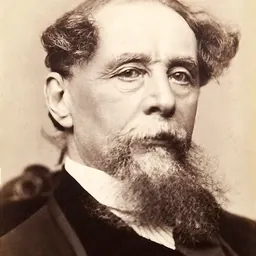
People in Albert Chevalier's life
Named in this biography and alive at the same time






Related people
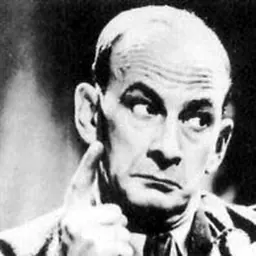
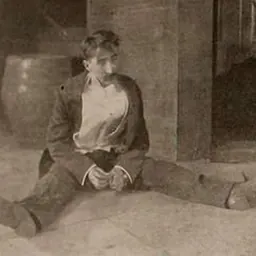
Same field, nearest in time



Contemporaries
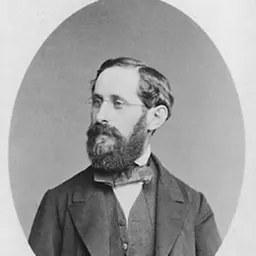
People whose lives overlapped Albert Chevalier's


Frequently asked questions
Who was Albert Chevalier?
English music hall comedian and singer (1861-1923)
When was Albert Chevalier born?
Albert Chevalier was born on 21 March 1861 in Kingdom of England, England.
When did Albert Chevalier die?
Albert Chevalier died on 10 July 1923.
What was Albert Chevalier's occupation?
Albert Chevalier was a comedian, singer and actor.
Sources & further reading
Cite this page
APA: Biography.guide. (2026). Albert Chevalier. https://biography.guide/albert-chevalier/
MLA: "Albert Chevalier." Biography.guide, https://biography.guide/albert-chevalier/.
Chicago: "Albert Chevalier." Biography.guide. https://biography.guide/albert-chevalier/.
Data last updated: 2026-09-20 · Spot an error? Report a correction.
Page generated 2026-09-27 05:18 UTC