
About Alannah Currie
Born 1957. Alannah Currie is a New Zealand singer, songwriter and composer.
Alannah Joy Currie (born 20 September 1957) is a New Zealand artist based in London. She is a musician and activist, best known as a former member of the pop band Thompson Twins.
Career Born in New Zealand and trained as a journalist, Currie emigrated to the UK in 1977. Currie squatted in South London. She formed a band the Unfuckables that performed a single gig.
In 1981, Currie joined Tom Bailey, Joe Leeway, and others to form part of Thompson Twins, the line-up of which included up to seven members in its early days. Thompson Twins became a trio in 1982 and signed two major recording contracts with Arista Records before signing with Warner Bros. Records. Currie was a lyricist, percussionist, visual stylist, and backing vocalist in the band for 15 years.
She co-wrote and recorded six studio albums which included gold and platinum records and the hits "Doctor! Doctor!", "Hold Me Now", and "You Take Me Up". The band performed at the JFK Stadium, Philadelphia for the 1985 Live Aid concert and worked with artists including Nile Rodgers, Madonna, Grace Jones, Alex Sadkin, Matthew Seligman and Jerry Harrison of Talking Heads amongst others. Her songwriting credits also include "I Want That Man", an international hit for Deborah Harry in 1989.
In 1984 the band participated in the "first international satellite installation" by Nam June Paik, "Good Morning, Mr. Orwell".
By 1992, Currie and her then husband, fellow Thompson Twins band member Tom Bailey, elected to form Babble, featuring Currie as lyricist, percussionist and visual artist, as a means of creating music without the commercial expectations that were placed on Thompson Twins. In 1994 Babble released their debut studio album, The Stone. Currie later returned to New Zealand working primarily as a glass artist and environmental activist. She was the founder of the women's anti-genetic engineering movement Mothers Against Genetic Engineering in Food and the Environment (MAdGE). In 2003 she designed a series of protest billboards that caused controversy in New Zealand and won several international art and science awards.
In 2004 she returned to London where she works under the name Miss Pokeno and makes art that fuses "joyful dissent" with disruptive and uncomfortable narratives. Her practice plays on the boundary between the humorous and threatening, as with the (semi-) mythological militant feminists The Sisters of Perpetual Resistance and the Armchair Destructivists. She has a studio in London called Doyce Street Studios Projects.
Don’t just read it —
keep it.
Full-length biographies made to live with: read them, listen on the way to work, watch them tonight.
- E-book
- Audio
- Video
Instant download · yours to keep · every purchase keeps this site free
Important facts
People in Alannah Currie's life
Named in this biography and alive at the same time
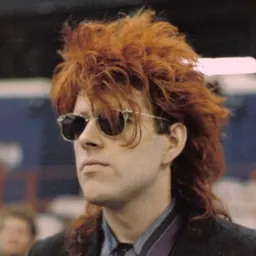




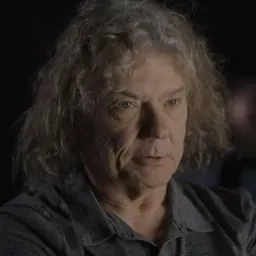

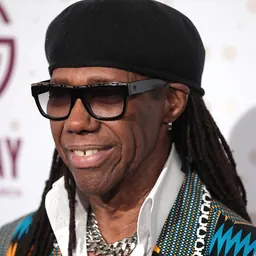
Related people
Same field, nearest in time

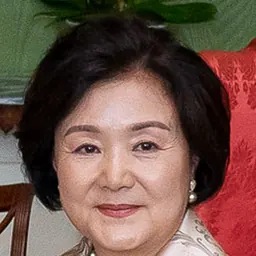


Contemporaries
People whose lives overlapped Alannah Currie's
Frequently asked questions
Who is Alannah Currie?
New Zealand musician
When was Alannah Currie born?
Alannah Currie was born on 20 September 1957.
What is Alannah Currie's occupation?
Alannah Currie is a singer, songwriter and composer.
What nationality is Alannah Currie?
Alannah Currie is New Zealand.
Sources & further reading
Cite this page
APA: Biography.guide. (2026). Alannah Currie. https://biography.guide/alannah-currie/
MLA: "Alannah Currie." Biography.guide, https://biography.guide/alannah-currie/.
Chicago: "Alannah Currie." Biography.guide. https://biography.guide/alannah-currie/.
Data last updated: 2026-09-20 · Spot an error? Report a correction.
Page generated 2026-09-27 05:19 UTC