
Alan Rowland Chisholm
Australian university teacher
About Alan Rowland Chisholm
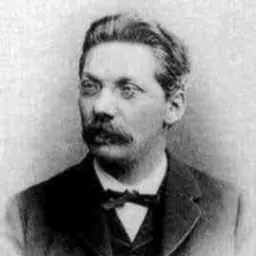
Lived 1888 – 1981 (aged 92). Alan Rowland Chisholm was an Australian university teacher, romanist and literary critic.
Alan Rowland Chisholm (1888–1981), often referred to as A. R. Chisholm, was a distinguished professor of French, critic and memorialist. During the more than three decades he spent at the University of Melbourne, the French "program became a world-renowned centre of scholarship in French literature". He was an expert in French symbolist poetry, particularly that of Stéphane Mallarmé.
Early life and education Alan Rowland Chisholm was born in Bathurst, New South Wales on 6 November 1888. His parents were William Samuel Chisholm, a coach painter, and Eliza, née Heagren.
When his family moved to Sydney, he attended school at public schools in Milsons Point and North Sydney and then from 1905 to 1907 at Fort Street Model School, where he studied French and Latin.
He attended the University of Sydney, where he studied French, under George Gibb Nicholson, and Latin, graduating in 1911 with first class honours in French. He also won the 1911 Frederick Lloyd Memorial Prize for a Latin essay on a specified subject.
After teaching at Fort Street and Glen Innes, he obtained a scholarship which enabled him to travel to Germany in 1912 and study German at the Institut Tilly in Berlin. In 1913 he moved to Paris, where he attended the lectures of Gustave Lanson and was awarded International Phonetic Association certificates of proficiency in the phonetics of French and German.
In 1914 he returned to Sydney and was appointed lecturer in modern languages at the Sydney Teachers' College.
When World War I broke out, Chisholm enlisted in the Australian Imperial Force in December 1915. He served on the Western Front in the "Australian Wireless Section (Corps Signals) to act as interpreter on Front Line listening posts for detection of German telephone work by means of listening set". He was demobilised in October 1919.
Returning to the Sydney Teachers' College, he founded the Modern Language Review of New South Wales.
His friend Christopher Brennan, the Australian poet and scholar, alerted him in 1919 to the links between German romanticism and French symbolism, which led to his lifelong interest in the poetry of the French symbolist poet Stéphane Mallarmé.
University of Melbourne In 1921 Chisholm was appointed as lecturer in charge of French at the University of Melbourne where he was to spend the rest of his career. Two years later he became a senior lecturer.
He introduced several major changes in the university's French courses: Almost from the start he promoted philological, medieval and Renaissance studies, as well as classical and nineteenth-century French literature, and pioneered the teaching of modern and contemporary authors. The historical bias was redressed by various 'special studies' that were critical, aesthetic and philosophical.
He taught honours German courses during fellow modern languages academic Associate Professor Augustin Lodewyckx's sabbaticals in 1924, 1931 and 1937.
In 1930 he published "his pioneer study" The Art of Arthur Rimbaud.
In the same year he was appointed associate professor in French at the University of Melbourne and in 1938 he was promoted to professor of French.
After extensive study of the works of Schopenhauer, Nietzsche, Jules de Gaultier and Fritz Strich, Chisholm wrote Towards Hérodiade (1934), an "important and influential" "L'université de Melbourne, au temps du professeur Chisholm, fut un véritable vivier des études mallarméennes, et de Christophe Brennan à Lloyd James Austin, l'Australie peut revendiquer le titre de deuxième patrie de Mallarmé." [the University of Melbourne in the time of Professor Chisholm was a veritable breeding ground of Mallarméan studies, and from Christopher Brennan to Lloyd James Austin, Australia can claim to be the second homeland of Mallarmé.]
More broadly, "the 'Melbourne school', as it came to be known the world over, became a byword for outstanding published contributions to the study of 19th and 20th century French poetry, especially Baudelaire, Mallarmé and Valéry."
While at Melbourne University Chisholm taught and "formed" many distinguished French scholars, some of whom (including James Lawler) went on to professorial chairs in the United States and others (including Lloyd Austin ) to chairs in the United Kingdom.
Lloyd Austin described his personality and influence as follows: His gentle, friendly personality won him the deep affection of many of his students; his great generosity in appreciation endeared him to younger scholars; the originality and authority of his thought and the elegance and precision of his writing earned him high esteem from junior and senior colleagues alike throughout the world. In 1950 he was one of the main forces behind the founding of the Australasian Universities Modern Language Association (since 1957 known as the Australasian Universities Languages and Literature Association, or AULLA in short).
Retirement Chisholm retired in 1956 after a career of 35 years at the University of Melbourne
He wrote two autobiographies, Men Were My Milestones (1958) and The Familiar Presence (1966). He published Mallarmé's Grand Oeuvre (1962), a work of synthesis based in part on the many articles and reviews he had published on the poet over the years. Order of the British Empire (1961) Honorary D.Litt. (Monash University, 1971) Cavaliere of the Order of Merit of the Republic of Italy
Don’t just read it —
keep it.
Full-length biographies made to live with: read them, listen on the way to work, watch them tonight.
- E-book
- Audio
- Video
Instant download · yours to keep · every purchase keeps this site free
Important facts
People in Alan Rowland Chisholm's life
Named in this biography and alive at the same time

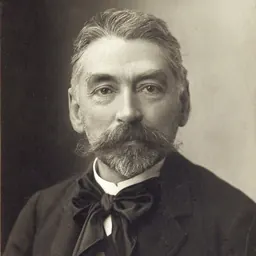
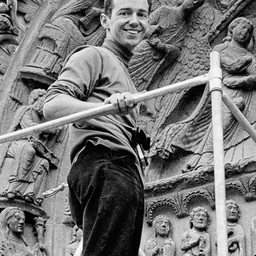

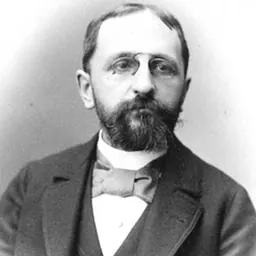

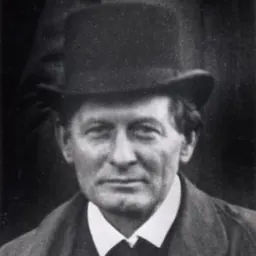
Related people
Same field, nearest in time


Contemporaries
People whose lives overlapped Alan Rowland Chisholm's



Frequently asked questions
Who was Alan Rowland Chisholm?
Australian university teacher (1888-1981)
When was Alan Rowland Chisholm born?
Alan Rowland Chisholm was born on 6 November 1888 in Bathurst.
When did Alan Rowland Chisholm die?
Alan Rowland Chisholm died on 10 September 1981 in Melbourne.
What was Alan Rowland Chisholm's occupation?
Alan Rowland Chisholm was a university teacher, romanist and literary critic.
What nationality was Alan Rowland Chisholm?
Alan Rowland Chisholm was Australian.
Sources & further reading
· Wikipedia: Alan Rowland Chisholm
· DBpedia: Alan Rowland Chisholm
Cite this page
APA: Biography.guide. (2026). Alan Rowland Chisholm. https://biography.guide/alan-rowland-chisholm/
MLA: "Alan Rowland Chisholm." Biography.guide, https://biography.guide/alan-rowland-chisholm/.
Chicago: "Alan Rowland Chisholm." Biography.guide. https://biography.guide/alan-rowland-chisholm/.
Data last updated: 2026-09-20 · Spot an error? Report a correction.
Page generated 2026-09-27 05:19 UTC