
About Alan Burns
Lived 1929 – 2014 (aged 84). Alan Burns was a British writer and lawyer.
Alan Burns (29 December 1929 – 23 December 2013) was an English author and one of the key figures in the short-lived group of experimental writers working in Britain in the 1960s and early 1970s, which included writers such as B. S. Johnson, Christine Brooke-Rose, Ann Quin and Giles Gordon. Burns wrote eight novels, a play and the script for two short films (one in collaboration with B. S. Johnson), as well as several short pieces, a book of interviews with writers, articles and edited an American report on pornography and censorship for publication in the UK. Burns was one of the earliest teachers of creative writing as an academic discipline in Britain, appointed as the first writer in residence on the University of East Anglia's Creative Writing Master's programme and later he went on to teach this discipline in both Australia and the USA. Burns also worked with Peter Whitehead, writing Jeanette Cochrane, a short experimental film in a montage style, which featured early music from Pink Floyd and an appearance by Nico.
Biography and creative works
Alan Burns was born on 29 December 1929 to a middle-class family, the second of his parents' three sons. He attended Merchant Taylors' School, Northwood. Burns recounts his experiences at the school in fictionalised form in Buster, his first and most autobiographical novel. While at the school, Burns published an absurdist and satirical essay on Samuel Johnson in the school magazine, which he reuses in Buster. Burns subsequently did national service from 1949 to 1951 in the Royal Army Education Corps.
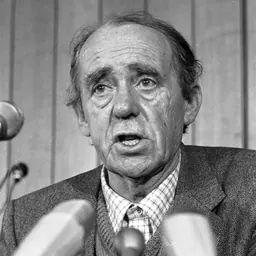
In his own accounts of the period, Burns suggests that the reasons for his change in writing style are political and theoretical, claiming to be inspired by Heinrich Böll's Nobel Prize acceptance speech, which extolled the virtues of writing plainly to achieve a political effect. Burns, in his interviews, seems uncomfortable with the associations that experimental writing has with elitism and, following Böll, sees the need for a plainly expressed writing which can speak to, and inform, a wide audience.
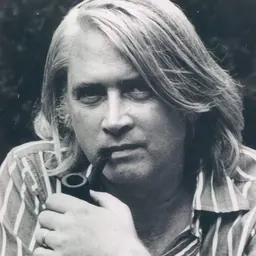
Alongside these personal and theoretical changes, the group of experimental writers that had formed in London in the mid sixties had lost much of its impetus following the suicides of Ann Quin and B.S. Johnson, both in 1973, less than three months apart, the first in August, the latter in early November. Burns had been close friends with Johnson. They wrote the short film Unfair together, and Burns considered writing a biography of Johnson, two short chapters of which appear in the 1997 Fall issue of the Review of Contemporary Fiction alongside another short piece by Burns and several critical essays.
In 1981, Burns published The Day Daddy Died, his most conventionally written novel. The novel traces the life of Norah, a working-class woman, whose life is made up of a series of encounters with institutions which exploit and oppress her, and with men who are representatives of those institutions. Toward the conclusion of the novel Norah and her large family (she has five children with five different partners) are confined to what Burns describes as "factory, hospital and work-camp [combined] into an all purpose institution to represent the power of the State", a particularly Thatcherite institution in which the workplace, the prison, the hospital and the school combine, and here in particular Burns seems to anticipate the sweatshops and maquiladoras that arrive with emerging globalisation. The novel is written in a very straightforward, vernacular style, and again Burns used interview material as his source for the novel.
In 1982 he co-edited (with Charles Sugnet) The Imagination on Trial: British and American writers discuss their working methods, which The Washington Post "Book World" called "diverting, iconoclastic, and compulsively readable". The book included interviews with 11 authors (as well as Burns himself): J. G. Ballard, Eva Figes, John Gardner, Wilson Harris, John Hawkes, B. S. Johnson, Tom Mallin, Michael Moorcock, Grace Paley, Ishmael Reed, and Alan Sillitoe.
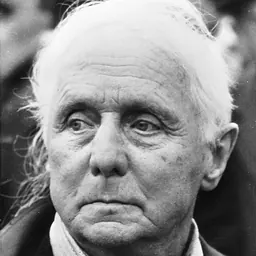
Burns published his final novel in 1986. Revolutions of the Night was a return to a lighter prose style, and in places its short, gnomic utterances recall his work in Celebrations. Again the title is taken from a Max Ernst painting, and the focus is a wealthy, middle-class family in which one member, on this occasion the mother, dies early on, and the remainder of the novel is focussed on the fallout from her death. The novel consists of a series of set pieces, most of which concern the incestuous relationship between the two children of the family, Hazel and Max, a relationship which seems to shield them from the institutions of the state that they encounter. Midway through the novel a war, or revolution, appears to begin, Max is imprisoned and then released, and the novel ends, in scenes that are reminiscent of the ending of Europe After the Rain, the two siblings escape the country and live together.
Burns taught briefly at Lancaster University in the 1990s, before returning to London, where he moved in with his ex-wife, Carol Burns, as a lodger. This movement, back to his first wife, to his hometown, retraces the movement of the protagonist of Burns’s first novel, Buster, and is itself an instantiation of the traumatic encircling and repetition that takes place in his novels. He died in December 2013.
Selected bibliography As writer "Buster" inNew Writers 1 (Calder, 1961) Europe After the Rain (Calder, 1965) Celebrations (Calder and Boyars, 1967) Babel (Calder and Boyars, 1969) Dreamerika! A Surrealist Fantasy (Calder and Boyars, 1972) To Deprave and Corrupt: Pornography, Its Causes, Its Forms, Its Effects (Davis-Pointer, 1972) The Angry Brigade: A Documentary Novel (Allison & Busby, 1973) The Day Daddy Died (Allison & Busby, 1981, illus. Ian Breakwell) Revolutions of the Night (Allison & Busby, 1986)
As editor The Imagination on Trial: British and American Writers Discuss Their Working Wethods (co-edited with Charles Sugnet; Allison & Busby, 1982)
Don’t just read it —
keep it.
Full-length biographies made to live with: read them, listen on the way to work, watch them tonight.
- E-book
- Audio
- Video
Instant download · yours to keep · every purchase keeps this site free
Important facts
People in Alan Burns's life
Named in this biography and alive at the same time





Related people
Same field, nearest in time

Contemporaries
People whose lives overlapped Alan Burns's


Frequently asked questions
Who was Alan Burns?
British writer (1929–2014)
When was Alan Burns born?
Alan Burns was born on 29 December 1929 in London.
When did Alan Burns die?
Alan Burns died on 13 January 2014 in London.
What was Alan Burns's occupation?
Alan Burns was a writer and lawyer.
What nationality was Alan Burns?
Alan Burns was British.
Sources & further reading
· DBpedia: Alan Burns (author)
Cite this page
APA: Biography.guide. (2026). Alan Burns. https://biography.guide/alan-burns/
MLA: "Alan Burns." Biography.guide, https://biography.guide/alan-burns/.
Chicago: "Alan Burns." Biography.guide. https://biography.guide/alan-burns/.
Data last updated: 2026-09-20 · Spot an error? Report a correction.
Page generated 2026-09-27 05:28 UTC