
About Ala Singh
Lived 1691 – 1765 (aged 73–74). Ala Singh was a monarch.
Ala Singh (1691 – 7 August 1765) was the founder and first ruler of Patiala from 1763 until his death in 1765. Born into the Sikh Phulkian dynasty, Singh rose to power through key battles in his early life and expanded his territory in Punjab. Singh's reign ended with his death in 1765, and he was succeeded by his grandson, Amar Singh.
Lineage Ala Singh was born into the Phulkian dynasty, named after Chaudhary Phul Sidhu-Brar, Singh's paternal grandfather, who was also the common ancestor of the rulers of Nabha, Jind and Faridkot. Singh is claimed to be a direct descendant of Rawal Jaisal Singh, the founder and first ruler of the Kingdom of Jaisalmer from 1156 to 1168, Jaisal Singh, is further said to be a descendant of Rao Bhatti, a 3rd-century Hindu king.
Mythological ancestry Descendants of Rao Bhatti, including the former and historical Patiala royal family, also claim to be direct descendants of Yadu, a mythological Hindu monarch from whom Bhatti claimed descent.
Early life Ala Singh was born in 1691 in Phul, in the present-day Bathinda district of Punjab. He was born into the Jat Sikh Phulkian dynasty to Chaudhary Ram Singh of the Phulkian Misl. Singh's mother was Sabi Kaur. His father had six children, from eldest to youngest: Dunna, Sabha, Ala, Bakhta, Buddha, Laddha. The Battle of Barnala in 1731 was a significant turning point in Singh's life. In the battle, Singh, along with the Majha Sikhs led by Kapur Singh, faced off against a confederacy of neighboring Muslim chiefs. In 1749, he built a fortress in Bhawanigarh and led an expedition to Bhatinda where he conquered territory for himself and his then expanding domain. He stayed neutral during the events and did not initiate hostilities against the Durrani Empire. According to historian Karam Singh, this period marked his transition from a Sardar chief to de facto kingship. In 1763, Ala Singh at the age of 57, founded of the city of Patiala and laid the foundations of Patiala State. In Patiala, he also built Qila Mubarak in 1763, which was initially constructed as a mud fortress and later reconstructed with bricks.
In 1764, while leading the Sikh Confederacy against the Durrani Empire, he conquered Sirhind and the surrounding territories along with his close friend Nanu Singh Saini. Singh later purchased part of the Sirhind for 25,000 rupees from the Sikh Confederacy, which enlarged his territory and formed the early territories of Patiala State. He also shifted his capital from Barnala to the city of Patiala in 1764.
In 1765, Durrani granted Ala Singh the title of Raja, robe of honour and the right to mint coinage. According to historian Rajmohan Gandhi, by accepting the title of Raja from Durrani, Ala Singh became the first Sikh monarch in history and, by 1765, the most powerful Sikh in Punjab. Patiala's army and the Dal Khalsa's army clashed in Patiala State's northern territories; however, peace was quickly brokered by Jassa Singh Ahluwalia, the leader of the Dal Khalsa. During Singh's ruler, the Patiala army consisted primarily of horseback cavalry and artillery that was transported by camels.
Singh's administration was secular, and he had Sikhs, Hindus and Muslims in high administrative positions. Having seen several famines in his lifetime, Singh focused extensively on agriculture, land management and cultivation. His extensive cultivation efforts led to the founding, rehabilitation, resettlement, and reclamation of many villages, ultimately resulting in the conquest of other villages and significantly increasing agricultural output. This not only boosted his finances and provided surplus grains for future emergencies but also secured the loyalty of the inhabitants of his territories. Singh's agricultural success enabled him to support political allies with provisions during critical times, which included the Mughal Emperor Alamgir II in 1758 and the Maratha Confederacy during the Third Battle of Panipat in 1761.
Death and succession On 7 August 1765, Singh died of a fever at the age of 74. He was succeeded by his grandson Amar Singh, who later gained the title Raja-e Rajgan, his three sons having predeceased him. Sardaul Singh the eldest died in 1753, Bhumian Singh died in 1742 and Lal Singh the youngest died in 1748.
Legacy Singh's descendants were the rulers of Patiala until 1947, when India gained independence from the British Empire. His descendants who had royal titles retained them until 1971, when they were abolished through the 26th Amendment to the Constitution of India.
Gallery
Don’t just read it —
keep it.
Full-length biographies made to live with: read them, listen on the way to work, watch them tonight.
- E-book
- Audio
- Video
Instant download · yours to keep · every purchase keeps this site free
Important facts
People in Ala Singh's life
Named in this biography and alive at the same time

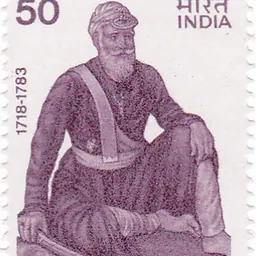
Related people
Same field, nearest in time
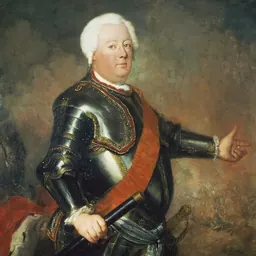
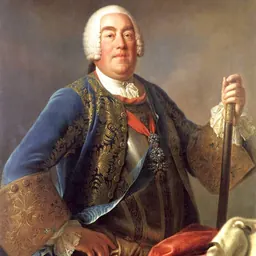
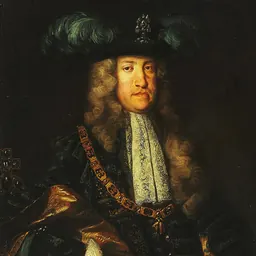

Contemporaries
People whose lives overlapped Ala Singh's




Frequently asked questions
Who was Ala Singh?
first Maharaja of the historical princely state of Patiala
When was Ala Singh born?
Ala Singh was born in 1691.
When did Ala Singh die?
Ala Singh died in 1765.
What was Ala Singh's occupation?
Ala Singh was a monarch.
What nationality was Ala Singh?
Ala Singh's recorded nationality: Patiala State.
Sources & further reading
Cite this page
APA: Biography.guide. (2026). Ala Singh. https://biography.guide/ala-singh/
MLA: "Ala Singh." Biography.guide, https://biography.guide/ala-singh/.
Chicago: "Ala Singh." Biography.guide. https://biography.guide/ala-singh/.
Data last updated: 2026-09-20 · Spot an error? Report a correction.
Page generated 2026-09-27 05:30 UTC