
Al Sayed Musa al-Sadr
Lebanese Shiite jurist and political activist
About Al Sayed Musa al-Sadr
Lived 1928 – 1978 (aged 49–50). Al Sayed Musa al-Sadr was a Lebanese politician, theologian, imam and philosopher.
Early life and education
Family background
Al-Sadr came from a long line of clerics tracing their ancestry to Jabal Amel. He attended Hayat Elementary School in Qom where he attended seminary classes informally; he started his official seminary education in 1941. After a while he started teaching other students "lower-level" courses. This coincided with the "liberalising of Iranian politics", the political climate of his time was secular, so that most religious scholars "felt politically and socially marginalised". His articles in this field were published as a book. He left the journal in December 1959 along with some of its original founders. Al-Sadr left Najaf for Tyre in late 1959,
Al-Sadr, who became known as Imam Musa, became one of the most prominent advocates for the Shia population of Lebanon, a group that was both economically and politically disadvantaged.
"[Al-Sadr] worked tirelessly to improve the lot of his community – to give them a voice, to protect them from the ravages of war and inter communal strife," said Vali Nasr. Sadr impressed the Lebanese people "by providing practical assistance," regardless of their sect. demanding that the Maronite Christians relinquish some of their power, but pursuing ecumenism and peaceful relations between the groups.
In 1969, al-Sadr was appointed the first head of the Supreme Islamic Shia Council (SISC) in Lebanon, , an entity meant to give the Shia more say in government. For the next four years, al-Sadr engaged the leadership of Syrian ‘Alawīs in an attempt to unify their political power with that of the Twelver Shia. Recognition of the ‘Alawī as Shi'a coreligionists came in July 1973 when he and the ‘Alawī religious leadership successfully appointed an ‘Alawī as an official mufti to the Twelver community.
Al-Sadr revived the Jami'at al-Birr wal-Ihsan charity, founded by S. Salih b. Muhammad Sharafeddin, and gathered money for The Social Institute (al-Mu'assasa al-Ijtima'iyya), an orphanage in Tyre. In 1963, Sadr established a sewing school and nursery named The Girls' Home (Bayt al-Fatat). That same year, he established The Institute of Islamic Studies (Ma'had al-Dirasat al-Islamiyya). In 1964, Sadr started Burj al-Shimali Technical Institute, whose funding was provided by Shi'a benefactors, bank loans, and the Lebanese Ministry of Education. and Movement of the Disinherited, and in cooperation with Mostafa Chamran Shia were the only major community without a militia group in the land of militias; Amal was created by Al-Sadr to protect Shia rights and interests.
In 1976, however, he withdrew his support after the Syrian invasion against Palestinian and leftist militias. He also actively cooperated with Mostafa Chamran, Sadegh Ghotbzadeh, and other Iranian Islamist activists during the civil war. Sadr and Chamran were involved in protests against the Shah out of Iran during the Islamic Revolution. According to Amal deputy Ali Kharis, "Musa Sadr and Chamran were the backbone of the Iranian revolution and how one can not speak of the Iranian revolution without mentioning these two people." In addition, al-Sadr developed ties between Hafez al-Assad, then Syrian president, and the opponents of Mohammad Reza Pahlavi, Shah of Iran. as well as Mohammad Khatami (his wife was a niece of al-Sadr), and Ayatollah Khomeini's son Ahmad Khomeini (his wife was another of al-Sadr's nieces). her paradigm being influenced by Søren Kierkegaard. '
Personality Al-Sadr has been referred to by Fouad Ajami as a "towering figure in modern Shi'i political thought and praxis." In Lebanon, he had garnered significant popularity "due to his good rapport with young people." scholar Fouad Ajami describes Sadr's charisma and magnetism as such: Lebanon has long been a country finicky about the looks, the aura, al-haiba of a leader. The Shia in particular have been noted to be a people of some vanity. In the Shia tradition, the Imams were not only morally infallible men (an Imam was said to be masum, not subject to error), but also physically perfect beings. A blind man or a lame man would not have been accepted as an Imam. Musa al Sadr, a handsome man of striking looks, was true to his people's fantasy of what a man of piety and distinction and high birth slated for bigger things should look like. He was, in addition, a dazzling speaker in a culture that exalted the spoken word and those who could express in classical Arabic what was on the minds of others.
Disappearance On 25 August 1978, al-Sadr and two companions, Sheikh Mohamad Yaacoub and journalist , departed for Libya to meet with government officials at the invitation of Muammar Gaddafi. The three were last seen on 31 August. Supporters of the missing cleric, however, pointed out that Sadr's baggage was found in a Tripoli hotel and there was no evidence of his arrival in Rome. Lebanese Parliament Speaker Nabih Berri claimed that the Libyan regime, and particularly the Libyan leader, was responsible for the disappearance of al-Sadr, as London-based Asharq Al-Awsat, a Saudi-run pan-Arab daily, reported on 27 August 2006.
According to Iranian General Mansour Qadar, the head of Syrian security, Rifaat al-Assad told the Iranian ambassador to Syria that Gaddafi planned to kill Sadr. Following the fall of the Gaddafi regime, Lebanon and Iran appealed to the Libyan rebels to investigate the fate of al-Sadr.
Lebanese political analyst Roula Talj has said that Gaddafi's son, Saif al-Islam Gaddafi, told her that Sadr and his aides never left Libya. She noted, however, that Saif al-Islam stopped short of "acknowledging that Imam Musa al-Sadr is still alive". She added, "based on my own analysis and people's reactions to this, I believe he is still alive". According to a representative of Libya's National Transitional Council in Cairo, Gaddafi murdered al-Sadr after discussions about Shia beliefs. Al-Sadr accused him of being unaware of Islamic teachings and of the Islamic branches of Shia and Sunni. According to other sources, Gaddafi had al-Sadr and his companions murdered at the request of Palestinian leader Yasser Arafat. At the time, the Shias and the Palestinians were involved in armed clashes in Southern Lebanon.
According to several sources, there was tension between al-Sadr and Khomeini as al-Sadr did not recognize him as the supreme religious authority of the Shiite world. The alleged rivalry between the two is what caused Gaddafi to eliminate al-Sadr at the request of Ayatollah Ruhollah Khomeini, who regarded al-Sadr as a potential rival. Gaddafi later supported Khomeini in the Iran-Iraq War.
According to a former member of the Libyan intelligence, al-Sadr was beaten to death for daring to challenge Gaddafi at his house on matters of theology. In an interview with Al Aan TV, Ahmed Ramadan, an influential figure in the Gaddafi regime and an eyewitness to the meeting between al-Sadr and Gaddafi, claimed that the meeting lasted for two and a half hours and ended with Gaddafi saying "take him". Ramadan also named three officials who he believes were responsible for the death of al-Sadr. In 2011, Abdel Monem al-Houni claimed that al-Sadr's body was sent to Sabha in Gaddafi's private jet and buried there. The plane was flown by Houni's cousin, Najieddine Yazigi, who was later murdered to preserve the secret.
In 2021, Muqtada al-Sadr, al-Sadr's cousin and leader of the Sadrist Movement in Iraq, announced that a committee has been formed to investigate the fate of Musa Sadr. In September 2025 the BBC World Service reported on the possible discovery and identification of al-Sadr's body in Libya by Lebanese-Swedish journalist Kassem Hamadé, who had been tipped off about a secret morgue in Tripoli while reporting on the 2011 Libyan Revolution. The bodies in the morgue were believed to have been preserved for 20–30 years. Upon investigating, Hamadé took a photograph of the corpse of an unusually large, bearded man, who bore signs of execution. Facial recognition analysis performed using the photograph by Hussain Ugail of the University of Bradford revealed a match with al-Sadr's confirmed appearance, indicating that the body likely belonged to al-Sadr himself or a close relative. Hamadé further disclosed that he had taken a sample of the corpse's hair for DNA analysis and sent it to the Lebanese government but the file had been declared lost due to "technical reasons".
Legacy
Al-Sadr is still regarded as an important political and spiritual leader by the Shia Lebanese community. His status only grew after his disappearance in August 1978, and today his legacy is revered by both Amal and Hezbollah followers. In the eyes of many, he became a martyr and a "vanished imam". A tribute to his continuing popularity is that it is popular in parts of Lebanon to mimic his Persian accent.
Works Al-Sadr wrote an introduction to Henry Corbin's History of Islamic Philosophy. Al-Sadr's paper Islam, Humanity and Human Values was published by Ahlul Bayt World Assembly. Unity of the Islamic Schools of Thought According to Imam Musa Sadr includes a biography and an English adaptation of one of his books, Imam Musa Sadr: surush-e wahdat, Majma’ Jahani-ye Taqrib-e Madhahib-e Islami, 2004.
Institutions Imam Moussa Al Sadr Center for Research & Studies - Beirut, Lebanon Sadr Foundation - Tyre, Lebanon Sadr Foundation - Dearborn, Michigan, United States
Don’t just read it —
keep it.
Full-length biographies made to live with: read them, listen on the way to work, watch them tonight.
- E-book
- Audio
- Video
Instant download · yours to keep · every purchase keeps this site free
Important facts
People in Al Sayed Musa al-Sadr's life
Named in this biography and alive at the same time
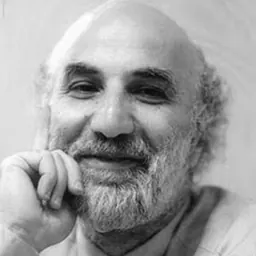
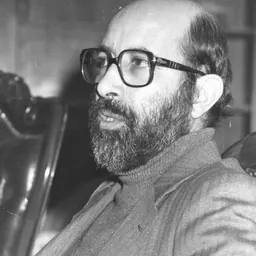
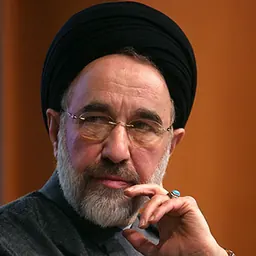
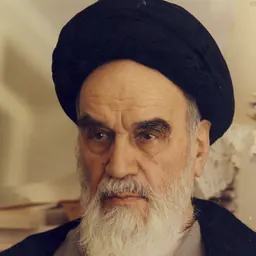



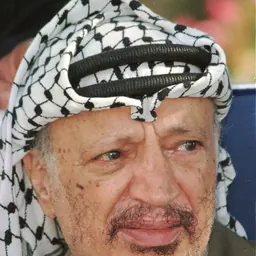
Related people
Same field, nearest in time






Contemporaries
People whose lives overlapped Al Sayed Musa al-Sadr's


Frequently asked questions
Who was Al Sayed Musa al-Sadr?
Lebanese Shiite jurist and political activist
When was Al Sayed Musa al-Sadr born?
Al Sayed Musa al-Sadr was born on 15 April 1928 in Qom.
When did Al Sayed Musa al-Sadr die?
Al Sayed Musa al-Sadr died in 1978 in Libya.
What was Al Sayed Musa al-Sadr's occupation?
Al Sayed Musa al-Sadr was a politician, theologian, imam and philosopher.
What nationality was Al Sayed Musa al-Sadr?
Al Sayed Musa al-Sadr was Lebanese.
Sources & further reading
· Wikipedia: Al Sayed Musa al-Sadr
Cite this page
APA: Biography.guide. (2026). Al Sayed Musa al-Sadr. https://biography.guide/al-sayed-musa-al-sadr/
MLA: "Al Sayed Musa al-Sadr." Biography.guide, https://biography.guide/al-sayed-musa-al-sadr/.
Chicago: "Al Sayed Musa al-Sadr." Biography.guide. https://biography.guide/al-sayed-musa-al-sadr/.
Data last updated: 2026-09-20 · Spot an error? Report a correction.
Page generated 2026-09-27 05:31 UTC