
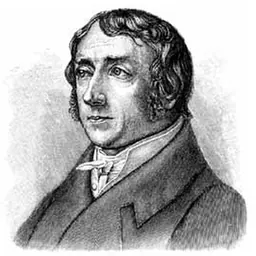
About Al-Jabarti
Lived 1754 – 1822 (aged 67–68). Al-Jabarti was a historian and theologian.
Abd al-Rahman ibn Hasan al-Jabarti (; 1753–1825) was an Egyptian Islamic scholar and historian who spent most of his life in Cairo.
Biography Al-Jabarti may have been born in the village of Tell al-Gabarti in the northern Delta province of Beheira, Egypt. Abdulkader Saleh asserts that al-Jabarti was instead born in Cairo. Al-Jabarti was born into a prominent family of Ulama with ties to the Egyptian scholarly and political elite. Al-Jabarti's father, Hassan ibn Ibrahim, was a learned and highly venerated man in Cairo. It is believed that Hassan al-Jabarti travelled from Zeila to Cairo during the mid-18th century, and was of a Somali ethnic background. According to his writings, his name comes from his "seventh-degree grandfather", Abd al-Rahman, who was the earliest member of his family known to him. The older Abd al-Rahman was from Jabarah (located in the Horn of Africa). As a result, al-Jabarti was trained as a Sheikh at the al-Azhar University in Cairo. Through his family ties, al-Jabarti gained access to prominent scholars al-Muradi and al-Murtada, both of whom influenced his decision to write about Egyptian history.
He began keeping a monthly chronicle of local events, from which he compiled his three most famous works. The last and lengthiest of these documents, in Arabic , which is generally known in English simply as Al-Jabarti's History of Egypt, and sometimes as The Marvellous Compositions of Biographies and Events, became a world-famous historical text by virtue of its eyewitness accounts of Napoleon's invasion and Muhammad Ali's rise to power. The entries from his chronicle dealing with the French expedition and occupation have been excerpted and compiled in English as a separate volume entitled Napoleon in Egypt. He was one of the first Muslims to realise the significance of the wave of modernity that accompanied the French occupation, and the gulf that existed between Western and Islamic knowledge "shocked him profoundly."
Jabarti maintained a strict, puritanical tone in his reaction to his witnessing of the advanced military, technical sciences and cultural values of the French occupiers. He abhorred the Republican ideas of the French Revolution such as laicism, liberty and equality; insisting on the supremacy of Wahy (Islamic Revelation) over European rationalism. Although he had acknowledged the advances made by Europeans in certain fields, al-Jabarti firmly believed in the eventual triumph of Islam over the West and advocated the restoration of Islamic prowess through his works. Expressing a strong revulsion against the French occupiers in his writings, al-Jabarti famously prayed for God to:"strike their tongues with dumbness ... confound their intelligence, and cause their breath to cease"
Works Al-Jabarti's ‘Aja’ib al-Athar fi’t-Tarajim wa’l-Akhbar (The Marvelous Compositions of Biographies and Events), a 27-volume book chronicling the History of Egypt between 1688 and 1821 C.E/ 1099–1236 A.H. Al-Jabarti is known for three works: (The History of the Period of the French Occupation in Egypt), completed in late 1798; (Demonstration of Piety in the Demise of French Society), completed in December 1801; and (The Marvellous Compositions of Biographies and Events), which was much longer and comprised elements from his first two works. The History of the French Occupation in Egypt chronicles the first seven months of the three-year occupation of Egypt by the French. In this work, in addition to chronicling factual events, al-Jabarti criticises the social and moral depravity of the French, embarks on an extensive correction of the grammar in the French Proclamation, and expresses general feelings of anger towards the invasion. His second work, Demonstration of Piety in the Demise of French Society, is much less known than his other two. The Marvellous Compositions of Biographies and Events is by far al-Jabarti's most famous work, as well as his longest. This work covers the history of Egypt from 1688 to 1821 but was banned in Egypt in 1870 due to its critical views about Muhammad Ali Pasha's reforms, among other controversial criticisms. Towards the end of the 1870s the ban on his book was lifted, and it was printed in part in 1878 by the press of Alexandria newspaper Misr, and in full in 1880 by the Bulak printing press.
Don’t just read it —
keep it.
Full-length biographies made to live with: read them, listen on the way to work, watch them tonight.
- E-book
- Audio
- Video
Instant download · yours to keep · every purchase keeps this site free
Important facts
People in Al-Jabarti's life
Named in this biography and alive at the same time



Related people
Same field, nearest in time



Contemporaries
People whose lives overlapped Al-Jabarti's




Frequently asked questions
Who was Al-Jabarti?
Egyptian Islamic scholar and historian (1753–1825)
When was Al-Jabarti born?
Al-Jabarti was born in 1754 in Cairo.
When did Al-Jabarti die?
Al-Jabarti died in 1822 in Cairo.
What was Al-Jabarti's occupation?
Al-Jabarti was a historian and theologian.
What nationality was Al-Jabarti?
Al-Jabarti's recorded nationality: Egypt eyalet.
Sources & further reading
· DBpedia: Abd al-Rahman al-Jabarti
Cite this page
APA: Biography.guide. (2026). Al-Jabarti. https://biography.guide/al-jabarti/
MLA: "Al-Jabarti." Biography.guide, https://biography.guide/al-jabarti/.
Chicago: "Al-Jabarti." Biography.guide. https://biography.guide/al-jabarti/.
Data last updated: 2026-09-20 · Spot an error? Report a correction.
Page generated 2026-09-27 05:27 UTC