
About Akbar Tanjung
Born 1945. Akbar Tanjung is an Indonesian politician.
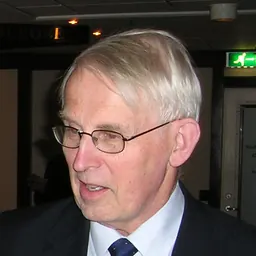
Djandji Akbar Zahiruddin Tandjung (born 14 August 1945) is an Indonesian politician who served as the Speaker of the People's Representative Council from 1999 until 2004. A member of the Golkar party, he also served as the party's chairman from 1999 until 2004 and was a member of the People's Representative Council from East Java from 1977 until 2004.
He served as a minister under former presidents Suharto and B.J. Habibie. He was Speaker of the People's Representative Council (DPR) from 1999 to 2004. In 2002 he was convicted of corruption over the embezzlement of funds intended for food relief for the poor, but the conviction was overturned on appeal in 2004.
Early life and education Djandji Akbar Zahiruddin Tandjung was born on 14 August 1945 in Sorkam, North Sumatra during the Japanese occupation of the Dutch East Indies. The son of Zahiruddin Tandjung and Siti Kasmijah, he is a Muslim Pesisir by ethnicity. He is the 13th of 16 siblings, four of whom died before adulthood.
He attended the Muhammadiyah People's School in Sorkam, Central Tapanuli, North Sumatra province. He also attended Christian Elementary School in Medan, North Sumatra. In Jakarta, he attended Cikini Junior High School and then Kanisius High School, graduating in 1964.
He studied at the University of Indonesia, where he engaged in student activism and served as president of the Faculty of Technology. From 1972 to 1974, he was president of the influential Indonesian Muslim Students Association (HMI). He also joined the Indonesian National Youth Committee (KNPI), which is affiliated with Golkar.
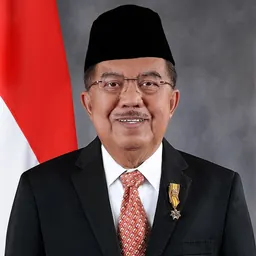
Political career In 1976, then-Golkar leader Amir Murtono invited Akbar to stand for election for the party. In 1977, Akbar was elected to the House of Representatives, representing Golkar for East Java province. He was re-elected in 1982 and 1987. In the late 1980s, when long-serving president Suharto started to more actively seek Muslim support, Akbar became deputy secretary general of Golkar. Under Suharto, he served as State Minister for Youth Affairs and Sport from 1988 to 1993. He then served as State Minister of Housing from March 1993 to May 1998. Under Suharto's successor B.J. Habibie, he served as State Secretary from May 1998 to May 1999. At the Golkar convention in December 2004, Akbar lost the party's chairmanship to Jusuf Kalla, at that time the country's vice president.
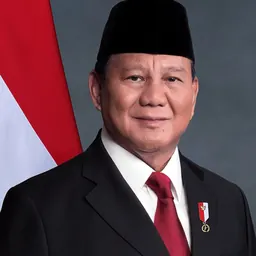
Akbar has remained an influential figure within Golkar. Ahead of the 2014 Indonesian presidential election, he criticized Golkar's plan to nominate then-party chairman Aburizal Bakrie for the presidency. The party ended up dropping Bakrie as its candidate and threw its weight behind Prabowo Subianto, with Akbar serving as one of his campaign advisers.
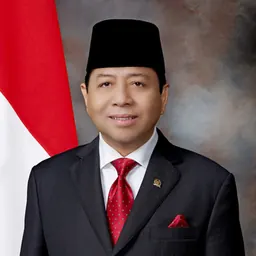
In 2017, Akbar expressed concern that Golkar could lose legislative seats in Indonesia's 2019 elections because of a negative public perception of its chairman, Setya Novanto. He said the party should make changes to improve its image.
Corruption conviction, appeal, and acquittal In September 2002, Central Jakarta District Court sentenced Akbar to three years in prison for embezzling Rp 40 billion (about $4.8 million) in state funds that were supposed to have been spent on a 1999 food program for the poor. Prosecutors had recommended a four-year prison sentence, although the maximum penalty for corruption and abuse of power is 20 years. Two other people involved in the scandal, Dadang Sukandar and Winfried Simatupang, were each sentenced to 18 months in prison. The two served their time in Jakarta's Cipinang penitentiary, but Akbar never went to prison. He remained free pending a lengthy appeal process and continued to hold his government and political jobs. In January 2003, the Jakarta High Court upheld his conviction. In February 2004, a panel of five Supreme Court judges overturned Akbar's corruption conviction on the grounds he had just been following orders in 1999 from then-president B.J. Habibie. After the ruling, a dissenting judge, Abdul Rahman Saleh, said Akbar had engaged in "corrupt practice" and was guilty of "shameful conduct because he failed to show minimal appropriate efforts to protect state money”.
Honours National
Foreign honours
Don’t just read it —
keep it.
Full-length biographies made to live with: read them, listen on the way to work, watch them tonight.
- E-book
- Audio
- Video
Instant download · yours to keep · every purchase keeps this site free
Important facts
People in Akbar Tanjung's life
Named in this biography and alive at the same time



Related people
Same field, nearest in time





Contemporaries
People whose lives overlapped Akbar Tanjung's



Frequently asked questions
Who is Akbar Tanjung?
Indonesian politician
When was Akbar Tanjung born?
Akbar Tanjung was born on 14 August 1945 in Sibolga.
What is Akbar Tanjung's occupation?
Akbar Tanjung is a politician.
What nationality is Akbar Tanjung?
Akbar Tanjung is Indonesian.
Sources & further reading
Cite this page
APA: Biography.guide. (2026). Akbar Tanjung. https://biography.guide/akbar-tanjung-politician/
MLA: "Akbar Tanjung." Biography.guide, https://biography.guide/akbar-tanjung-politician/.
Chicago: "Akbar Tanjung." Biography.guide. https://biography.guide/akbar-tanjung-politician/.
Data last updated: 2026-09-24 · Spot an error? Report a correction.
Page generated 2026-09-27 05:05 UTC