
About Ahmed Rıza
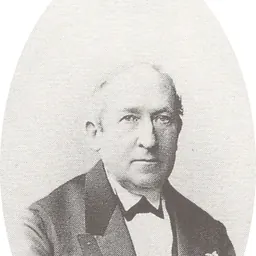
Lived 1859 – 1930 (aged 70–71). Ahmed Rıza was a Turkish politician, journalist, activist and academic.
Ahmed Rıza Bey (1858 – 26 February 1930) was a Turkish activist, intellectual, politician, author, educator, polymath, and a prominent Young Turk. He was an early leader of the Committee of Union and Progress.
During the nearly twenty years that he lived in Paris, he led the Paris branch of the Committee of Ottoman Union, which would later be named the Committee of Union and Progress, and together with Doctor Nâzım Bey he founded Meşveret, the first official publication of the society, where he was exiled. In addition to his work as an opposition leader, Rıza doubled as a positivist ideologue.
Following the 1908 revolution, he was proclaimed as the "Father of Liberty" and became the first President of the revived Chamber of Deputies, the lower house of the Ottoman Parliament. By 1910 he distanced himself from the CUP as it turned more radical and authoritarian. In 1912, he was appointed as a Senator. He was the leading negotiator during the failed talks for a military alliance between the Ottoman Empire, France, and Britain for World War I. During the war, he was among the few politicians who opposed and condemned the Armenian genocide while it was ongoing. In the Armistice Era he was appointed as president of the Senate and prosecuted his former Unionist comrades. After a falling out with Damat Ferid Pasha he once again went to France, where he supported Mustafa Kemal Pasha (Atatürk)'s Nationalists, returning to Turkey after the signing of the Treaty of Lausanne.
Early life Ahmed Rıza was born in Istanbul in 1858 to a family that was in public service for generations, the eldest of seven children. He was the son of a statesman and Senator. Ahmed's grandfather was the Minister of Agriculture and Mint, also named Ali Rıza. Ahmed's great-grandfather was Kemankeş Efendi, Sultan Selim III's Sır Kâtibi (Secret Secretary); His father was a Turkish kadı that served in Egypt. Ali Rıza was nicknamed İngiliz ("Englishman") because of his command of the English language and admiration of Britain. His wife, Fräulein Turban, was born in Munich but of Hungarian origin. She moved to Vienna, where she met İngiliz while he was on a diplomatic mission, and converted to Islam to marry him, taking the name Naile Sabıka Hanım. Among Ahmed's siblings, his youngest sister was Selma Rıza, who became the first female Turkish journalist. Under his mother's influence he was raised with a Western education, and attended the Mekteb-i Sultânî (modern Galatasaray High School). He began a career in civil service working at the Sublime Porte's Translation Office.
With the dissolution of the Ottoman Parliament, Ahmet accompanied his father to his exile to Ilgın, Konya. Along the way he noticed the poor conditions of the peasants. The journey made Rıza concerned of their well-being, and he wished to introduce them to modern cultivation methods, which led him to study agriculture in France. Laffitte believed that Islam was the most advanced religion, so it was easy for Muslims to embrace positivism. Rıza became an active member of the Société Positiviste, and served as a Muslim or Ottoman representative in conferences meant to spread positivism internationally, or to create a "United States of Europe".
Though patriotic of his country, Rıza determined a lack of education and positive sciences was the reason for the Ottoman Empire's backwardness compared to the rest of Europe. In 1893, Ahmed Rıza sent multiple petitions to Sultan Abdul Hamid II where he outlined the benefits of a constitutional regime and its adherence to the Islamic principle of consultation. This being part of a larger suggested reform package, he initially received interest from the Sultan. But discouraged after no response to his sixth petition, he began publishing his reform proposals in the French newsletter La Jeune Turquie, edited by his friend Khalil Ghanim (Halil Ganim), in the form of a pamphlet called Lâyiha ve Mektub (Petition and Letter) in London. The Hamidian regime attempted to intimidate Rıza with censorship, bribes, offers of amnesty, and threats to friends and family, but he stubbornly refused to fold until the regime's collapse in 1908. Ahmed Rıza, his Parisian circle, and Meşveret became synonymous with the CUP and the Young Turks movement. He also contributed for 's İstikbal during this time.
Rıza was horrified by the Hamidian massacres, which he blamed on the sultan and condemned as contrary to "the traditions of Islam and the precepts of the Quran". During the Greco-Turkish War, Ahmed Rıza was expelled from the CUP after he refused to pull an article he published in Meşveret in support of the Cretan Rebellion.
Throughout his exile he was constantly approached by Ottoman agents with generous offers of amnesty for his defection, which he always refused. However, Ahmed Rıza's stubborn secularism and internationalist positivism caused a rift with conservative Young Turks which united around Mizancı Murad. The basis for this conflict may have been Rıza's attempt to merge the CUP with the Positivist Committee of Paris. Most frustrating of all for the Unionists was Rıza staunch opposition to revolution, instead believing in progress through political evolution. In a congress held in December 1896, Murad Bey was elected as president of the CUP, replacing Ahmed Rıza. In Paris, he played no significant role in the events of the Young Turk Revolution. Rıza returned to his job when the Action Army arrived in Ayastefanos to restore order. He was re-elected as the parliament's president in late 1910. That year he nominated the CUP as an organization deserving of the Nobel Peace Prize for its efforts in advocating for peace in the Ottoman Empire.
However, Rıza became increasingly disillusioned with the CUP for their assassinations of journalists such as Hasan Fehmi and Ahmet Samim and increasing authoritarianism. He resigned from the CUP's Central Committee in 1910, and gave up his parliamentary presidency in 1911.
Turkish War of Independence
Like many of his other contemporary European progressives, Ahmet Rıza was opposed to colonialism, as well as class privilege.During the armistice period, Sultan Mehmed VI Vahdettin appointed Ahmed Rıza as president of the Ottoman Senate. He initially threw his hat in with the Sultan. He heavily criticized the Ahmed İzzet Pasha government as a Unionist rearguard. He would assist Mehmed VI in his quest to purge the Unionists by amending the constitution to give his sovereign the power to change and dismiss ministers. However he would eventually disagree with Mehmed VI's decision to dissolve the Chamber of Deputies.
Ahmed Rıza was instrumental in establishing war crimes tribunals to try Ottoman war criminals. He noted in his speeches that Armenians had been killed in a premeditated state plan, and that their deaths were those of non-combatants and discriminatory. In his speech to the Chamber:The Mercy of His Imperial Majesty would not leave the orphans and widows of those Armenians who were brutally killed, of those Arabs who were hanged or deported, to be crushed under the weight of their poverty and despair. There will no longer be any weeping or moaning.He became a probable candidate for Grand Vizier and it was rumored he could form a government with Mustafa Kemal Pasha, and even met with Fethi Bey to potentially revive the CUP as the government turned dovish to the Allied powers occupying Istanbul. He was outmaneuvered by Damat Ferid Pasha, who was first appointed Grand Vizier on 4 March 1919. During this time he informed the American diplomats of the Ottoman government's opposition to a League of Nation's mandate.
Works Ahmed Rıza's memoirs were published in Cumhuriyet by Haluk Y. Şehsuvaroğlu in 1950, and his correspondences in Akşam. He contributed to the following publications: İstikbal, Islâhat, Osmanlı, Meşveret and Mechvéret Supplément Français, Şûrâ-yı Ümmet (1902–1908), La Jeune Turquie, La Revue Occidentale (1896–1908), and Positivist Review (1900–1908).
He published the memorandums he sent to Sultan Abdul Hamid II.
Vatanın Haline ve Maârif-i Umûmiyyenin Islâhına Dair Sultan Abdülhamid Hân-ı Sânî Hazretleri’ne Takdim Kılınan Altı Lâyihadan Birinci Lâyiha, London A.H. 1312. "First of the Six Memorandums Presented to His Excellency Sultan Abdulhamid Khan on the State of the Homeland and the Reform of Public Education" Vatanın Hâline ve Maârif-i Umûmiyyenin Islâhına Dair Sultan Abdülhamid Hân-ı Sâni Hazretleri’ne Takdim Kılınan Lâyihalar Hakkında Makâm-ı Sadârete Gönderilen Mektub, Geneva A.H. 1313, 1314. "Letters Sent to the Grand Viziership Concerning the Memorandums Presented to His Excellency Sultan Abdulhamid Khan on the State of the Homeland and the Reform of Public Education"
Books Rehnüma-yı Sayyad Layihalar, 1889 Tolarance Muslumane, 1897 Journals of Meşveret, 1903–1908 La Crise de I’Orient, 1907 Echos de Turquie, 1920 La Faillite Morale de la Politique Occidentale en Orient, 1922 Vazife ve Mesuliyet: Padişah ve Şehzadeler, Egypt, A.H. 1320 Vazife ve Mesuliyet: Asker, Egypt, A.H. 1320 Vazife ve Mesuliyet: Kadın
Don’t just read it —
keep it.
Full-length biographies made to live with: read them, listen on the way to work, watch them tonight.
- E-book
- Audio
- Video
Instant download · yours to keep · every purchase keeps this site free
Important facts
People in Ahmed Rıza's life
Named in this biography and alive at the same time

Related people
Same field, nearest in time




Contemporaries
People whose lives overlapped Ahmed Rıza's



Frequently asked questions
Who was Ahmed Rıza?
Turkish social reformer and statesperson (1859–1930)
When was Ahmed Rıza born?
Ahmed Rıza was born in 1859 in Istanbul.
When did Ahmed Rıza die?
Ahmed Rıza died on 26 February 1930 in Istanbul.
What was Ahmed Rıza's occupation?
Ahmed Rıza was a politician, journalist, activist and academic.
What nationality was Ahmed Rıza?
Ahmed Rıza was Turkish.
Sources & further reading
Cite this page
APA: Biography.guide. (2026). Ahmed Rıza. https://biography.guide/ahmed-riza/
MLA: "Ahmed Rıza." Biography.guide, https://biography.guide/ahmed-riza/.
Chicago: "Ahmed Rıza." Biography.guide. https://biography.guide/ahmed-riza/.
Data last updated: 2026-09-20 · Spot an error? Report a correction.
Page generated 2026-09-27 05:30 UTC