
Ahmed Hilmi Abdelbaqi
Palestinian soldier, banker and politician
About Ahmed Hilmi Abdelbaqi
Lived 1883 – 1963 (aged 79–80). Ahmed Hilmi Abdelbaqi was a politician, military personnel and banker.
Ahmed Hilmi Abd al-Baqi Pasha ( 1882 – 1963) was an Arab soldier, economist, and politician of Albanian descent, who served in various positions in post-Ottoman Levant, and later as Prime Minister of the short-lived All-Palestine Government in the Gaza Strip.
Early life Ahmed Hilmi was born 1882 in Sidon, Ottoman Empire (now Lebanon) and was of Albanian origin. and stationed in Sidon at the time of Ahmed's birth. Before the collapse of the Ottoman Empire, Hilmi attained the rank of General in the Ottoman army. In 1920 he was Minister of Finance for the short-lived Arab Kingdom of Syria in Damascus. He became the finance minister in Transjordan from 1922 to 1924. He was a member of the Committee of Union and Progress.
In Mandatory Palestine In 1926 he arrived in Jerusalem where he became friends with Haj Amin Husseini. He worked with him in the Supreme Muslim Council where until 1930 Hilmi served as Inspector General of Awqaf, the organisation which controlled and regulated properties bequeathed to charities under Islamic law. He later began his banking career when he joined the Arab Bank, which had been established in Jerusalem by Abdul Hamid Shoman in 1930. A few years later Ahmed Hilmi founded his own bank, the Arab National Bank. He was one of the early members of the Istiqlal (Independence) Party which was set up in 1932 and in April 1936 he was named as a member of the Arab Higher Committee becoming its treasurer.
In 1937, he, along with other members of the Higher Committee not already in exile, was deported to the Seychelles Islands. In 1939, he was allowed to attend the London Conference at St. James Palace, where he urged the Higher Committee to accept the British proposals later set out in the 1939 White paper. Regarded by the authorities as a moderate, he was allowed back to Palestine in early 1940 and resumed his post as chairman of the National Bank. He purchased the newspaper Filistin and used it to present Istiqlal policies to the public. The war years were very profitable for the Palestinian economy and the bank had large deposits to invest. In August 1943 he set up the Arab National Fund the purpose of which was to buy land from farmers who were heavily in dept and to encourage the establishment of Awqaf whose proceeds would be allocated to the Fund. By the middle of 1946, the Fund had an income of £P150,000 and owned 15,000 dunams (3,750 acres) of land. It had offices in all the Arab towns and in most of the large villages. Since the Supreme Muslim Council had been abolished the Fund was the only institution offering an alternative to land purchases by the Jewish National Fund. Its success was seen as a threat by followers of the Haj Amin Husseini, who had formed the Palestine Arab Party with most of its leaders in exile. With the end of the war the fund went into decline. Declaration of establishment of Palestinian Government. El-Falah school, Gaza City. 22 September 1948.
As the situation in Palestine deteriorated, the Arab League tried to impose a united front on the various Palestinian Arab factions. Eventually in January 1947, after four attempts, a five-member Arab Higher Committee was set up, which included Hilmi. Husayin al-Khalidi and Hilmi were the only members of this Committee actually resident in Palestine during 1947 and 1948.
Prime Minister of All-Palestine Government On 9 July 1948, following the declaration of Israeli statehood, the Arab League set up the Administrative Council for Palestine, chaired by Hilmi. On 22 September the National Assembly was set up in Gaza, with Haj Amin Husseini as President and Hilmi as Prime Minister. The assembly ceased to function following the Israeli army victories in Southern Palestine and the Arab Legion assuming control over Bethlehem and Hebron. In 1949 Hilmi became a district military governor in the West Bank and later he served as the Palestinian representative to the Arab League.
Later years and death Ahmed Hilmi Pasha was residing in Cairo and went to Lebanon for treatment. He was buried in Jerusalem.
Don’t just read it —
keep it.
Full-length biographies made to live with: read them, listen on the way to work, watch them tonight.
- E-book
- Audio
- Video
Instant download · yours to keep · every purchase keeps this site free
Important facts
People in Ahmed Hilmi Abdelbaqi's life
Named in this biography and alive at the same time
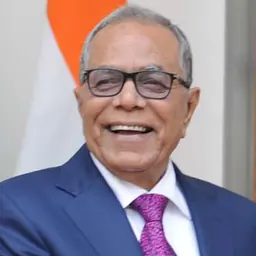
Related people
Same field, nearest in time

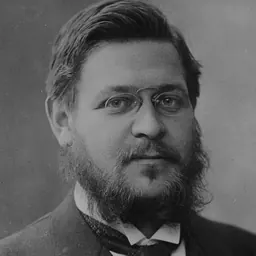



Contemporaries
People whose lives overlapped Ahmed Hilmi Abdelbaqi's


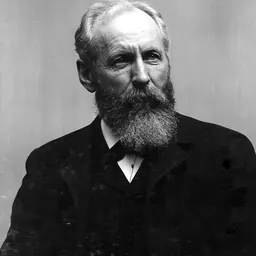
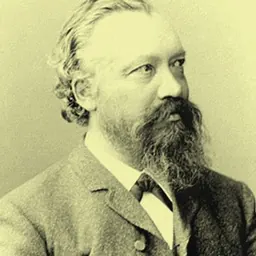
Frequently asked questions
Who was Ahmed Hilmi Abdelbaqi?
Palestinian soldier, banker and politician (1883–1963)
When was Ahmed Hilmi Abdelbaqi born?
Ahmed Hilmi Abdelbaqi was born in 1883 in Sidon.
When did Ahmed Hilmi Abdelbaqi die?
Ahmed Hilmi Abdelbaqi died in 1963 in Souk El Gharb.
What was Ahmed Hilmi Abdelbaqi's occupation?
Ahmed Hilmi Abdelbaqi was a politician, military personnel and banker.
What nationality was Ahmed Hilmi Abdelbaqi?
Ahmed Hilmi Abdelbaqi's recorded nationality: Mandatory Palestine.
Sources & further reading
· Wikipedia: Ahmed Hilmi Abdelbaqi
Cite this page
APA: Biography.guide. (2026). Ahmed Hilmi Abdelbaqi. https://biography.guide/ahmed-hilmi-abdelbaqi/
MLA: "Ahmed Hilmi Abdelbaqi." Biography.guide, https://biography.guide/ahmed-hilmi-abdelbaqi/.
Chicago: "Ahmed Hilmi Abdelbaqi." Biography.guide. https://biography.guide/ahmed-hilmi-abdelbaqi/.
Data last updated: 2026-09-20 · Spot an error? Report a correction.
Page generated 2026-09-27 05:25 UTC