
About Ahmed Deedat
Lived 1918 – 2005 (aged 87). Ahmed Deedat was an Indian and South African debater, writer, orator, missionary and author.
Early missionary work (1942–1956)
Deedat's first lecture, entitled "Muhammad: Messenger of Peace", was delivered in 1942 to an audience of fifteen people at a Durban cinema named Avalon Cinema.
A major vehicle of Deedat's early missionary activity was the 'Guided Tours' of the Jumma Mosque in Durban. The vast ornamental Jumma Mosque was a landmark site in the tourist-friendly city of Durban. A program of luncheons, speeches and free hand-outs was created to give an increasingly large number of international tourists what was often their first look at Islam. Deedat himself was one of the guides, hosting tourists and giving introductions to Islam and its relationship with Christianity.
In 1949, Deedat moved to Pakistan with his family and lived in Karachi for three years near Pakistan Chowk during which he became a Pakistani citizen under the Pakistan Citizenship Act, 1951. According to an interview on Pakistan Television, he had been a strong proponent of the idea of an Islamic state. The next year Deedat established an Islamic seminary called As-Salaam Educational Institute on a donated piece of land located in Braemar in the south of Natal province. The experiment was not a success, however, because of the IPC's lack of manpower and paucity of funds, and was taken over by the Muslim Youth Movement of South Africa in 1973. Deedat then returned to Durban and expanded the IPC's activities.
Problems arose after the publication of From Hinduism to Islam (1987), a critique of Hindu beliefs and practices. Two years later, Jews joined the criticism after Deedat published Arab and Israel – Conflict or Conciliation?
In his last tour to Australia, the publicity resulting from the presence of Deedat caused Franca Arena, member of the Legislative Council of the government of New South Wales to comment in her speech concerning racism:
Illness and death (1996–2005)
Ahmed Deedat suffered a stroke which left him paralyzed from the neck down because of a cerebral vascular accident affecting the brain stem (on 3 May 1996), leaving him unable to speak or swallow. He was flown to King Faisal Specialist Hospital in Riyadh, where he was reported to be fully alert. He learned to communicate through a series of eye-movements via a chart whereby he would form words and sentences by acknowledging letters read to him. Hawa Deedat died on Monday 28 August 2006 at the age of 85 at their home. His funeral prayer was led by Ismail ibn Musa Menk.
Writings and speeches
With funding from the Gulf states, Most of Deedat's numerous lectures, as well as most of his debates in fact, focus on and around these same themes. Often the same theme has several video lectures to its credit, having been delivered at different times and different places.
Is the Bible God's Word? What The Bible Says About Muhammad. Combat Kit Against Bible Thumpers. Crucifixion or Cruci-Fiction Muhammad: The Natural Successor to Christ. Christ in Islam Muhammad The Greatest. Al-Qur'an the Miracle of Miracles
His famous quote is : Islam will win with or without you. But without Islam, you will get lost and you will lose.
Capitalizing on his popularity in the Middle East following his receipt of the King Faisal Award, Deedat secured a grant to print a collated volume of four of his popular booklets. 10,000 copies of this book titled The Choice: Islam and Christianity were initially printed in April 1993; this book was very popular in the 1990s, available for free at many missionary outlets across North America. Subsequently, several printing houses offered to print more, and within two years another 250,000 copies had been printed in several print runs across the Middle East.
Later, a second paperback volume entitled The Choice: Volume Two containing six more of Deedat's booklets was published. Deedat also widely promoted a South African printing of The Holy Qur'an Translation by Abdullah Yusuf Ali with commentary and a detailed index. This was widely sold at subsidised cost to the general public, and is often mentioned in Deedat's speeches.
Deedat also produced a booklet entitled "Al-Qur'an: the Ultimate Miracle" featuring the theory of 'the Number 19' that was popularised by Arizona-based Egyptian computer analyst Dr. Rashad Khalifa. However, this booklet was withdrawn after Dr. Khalifa disclosed some controversial beliefs, including his rejection of the entire Hadith literature of Islam.
Style According to one scholar, Brian Larkin, "Deedat's da’wa is of a particular kind. He has little to say about the errancy of Sufism or Shi’ism, for instance, and makes no particular demand for establishing an Islamic state (though he was supportive of these efforts in Nigeria). Rather his entire effort is directed at undermining and refuting Christian evangelism and arming Muslims against Christian attacks. His fame is thus based not on the mastery of Islamic sciences but on his thoroughgoing knowledge of the Bible. As one Nigerian characterized him, Deedat opened the eyes of millions of Muslims in the fine art of inter-religious dialogue." His knowledge of English, his skill at debating, and his mastery of other scriptures "endeared him to the millions who have seen his videos or read his tracts, millions of which are sent free of charge all over the world. ... Deedat's source of authority, then, is an unusual one, drawing on the mastery of Christian rather than Muslim texts and his skill at English rather than Arabic." A family member later told South Africa's Sunday Times that the Bin Ladens had contributed around $5 million to the IPCI over the years. In interviews given after the September 11 attacks, Deedat and his son Yusuf said Deedat had met Osama bin Laden in the 1980s through this family connection, describing him at the time as a "freedom fighter" recently returned from fighting in Afghanistan.
"Deedat's debates and writings have been labelled as a form of "Apologetics through Polemics" by David Westerlund, an associate professor at the department of comparative religion, Stockholm University and an expert on Islam in Africa. "
Muslim scholar Farid Esack has criticised Deedat, comparing him to such fundamentalists as Rabbi Meir Kahane and Jerry Falwell, and writing:
"Deedat's multitude of anti-Christian, anti-Jewish and anti-Hindu videotapes have told us all that there is to be told about the other, and we are comfortable with that. There are times, of course, when questions surface about the importance of correct dogma, about the importance of labels to a God whom we believe sees beyond labels and looks at the hearts of people. Instead of pursuing these questions, we hasten back and seek refuge in "the known." We order another of those Deedat tapes. In France sale and distribution of his books has been forbidden since 1994 as they are said to be violently anti-western, antisemitic and inciting to racial hate.
His supporters, among them his son maintain that he was "a promoter of free speech and dialogue," while Abdulkader Tayob of University of Cape Town comments that he was only responding to Christian proselytization in a manner that was "not good or bad – but worth reflecting on."
Don’t just read it —
keep it.
Full-length biographies made to live with: read them, listen on the way to work, watch them tonight.
- E-book
- Audio
- Video
Instant download · yours to keep · every purchase keeps this site free
Important facts
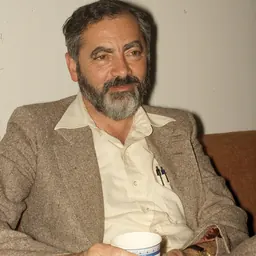
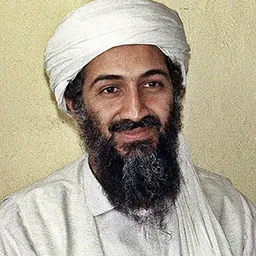
People in Ahmed Deedat's life
Named in this biography and alive at the same time





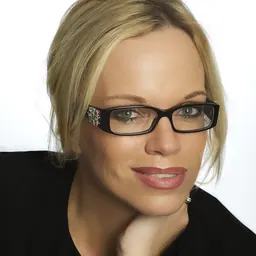
Related people
Same field, nearest in time
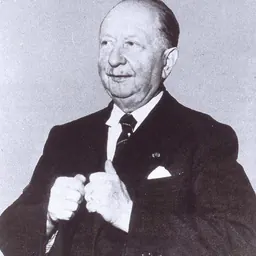
Contemporaries
People whose lives overlapped Ahmed Deedat's


Frequently asked questions
Who was Ahmed Deedat?
South African writer and orator (1918–2005)
When was Ahmed Deedat born?
Ahmed Deedat was born on 1 July 1918 in Surat.
When did Ahmed Deedat die?
Ahmed Deedat died on 8 August 2005 in Verulam.
What was Ahmed Deedat's occupation?
Ahmed Deedat was a debater, writer, orator, missionary and author.
What nationality was Ahmed Deedat?
Ahmed Deedat was Indian and South African.
Sources & further reading
Cite this page
APA: Biography.guide. (2026). Ahmed Deedat. https://biography.guide/ahmed-deedat/
MLA: "Ahmed Deedat." Biography.guide, https://biography.guide/ahmed-deedat/.
Chicago: "Ahmed Deedat." Biography.guide. https://biography.guide/ahmed-deedat/.
Data last updated: 2026-09-20 · Spot an error? Report a correction.
Page generated 2026-09-27 05:18 UTC