
About Abdullah Yusuf Ali
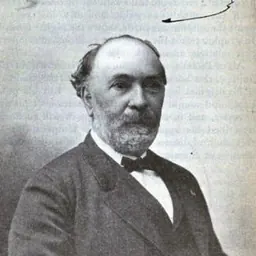
Lived 1872 – 1953 (aged 81). Abdullah Yusuf Ali was an Indian and British translator, writer and scholar.
Early life
Ali was born in Bombay, British India, the son of Yusuf Ali Allahbuksh (died 1891), also known as Khan Bahadur Yusuf Ali. On his retirement, he gained the title Khan Bahadur for public service. As a child, Abdullah Yusuf Ali attended the Anjuman Himayat-ul-Islam school and later studied at the missionary school Wilson College, both in Bombay. His wife and children settled variously in Tunbridge Wells, St Albans and Norwich while Ali returned to his post in India. He returned to Britain in 1905 on a two-year leave from the ICS and during this period he was elected a Fellow of the Royal Society of Arts and the Royal Society of Literature. Ali first came to public attention in Britain after he gave a lecture at the Royal Society of Arts in London in 1906, organised by his mentor Sir George Birdwood. Another mentor was Lord James Meston, formerly Lieutenant Governor of the United Provinces, who, when he was made Finance Member of the Government of India appointed Ali to positions in various districts in India which also involved two short periods as acting Under Secretary (1907) and then Deputy Secretary (1911–12) in the Finance Department of the Government of India.
Family and career
Khizar Humayun Ansari, his biographer on the Oxford Dictionary of National Biography, wrote of Ali:
Abdullah Yusuf Ali belonged to the group of Indian Muslims from professional families who were concerned with rank and status. In pursuit of his aspiration for influence, deference, if not outright obsequiousness, became a central feature of his relationship with the British. During the formative phase of his life he mingled mainly in upper-class circles, assiduously cultivating relations with members of the English élite. He was particularly impressed by the apparently genteel behaviour and cordiality of those with whom he associated, and, as a result, became an incorrigible Anglophile. His marriage to Teresa Shalders according to the rites of the Church of England, his hosting of receptions for the good and the great, his taste for Hellenic artefacts and culture and fascination for its heroes, his admiration for freemasonry in India as a way of bridging the racial and social divide, and his advocacy of the dissemination of rationalist and modernist thought through secular education were all genuine attempts to assimilate into British society. and gaining custody of their four children, whom he left with a governess in England. In 1914 Ali resigned from the ICS and settled in Britain where he became a Trustee of the Shah Jehan Mosque in Woking and in 1921 became a Trustee of the fund to build the East London Mosque.
With Mawbey he had a son, Rashid (born 1922/3),
Later years
In December 1938 while on tour to promote his translation, Ali helped to open the Al-Rashid Mosque, the third mosque in North America, in Edmonton, Alberta, Canada. In 1947 Ali was among many Indians who returned to India after Independence to take up political posts. However, for him the move was not a success and he returned to London where he became increasingly frail in mind and body, living in isolation ignored by both his family and the British establishment he had previously associated with. Of no fixed abode, Ali spent most of the last decade of his life either living in the National Liberal Club, in the Royal Commonwealth Society or wandering about the streets of London and living in poverty despite having £20,578 16s 3d in the bank. On 9 December 1953 Ali was found destitute and in a bewildered condition in a doorway in Westminster by the police
Ali's Quran translation 'The Holy Quran' complete Quran English translation of A. Yusuf Ali
There have been 30 printed versions of his Quran translation. In Saudi Arabia, the state-sponsored Presidency of Islamic Researches, has modified the original Yusuf Ali translation. The Ahlul Bayt Digital Islamic Library Project, whose "particular emphasis [is] on the Twelver Shi'ah Islamic school of thought", has analysed printings of Ali's translations to ascertain whether they have maintained Ali's understandings of the original Arabic text. They have determined there have been changes.
Don’t just read it —
keep it.
Full-length biographies made to live with: read them, listen on the way to work, watch them tonight.
- E-book
- Audio
- Video
Instant download · yours to keep · every purchase keeps this site free
Important facts
People in Abdullah Yusuf Ali's life
Named in this biography and alive at the same time

Related people
Same field, nearest in time

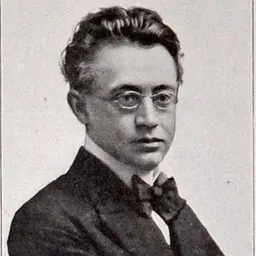



Contemporaries
People whose lives overlapped Abdullah Yusuf Ali's

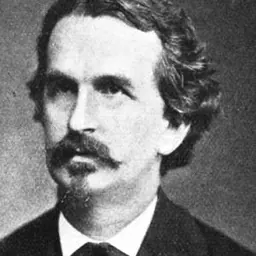
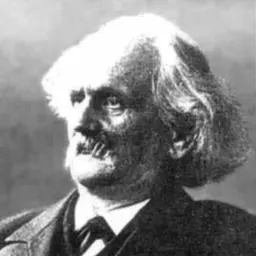
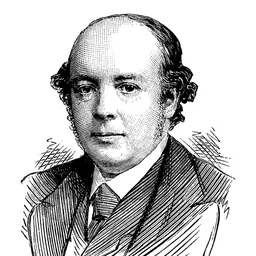

Frequently asked questions
Who was Abdullah Yusuf Ali?
Indian-British barrister (1872-1953)
When was Abdullah Yusuf Ali born?
Abdullah Yusuf Ali was born on 14 April 1872 in Mumbai.
When did Abdullah Yusuf Ali die?
Abdullah Yusuf Ali died on 10 December 1953 in Brookwood.
What was Abdullah Yusuf Ali's occupation?
Abdullah Yusuf Ali was a translator, writer and scholar.
What nationality was Abdullah Yusuf Ali?
Abdullah Yusuf Ali was Indian and British.
Sources & further reading
· Wikipedia: Abdullah Yusuf Ali
Cite this page
APA: Biography.guide. (2026). Abdullah Yusuf Ali. https://biography.guide/abdullah-yusuf-ali/
MLA: "Abdullah Yusuf Ali." Biography.guide, https://biography.guide/abdullah-yusuf-ali/.
Chicago: "Abdullah Yusuf Ali." Biography.guide. https://biography.guide/abdullah-yusuf-ali/.
Data last updated: 2026-09-20 · Spot an error? Report a correction.
Page generated 2026-09-27 05:27 UTC