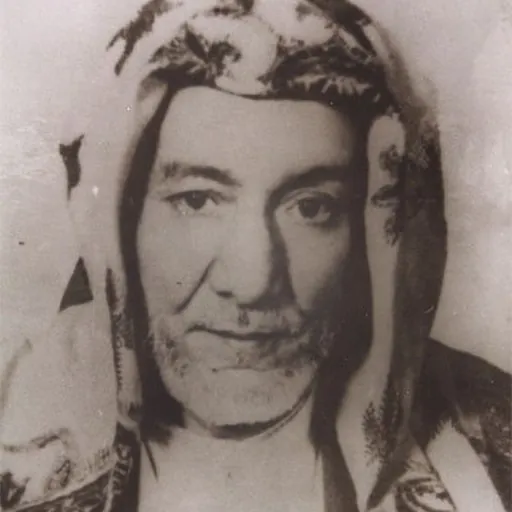
About Ahmad Zayni Dahlan
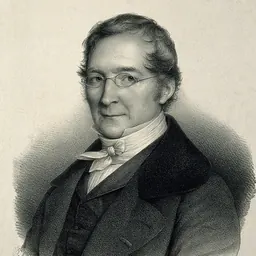
Lived 1817 – 1886 (aged 68–69). Ahmad Zayni Dahlan was a Turkish writer, islamicist, islamic jurist and historian.
Ahmad Zayni Dahlan (1816–1886) was an Islamic scholar who served as the Grand Mufti of Mecca between 1871 and his death. He also held the position of Shaykh al-Islam in the Hejaz and Imam of the Haramayn (imam of Mecca and Medina).
Theologically and juridically, he followed the Shafi'i school of jurisprudence and Ash'ari school of theology. He was known for his harsh criticism of Wahhabism, being one of their main adversaries, and his recognition of Sufi principles. A leader of the conservative faction among the Shafi'is, he was particularly important in Asia, where his influence grew with his many disciples. He authored, and personally published numerous works on history, fiqh, and the Islamic sciences in general. He taught to many Muslims scholars, including Hussein bin Ali, Sharif of Mecca and sometimes considered the last Caliph and many foreign Islamic scholars, like Arsyad Thawil al-Bantani and Khalil Ahmad Saharanpuri, a leading figure of the Deobandi movement, as well as Ahmad Raza Khan, the founder of the Barelvi movement.
Biography
Birth and education He was born in Mecca in 1816 or 1817. He was from a Sayyid family, and was a direct descendent of Muhammad in the 38th generation via Hasan ibn Ali. His father was called Zayni and his great-grandfather was Uthman Al-Dahlan Al-Jilani, hence his name. He is a descendant of 'Abd al-Qadir al-Jilani through his son Muhammad Al-Jalani (d. 1204). and under Muhammad Sayyid Quds, the previous Shafi'i Mufti of Mecca, Abdullah Siraj al-Hanqi, Yusuf al-Sawy al-Masri al-Maliki, the Maliki Mufti of Mecca and Abd al-Rahman al-Jabarti.
After obtaining his degree in Islamic studies, he started to preach in Mecca.
Lineage His lineage is as follows;
Ahmad Zayni Dahlan, bin Zayni Al-Dahlan, bin Ahmad Al-Dahlan, bin Uthman Al-Dahlan Al-Jilani, bin Ni'matullah Al-Jilani, bin Abdul-Rahman Al-Jilani, bin Muhammad Al-Jilani, bin Abdullah Al-Jilani, bin Uthman Al-Jilani, bin Atiyyah Al-Jilani, bin Faris Al-Jilani, bin Mustafa Al-Jilani, bin Muhammad Al-Jilani, bin Ahmad Al-Jilani, bin Zayni Al-Jilani, bin Abdul-Qadir Al-Jilani, bin Abdul-Wahhab Al-Jilani, bin Muhammad Al-Jilani, bin Abdul-Razzaq Al-Jilani, bin Ali Al-Jilani, bin Ahmad Al-Jilani, bin Ahmad Al-Jilani, bin Muhammad Al-Jilani, bin Zakariyya Al-Jilani, bin Thaheer al-Din Yahya Al-Jilani, bin Muhammad Al-Jilani, bin 'Abd al-Qadir al-Jilani.
Subsequent life and teaching Ahmad Zayni Dahlan is frequently considered as one of the most important religious figures of the Meccan landscape in the 19th century.
In 1848, he started to teach at the Masjid al-Haram. He was then named, in 1871, Sheikh al-Ulama, or Grand Mufti of Mecca. Khalil Ahmad Saharanpuri, Sheikh Mustafa, Usman bin Yahya, Arsyad Thawil al-Bantani, and Ahmad b. Hasan al-'Attas.
He also taught to Sayyid Fadl, while he was in Mecca before departing for Constantinople.
Dahlan issued numerous fatwas, including one approving the use of radiophonic devices for religious means or one approving the use of drums and music during religious days, which was an important concern for Muslims in Indonesia, considering that "it was acceptable if nothing unlawful happened." There, he died the next year
Theology and thought Joseph Schacht described him as the "solitary representative of historical writing in Mecca in the XIXth century".
Sufism and Wahhabism In his treatise against Wahhabi influence, he viewed Sufism as a legal and integral part of Islamic practice – including such aspects as Tawassul (intercession, or addressing God through an intermediary), Tabarruk (seeking blessings through persons or things), and Ziyarat al-Qubur (the visitation of tombs and graves).
Dahlan considered that Wahhabism would destroy the Ummah. Moreover, he called Muhammad ibn Abd al-Wahhab "malevolent" and compared his followers to the Kharijites. For Dahlan, he was a "deceiver" when he called himself an Hanbali. He also said that he was trying to divide the madhhabs by saying that one another were opposed between themselves.
The opposition to the Wahhabi movement seems to have been the opinion of the majority of Hejazi scholars and jurists of that time.
He was also influential in supporting anti-imperialism in the Dutch East Indies (modern-day Indonesia) and more generally, in Southeast Asia.
Posterity He played a crucial role through his student, Ahmad Raza Khan Barelvi in the establishment of the Barelvi movement in India, Pakistan, Kashmir, Bangladesh and Afghanistan, exerting significant influence and contributing to their staunch opposition to Wahhabism.
His fatwas were recognized after his death and are particularly important in the shaping of Indonesian Islam. The Horn of Africa was also quite influenced by him, especially via the preaches of Abd al-Rahman al-Zayla'i, in Somalia.
Since he attacked Wahhabism and clashed violently with them, some of his books are banned in Saudi Arabia.
Explanation by Sayyid Ahmad Zayni Dahlan on the Ajurrumiyya where he discussed the Ajurrumiyya, a famous Arabic grammatical manual.
To fulfill this goal, he also wrote rhetoric manuals for young learners based on the Quran and treaties of mantiq. He was very interested in the metaphors used in the Quran.
Following is a list of some of his published works: Fitnat al-Wahhabiyyah . Al-Durar al-Saniyyah fi al-Radd 'ala al-Wahhabiyyah . Khulasat al-Kalam fi Bayan Umara' al-Balad al-Haram . Al-Futuhat al-Islamiyyah ba'da Mudhiy al-Futuhat al-Nabawiyyah . Sharh al-Ajurrumiyyah, by Ibn Ajurrum . Sharh al-Alfiyyah, by Ibn Malik . Tanbih al-Ghafilin, Mukhtasar Minhaj al-'Abidin, by al-Ghazali .
Don’t just read it —
keep it.
Full-length biographies made to live with: read them, listen on the way to work, watch them tonight.
- E-book
- Audio
- Video
Instant download · yours to keep · every purchase keeps this site free
Important facts
People in Ahmad Zayni Dahlan's life
Named in this biography and alive at the same time


Related people
Same field, nearest in time


Contemporaries
People whose lives overlapped Ahmad Zayni Dahlan's




Frequently asked questions
Who was Ahmad Zayni Dahlan?
Ottoman Grand Mufti of Mecca (1816–1886)
When was Ahmad Zayni Dahlan born?
Ahmad Zayni Dahlan was born in 1817 in Mecca.
When did Ahmad Zayni Dahlan die?
Ahmad Zayni Dahlan died in 1886 in Medina.
What was Ahmad Zayni Dahlan's occupation?
Ahmad Zayni Dahlan was a writer, islamicist, islamic jurist and historian.
What nationality was Ahmad Zayni Dahlan?
Ahmad Zayni Dahlan was Turkish.
Sources & further reading
· Wikipedia: Ahmad Zayni Dahlan
Cite this page
APA: Biography.guide. (2026). Ahmad Zayni Dahlan. https://biography.guide/ahmad-zayni-dahlan/
MLA: "Ahmad Zayni Dahlan." Biography.guide, https://biography.guide/ahmad-zayni-dahlan/.
Chicago: "Ahmad Zayni Dahlan." Biography.guide. https://biography.guide/ahmad-zayni-dahlan/.
Data last updated: 2026-09-22 · Spot an error? Report a correction.
Portrait: Wikimedia Commons · author & licence
Page generated 2026-09-27 05:02 UTC