
About Ahmad Khomeini
Lived 1946 – 1995 (aged 49). Ahmad Khomeini was an Iranian politician, theologian and cleric.
Ahmad Mostafavi Khomeini (15 March 1946 – 17 March 1995) was an Iranian cleric and politician who was Custodian of the Mausoleum of Khomeini from 1989 until his death in 1995. A member of the Khomeini family and the second son of the first Iranian supreme leader Ruhollah Khomeini, Khomeini was the "right-hand" of his father before, during and after the Iranian Revolution, and also held key positions during his father's rule.
Early life and education Ahmad Mostafavi Khomeini was born in Qom on 15 March 1946 (although several sources have given his birth year as 1945), where he did his primary and secondary education in Owhadi and Hakin Nezami school, respectively and then started seminary studies and accomplished primary and secondary hawza courses. He secretly joined his father, Ruhollah Khomeini, after his father was exiled to Najaf.
Career and activities Ahmad was regarded as Khomeini's "right-hand man", the "torch-bearer for his father's anti-Western radicalism" Ahmad participated in the trials of the Shah's army officers and politicians by the Islamic Revolutionary Court. In one case he said Nader Jahanbani, who had been deputy chief of the Imperial Air Force that he was a foreigner.
His political life career commenced after death of his brother, Mostafa. In the 6 years after the death of his father, he had several decision-making positions. He was a member of Iran's Supreme National Security Council without assuming any executive position. He was a member of Supreme Council of the Cultural Revolution by Ali Khamenei's official order. He became the overseer of the Mausoleum of Khomeini. He spoke against America, Israel and what he called "exploitative Iranian capitalists," on several occasions.
During hostage crisis During the Iran hostage crisis, he had a "prominent role" and made "tough anti-American statements". According to the hostages, after Ahmad's visit to the then taken over embassy, he greeted the students and congratulated them for their action. Emphasizing on that some of the hostages were CIA agents based on the discovered documents, he repeated his father's threat "to put some of the captives on trial for spying" if the recently toppled Shah was "not returned to Iran." In response, Montazeri defended Mehdi Hashemi, an Iranian Shia cleric who was defrocked later, and said that he would "stay away from politics."
Personal life His wife was Fatemeh Soltani Tabatabai, daughter of Grand Ayatollah Mohammad Bagher Soltani Tabatabai Borujerdi, niece of Imam Musa Sadr, the Shia religious leader of Lebanon.
Death According to pro-government media, Ahmad Khomeini suffered a cardiac arrest on 12 March 1995, and went into a coma. He died five days later, on 17 March 1995, hours after being connected to life support machinery. According to Assembly of the Forces of Imam's Line, the Tehran Times reported that the rumors regarding Ahmad Khomeini's death was originally published by Alireza Nourizadeh, an alleged "British spy". Under duress, his son, Hassan Khomeini "confirmed" this, calling the rumors "baseless" and repeated the claim that they were created by a "British spy".
However, non-government sources claim that Ahmad Khomeini was indeed killed after falling foul of the supreme leader, Ayatollah Seyyed Ali Khamenei, and the then president, Hashemi Rafsanjani. On multiple occasions, Hassan Khomeini publicly claimed that his father was poisoned by the Iranian intelligence agents with the help of pills that his father had received at the hospital.
Reception Ahmad's father described him as: Ayatollah Ali Khamenei, the former supreme leader of Iran, described him as someone who solved many problems and did many things throughout the revolution. Khamenei called him capable and a unique and necessary element besides Khomeini. According to Ayatollah Mohammad Fazel Lankarani, Ahmad was a strong column, a capable arm for the government, supreme leader and the officials.
Don’t just read it —
keep it.
Full-length biographies made to live with: read them, listen on the way to work, watch them tonight.
- E-book
- Audio
- Video
Instant download · yours to keep · every purchase keeps this site free
Important facts
Family & relationships
People in Ahmad Khomeini's life
Named in this biography and alive at the same time
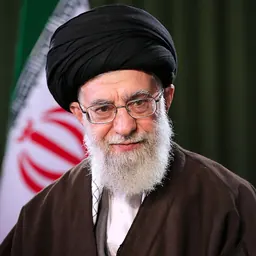


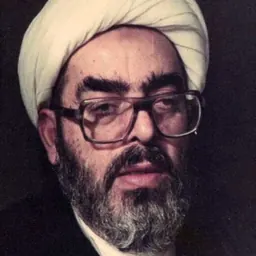


Related people
Same field, nearest in time





Contemporaries
People whose lives overlapped Ahmad Khomeini's
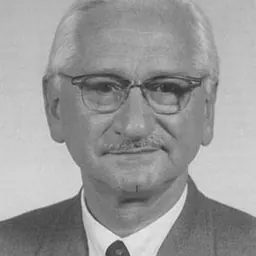
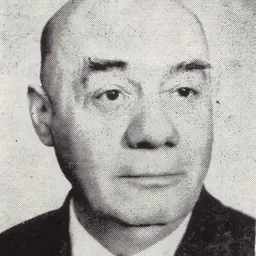


Frequently asked questions
Who was Ahmad Khomeini?
Iranian politician
When was Ahmad Khomeini born?
Ahmad Khomeini was born on 14 March 1946 in Qom.
When did Ahmad Khomeini die?
Ahmad Khomeini died on 17 March 1995 in Tehran.
What was Ahmad Khomeini's occupation?
Ahmad Khomeini was a politician, theologian and cleric.
What nationality was Ahmad Khomeini?
Ahmad Khomeini was Iranian.
Sources & further reading
Cite this page
APA: Biography.guide. (2026). Ahmad Khomeini. https://biography.guide/ahmad-khomeini/
MLA: "Ahmad Khomeini." Biography.guide, https://biography.guide/ahmad-khomeini/.
Chicago: "Ahmad Khomeini." Biography.guide. https://biography.guide/ahmad-khomeini/.
Data last updated: 2026-09-20 · Spot an error? Report a correction.
Page generated 2026-09-27 05:28 UTC