
About Ahilyabai Holkar
Lived 1725 – 1795 (aged 70). Ahilyabai Holkar was a politician and sovereign.
Ahilyabai Holkar (; 31 May 1725 – 13 August 1795), also spelled Ahalya Bai, Rajmata Ahilyabai Holkar was the Holkar Queen of the Malwa kingdom . She was later ruling queen of Indore within the Maratha Empire. She established Maheshwar (in Madhya Pradesh) as the seat of the Holkar Dynasty.
Maharani Ahilyabai Holkar is renowned for good governance, along with educational and cultural development. She commisioned a number of temples, Ghats, Pathasalas, and Dharmshalas as socio-cultural projects, while also contributing to the growth of Indian architecture. After the deaths of her husband Khanderao Holkar and father-in-law Malhar Rao Holkar, Ahilyabai undertook the affairs of the Holkar dynasty. She defended Indore against invasions and personally led armies into battle, with her brother-in-law Tukoji Rao Holkar serving as her military commander. Ahilyabai's Matha, or charitable endowments, spread across India. Ahilyabai had five brothers and was first educated at home.
Ahilyabai rose to prominence when Malhar Rao Holkar, a commander in the army of Maratha Peshwa Baji Rao I and ruler of Malwa, stopped in Chandi on his way to Pune and saw her at a temple service. Impressed by the child's piety and character, Malhar advised his son, Khanderao, to marry her. They were wed in 1733 when he was nine or ten and she was seven or eight. Twelve years after her marriage, her husband Khanderao died during the siege of the Kumher Fort. In 1766,Her father-in-law, Malhar Rao passed away, and in the following year, she lost her son, Male Rao. His land lay north of the Narmadha on both sides of Sahyadri.
Education and military expertise Starting in 1754, Malhar Rao kept Ahilyabai actively involved in diplomacy debates, matters of the kingdom's finances, and other problems of both the Mughal Empire and the Peshwa. Throughout her married life, she was brought up by her mother-in-law, Gautama Bai Holkar, who is credited for teaching Ahilyabai to have proper values. She trained her in administration, accounts, and politics and, in 1759, gave Ahilyabai her khasgi, or land grant.
Ahilyabai's trust from her father-in-law and her military expertise are both demonstrated by a 1765 letter he wrote her during an invasion of Punjab by a Durrani Empire-Rohilla dynasty coalition led by Emperor Ahmad Shah Durrani. Malhar Rao, who was fighting in Delhi, commanded her to take heavy artillery on a military expedition to Gwalior and attack the fort at Gohad:"...proceed to Gwalior after crossing the Chambal. You may halt there for four or five days. You should keep your big artillery and arrange for its ammunition as much as possible... The big artillery should be kept at Gwalior and you should proceed further after making proper arrangements for expenses for a month. On the march you should arrange for military posts to be located for protection of the road." Ahilbayai's attack was successful.
Khanderao's death and aftermath In 1754, Khanderao and Malhar Rao, acting on orders from Mughal Grand Vizier Ghazi ud-Din Khan Feroze Jung III, laid siege to the fort at Kumher, then held by Jat Raja Suraj Mal. Suraj Mal had sided with Safdar Jang, another Mughal vazier who had rebelled against the emperor. Khanderao was inspecting his troops in an open palanquin when he was killed by cannon fire.
Devastated by Khanderao's death, Alhiyabai announced she would commit sati, ritualistic suicide on his funeral pyre. Her dismayed subjects begged her to reconsider but she explained that she felt sati was the only way she could fulfill her husband's promise to accompany her all her life. Her father-in-law Malhar Rao begged:"Daughter, my son left me whom I raised with a hope that he would support me in my old age. Now, will you also leave me, an old man, alone to be drowned in the fathomless ocean? ... Will you also leave me without any support? Still, if you don't want to change your mind, let me die first."
This convinced her to choose to live and Malhar Rao thereupon began to train her in military affairs. He died on 20 May 1766 in Alampur.
Reign
On 23 August 1766, Ahilyabai's only son, Male Rao Holkar, became ruler of Indore at the age of 21 when he received investiture from the Peshwa. Male Rao had reigned for just over six months when he died on 5 April 1767. Malhar Rao's adopted son Tukoji Rao Holkar was then made Subahdar on the payment of a large tribute of Indian rupees and Ahilyabai became the de facto ruler.
Historical records show that groups from neighboring states, particularly the Chundawat clan of Jaipur, rebelled during this transfer of power, taking advantage of both Tukoji Rao's absence from the region and the widespread devastation wrought by the Third Battle of Panipat and its aftermath. Ahilyabai led Maratha armies against these rebellions and, despite a lack of resources and aid, won every battle.
In 1791, Ahilyabai's son-in-law, Yeshwantrao Fanse, died and her daughter Muktabai committed sati on his funeral pyre.
Administration In those times, the state's administration was two-sided, military and civil. The military side was again bifurcated, Tukoji Rao Holkar was the Subedar, and he had to serve the Maratha. Devi Ahilyabai was outspoken, proclaiming her power by declaring, "I am the daughter-in-law of Malhar Rao". The Saranjamdar system established by Malhar Rao was efficient and was recognized by the Puna authorities. Saranjamdar was a "camp within a camp" complete by itself. The state records involuntarily reveal the diplomatic and administrative skills exhibited by Devi. Justice administration was soft but speedy, practical yet spiritual, restraining yet re-forming.
She transformed Indore into a progressive city, and built industries and universities. The government of India issued a stamp on 25 August 1996 in celebration of her 200th death anniversary. The Indore airport is named after her. The city of Indore named the university Devi Ahilya Vishwavidyalaya. Not merely in her state but indeed in other parts of India she is credited with promoting activities including repair and additions to several famous temples such as Kashi Viswanath Mandir at Varanasi, Gouri Somnath Mandir at Chola and the construction of the famous Dashashwamedh Ghat at Banaras.
Charities and endowments The Rajwada Palace was the official residence of the Holkars during the reign of Ahilyabai. The Holkar family was known for avoiding using public cash to meet their personal and family expenses. They possessed their personal funds, which they had accumulated through their private property. Ahilyabai inherited personal funds estimated at sixteen crores rupees at that time. Ahilyabai donated money from her personal resources to charity. The charities of the Devi Ahilyabai in her territory as well as throughout the Bharata Kanda are too well known. A well-documented account of the expenditure can be found in the "Devasthan classification list 1923 by the Holkar government". The Holkar government appointed a "Devastahan officer" who travelled far and wide and collected information on the spot.
The arrangements made by Devi Ahilya at all the sacred were shown in the below table
Charities connected with the Jyotir-Lingas Sl NoName of the LingaGeographical situation.Description of charity.Authority for statement.1Shree SomanathKathiawad, on the sea side.In 1786 A. D. The idol was re-installedMaheshwar Durbar Batmipatre. Part II, P.872Shree MallikarjunaDist. Karnul Madras Presidency.Temple was built. State Record.3Shree OmkareshwarCentral India (on the Narbada bank.)House for Drums, Flower-garden, Palanquin, Boat, Silver-idolState Record.4Shree VaijnathNizam's StateIn 1784 A. D. The temple was re-built.Bharat Itihasa Shanshodliak Mandal Report Shak 1834, Bhadrapad Number.5Shree NageshwarNizam's StateIn 1784 A, D. Annual payment of Rs. 81/- for 1 worship.State Record.6Shree VishwanathBenares(1) Mankarnikaghat (2) Re-installation of Kashi- Vishwanath. (3) 6 Private temples. (4) Temple of the Ganges and 3 temples on the Ghat. (5) Shree Tarkeshwar temple. (6) Dashashwamedh Ghat (7) Female Mankarnika Ghat (8) Dharmashala Rameshwar (9) Dharmashala Kapildhara (10) 9 Private Bungalows (11) Garden-field (12) Plinth on Shitala Ghat (13) Dharmashala Uttar Kashi (14) Establishment of Bramha-puriState Record.7Shree TrimbakeshwarNasik District.Bridge of Kushawarta-GhatState Record.8Shree GrishneshwarVerul Nizam's StateRe-built Shivalaya Tirth.Bharat I.S.M. R. Shak 1838,9Shree GokarnaOn the Western sea. Madras Presidency.(1) Alms-House.State Record.10Shree MahakaleshwarUjjain (Central India)Worship of the Linga on the Mahashivratra night, and food distribution on the day following.State Record.11Shree RameshwarMadras Presidency.Alms-House. Wells. Shree Radha-Krishna temple.State Record.12Shree Bhima-ShankarBombay Presidency.Alms-House,State Record.
Sapta Puri and Char Dham Sapta Puri (seven cities) and Char Dham (four quarters) were looked up eventually by Hindus of all castes and creeds in worship and pilgrimage.
Dwarka: she built a Almshouse
Ujjain(Avantika): she built four Mandir and a charitable building
Kanchipuram: Ganga water annually sent
Mathura: she built a Mandir 2 Ghat and one charitable building
Ayodhya: She built 4 Ram Mandir and 3 charitable buildings
Haridwar(Maya): a Ghat and a charitable house
Varanasi: Refer the above table
Char Dhama – four quadrants of Aryavarta Badrinath: 5 Dharmashalas and eight charity buildings
Jagnath (Puri): A temple, Almhouse and garden land
Conclusion
Here we see the various charities of Devi Ahilyabai extending throughout the length and breadth of Bharatakhanda. In the book HOLKAR STATE HISTORY VOL. II Life and Life's-Work of Devi Shree Ahilyabai ( 1725–1795 A. D.)page 42 there are worship expenses
Various temples Ghats and rest houses built during her time exhibit Indian architecture and the various features of different schools. They became so many training grounds for young Indian architecture. Not only in her territory but throughout the whole of India. The aspects of Devi Ahilyabai charity reveal and resuscitation of Thirthas and Kshetras.
Death Ahilyabai died on 13 August 1795 at age 70. She was succeeded by her commander-in-chief and brother-in-law, Tukoji Rao Holkar, who abdicated the throne in 1797 in favour of his son Kashi Rao Holkar.
Legacy
300th Birth Anniversary Celebrations On May 31, 2025, tributes were paid across India to Maharani Ahilyabai Holkar, who was revered as a queen of the Maratha Malwa kingdom and remembered for her legacy of good governance focused on public welfare, education, and socio-cultural development.
Collecting oral memories of hers in the 1820s, Sir John Malcolm, the British official most directly concerned with the 'settlement' of central India, seems to have become deeply enamored of her.
John Keay called her 'The Philosopher Queen', a reference perhaps to the 'Philosopher king' Bhoj.
A commemorative stamp was issued in her honour on 25 August 1996 by the Republic of India.
As a tribute to the great ruler, Indore international airport has been named Devi Ahilyabai Airport. Similarly, Indore university has been renamed as Devi Ahilya Vishwavidyalaya.
In popular culture Former Lok Sabha Speaker Sumitra Mahajan has written a book "Matoshree" based on the life of Ahilyadevi Holkar A film titled Devi Ahilyabai was produced in 2002 featuring Mallika Prasad as Devi Ahilyabai, Shabana Azmi as Harkubai (Khanda Rani, Malhar Rao Holkar's wife) and also including Sadashiv Amrapurkar as Malhar Rao Holkar, Ahilyabai's father in law. In Thane City in Maharashtra, a children's park has been named as 'Ahilyadevi Holkar Udyan' after her. Also, a road has been named after her in the same city. The airport at Indore is named Devi Ahilyabai Holkar Airport in her honor. There are two universities named Devi Ahilya Vishwa Vidyalaya in Indore, Madhya Pradesh, and Punyashlok Ahilyadevi Holkar Solapur University in Solapur, Maharashtra. In 2006, a statue of Ahilyabai was unveiled on the premises of the Parliament Library Building by Vice-president Bhairon Singh Shekhawat. In the 1994 Hindi TV series The Great Maratha, Ahilyabai's character was portrayed by Mrinal Kulkarni. In 2016, a TV serial titled Awaaz: Punyashlok Ahilybai Holkar aired on Colors Marathi starring Urmila Kothare as Ahilybai. The State Highway 15 (West Bengal) has been renamed as Ahilyabai Road. In 2021, a Hindi TV series titled Punyashlok Ahilyabai aired on Sony TV, starring Aetashaa Sansgiri as Ahilyabai and Aditi Jaltare as a young Ahilyabai. Government Medical College in Baramati(Maharashtra) and Auraiya(Uttar Pradesh) has been named after her. Government Engineering College in Mainpuri is named as Lokmata Devi Ahilya bai Holkar Rajkiya Engineering College,Mainpuri after her. Ahilyabai Holkar Stadium, Ramghat Road, Aligarh (Uttar Pradesh)
Don’t just read it —
keep it.
Full-length biographies made to live with: read them, listen on the way to work, watch them tonight.
- E-book
- Audio
- Video
Instant download · yours to keep · every purchase keeps this site free
Important facts
Family & relationships
People in Ahilyabai Holkar's life
Named in this biography and alive at the same time



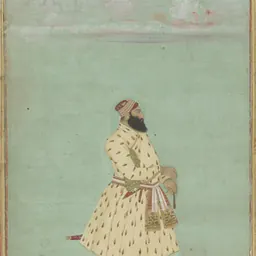
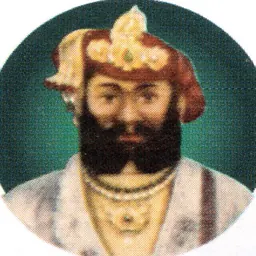
Related people
Same field, nearest in time



Contemporaries
People whose lives overlapped Ahilyabai Holkar's





Frequently asked questions
Who was Ahilyabai Holkar?
queen of Indore
When was Ahilyabai Holkar born?
Ahilyabai Holkar was born on 31 May 1725 in Jamkhed.
When did Ahilyabai Holkar die?
Ahilyabai Holkar died on 13 August 1795 in Indore.
What was Ahilyabai Holkar's occupation?
Ahilyabai Holkar was a politician and sovereign.
Sources & further reading
Cite this page
APA: Biography.guide. (2026). Ahilyabai Holkar. https://biography.guide/ahilyabai-holkar/
MLA: "Ahilyabai Holkar." Biography.guide, https://biography.guide/ahilyabai-holkar/.
Chicago: "Ahilyabai Holkar." Biography.guide. https://biography.guide/ahilyabai-holkar/.
Data last updated: 2026-09-20 · Spot an error? Report a correction.
Page generated 2026-09-27 05:20 UTC