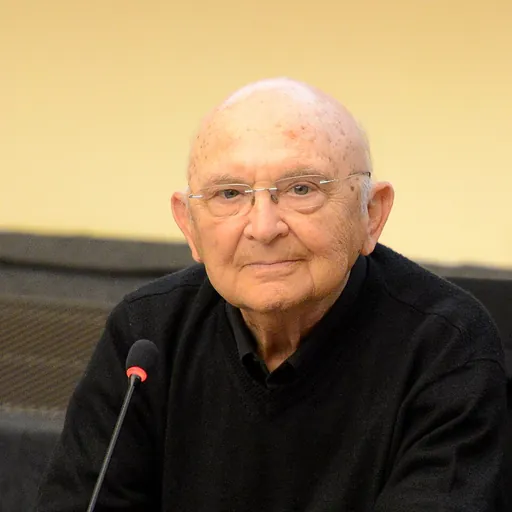
About Aharon Appelfeld
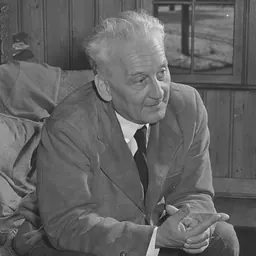
Lived 1932 – 2018 (aged 85). Aharon Appelfeld was a Russian and Israeli writer, university teacher, prose writer, physical education teacher, literary scholar and novelist.
Aharon Appelfeld (; born Ervin Appelfeld; February 16, 1932 – January 4, 2018) was an Israeli novelist and Holocaust survivor.
Biography Ervin (Aharon) Appelfeld was born in Jadova Commune, Storojineț County, in the Bukovina region of the Kingdom of Romania, now Ukraine. In an interview with the literary scholar, Nili Gold, in 2011, he remembered his home town in this district, Czernowitz, as "a very beautiful" place, full of schools and with two Latin gymnasiums, where fifty to sixty percent of the population was Jewish. In 1941, when he was nine years old, the Romanian Army retook his hometown after a year of Soviet occupation and his mother was murdered. Appelfeld was deported with his father to a forced labor camp in Romanian-controlled Transnistria. He escaped and hid for three years before joining the Soviet army as a cook. After World War II, Appelfeld spent several months in a displaced persons camp in Italy before immigrating to Palestine in 1946, two years before Israel's independence. He was reunited with his father after finding his name on a Jewish Agency list in 1960. (Both Appelfeld and his father had presumed the other had been murdered in the Holocaust. They had both made their way separately to Israel after the war.) The father had been sent to a ma'abara (refugee camp) in Be'er Tuvia. The reunion was so emotional that Appelfeld had never been able to write about it.
In Israel, Appelfeld made up for his lack of formal schooling and learned Hebrew, the language in which he began to write. His first literary efforts were short stories, but gradually he progressed to novels. He completed his studies at the Hebrew University of Jerusalem. He lived in Mevaseret Zion and taught literature at Ben Gurion University of the Negev and was often writing in Jerusalem's Ticho House (Beit Ticho).
In 2007, Appelfeld's Badenheim 1939 was adapted for the stage by Arnold Wesker and performed at the Gerard Behar Center in Jerusalem.
Choice of language Appelfeld was one of Israel's foremost living Hebrew-language authors, despite the fact that he did not learn the language until he was a teenager. His mother tongue was German, but he was also proficient in Yiddish, Ukrainian, Romanian, Russian, English, and Italian.
In an interview in the Boston Review, Appelfeld explained his choice of Hebrew: "I’m lucky that I’m writing in Hebrew. Hebrew is a very precise language, you have to be very precise—no over-saying. This is because of our Bible tradition. In the Bible tradition you have very small sentences, very concise and autonomic. Every sentence, in itself, has to have its own meaning."
The Holocaust as a literary theme Many Holocaust survivors have written an autobiographical account of their survival, but Appelfeld did not offer a realistic depiction of the events. He wrote short stories that can be interpreted in a metaphoric way. Instead of his personal experience, he sometimes evoked the Holocaust without even relating to it directly. His style is clear and precise, but also very modernistic.
Appelfeld resided in Israel but wrote little about life there. Most of his work focuses on Jewish life in Europe before, during and after World War II. As an orphan from a young age, the search for a mother figure is central to his work. During the Holocaust he was separated from his father, and only met him again 20 years later.
Motifs Silence, muteness and stuttering are motifs that run through much of Appelfeld's work.
Awards and honors 1975 Brenner Prize for literature. 1979 Bialik Prize for literature (jointly with Avot Yeshurun). 1983 Israel Prize for literature. 1989 National Jewish Book Award for Fiction for Badenheim 1939 , 1989 National Jewish Book Award for Fiction for The Immortal Bartfuss 1997 Foreign Honorary Member of the American Academy of Arts and Sciences. 1998 National Jewish Book Award for Fiction for The Iron Tracks 2016 Sydney Taylor Book Award for the children's book "Adam and Thomas"
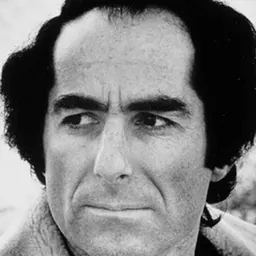
Cultural references Appelfeld's work was greatly admired by his friend, fellow Jewish novelist Philip Roth, who made the Israeli writer a character in his own novel Operation Shylock.
Published works
Badenheim 1939 (1978, English translation: 1980) The Age of Wonders (1978, tr. 1981) Tzili (1982, tr. 1983) The Retreat (tr. 1984) To the Land of the Cattails (tr. 1986) (earlier published as To the Land of the Reeds) The Immortal Bartfuss (1988) For Every Sin (tr. 1989) The Healer (tr. 1990) Katerina (1989, tr. 1992) Iron Tracks (1991, tr. 1998) Unto the Soul (tr. 1993) The Conversion (1991, tr. 1998) Laish (2001, tr. 2009) Beyond Despair: Three Lectures and a Conversation With Philip Roth (tr. 2003) The Story of a Life: A Memoir (2003) A Table For One: Under The Light Of Jerusalem (tr. 2005) All Whom I Have Loved (tr. 2007) Blooms of Darkness (2006, tr. 2010) Until the Dawn’s Light (1995, tr. 2011) Yalda Shelo Minhaolam Hazé = A girl from another world (fiction for children) (2013, not yet tr. in English), (published in French, Italian, 2014) Suddenly Love (tr. 2014) Long Summer Nights (2015) Adam and Thomas (fiction for children) (2015) The Man Who Never Stopped Sleeping (2017) To the Edge of Sorrow (2012, tr. 2020)
Don’t just read it —
keep it.
Full-length biographies made to live with: read them, listen on the way to work, watch them tonight.
- E-book
- Audio
- Video
Instant download · yours to keep · every purchase keeps this site free
Important facts
People in Aharon Appelfeld's life
Named in this biography and alive at the same time



Related people
Same field, nearest in time


Contemporaries
People whose lives overlapped Aharon Appelfeld's


Frequently asked questions
Who was Aharon Appelfeld?
Israeli writer (1932–2018)
When was Aharon Appelfeld born?
Aharon Appelfeld was born on 16 February 1932 in Stara Zhadova.
When did Aharon Appelfeld die?
Aharon Appelfeld died on 4 January 2018 in Petah Tikva.
What was Aharon Appelfeld's occupation?
Aharon Appelfeld was a writer, university teacher, prose writer, physical education teacher, literary scholar and novelist.
What nationality was Aharon Appelfeld?
Aharon Appelfeld was Russian and Israeli.
Sources & further reading
Cite this page
APA: Biography.guide. (2026). Aharon Appelfeld. https://biography.guide/aharon-appelfeld/
MLA: "Aharon Appelfeld." Biography.guide, https://biography.guide/aharon-appelfeld/.
Chicago: "Aharon Appelfeld." Biography.guide. https://biography.guide/aharon-appelfeld/.
Data last updated: 2026-09-21 · Spot an error? Report a correction.
Portrait: Wikimedia Commons · author & licence
Page generated 2026-09-27 05:01 UTC