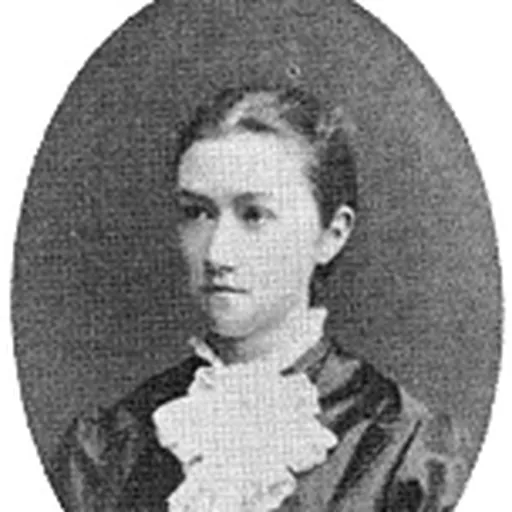
About Agnes Pockels
Lived 1862 – 1935 (aged 73). Agnes Pockels was a German physicist and chemist, known for Surface science.
Agnes Luise Wilhelmine Pockels (14 February 1862 – 21 November 1935) was a German scientist, whose pioneering research was fundamental in establishing the modern discipline known as surface science, which describes the properties of liquid and solid surfaces and interfaces.
Pockels became interested in fundamental research in surface science through observations of soaps and soapy water in her own home while washing dishes. She devised a surface film balance technique to study the behavior of molecules such as soaps and surfactants at air-liquid interfaces. From these studies, Pockels defined the "Pockels point" which is the minimum area that a single molecule can occupy in monomolecular films.
Early life and education Pockels was born in Venice in 1862. At the time, Venice was part of the Kingdom of Lombardy–Venetia, a part of the Austrian Empire, and Pockels' father served in the Austrian Army. When he fell sick, the family moved in 1871 to Brunswick, which was part of the nascent German Empire. Agnes was interested in science as a child. However, women were not allowed to enter universities to study.
Pockels further developed her apparatus by placing a small disk (typically 6 millimeters in diameter), such as a button, on the surface of the water in the trough. She then used a weighing scale (typically an apothecary's balance) to determine the force (weight) necessary to lift the disk from the water. By comparing the forces required to lift the disk from pure water to water containing impurities, she devised a direct measure of surface tension. This apparatus enabled her to investigate the surface forces of mono-molecular films, the surface tension of emulsions and solutions, the effect of impurities on the physical properties of water, and providing an understanding of surfactancy. Pockels' design influenced later investigators who improved on the method, leading to the modern Langmuir–Blodgett trough which is in extensive use in colloid and surface science in contemporary times. Her first paper was "Surface Tension," describing her measurements and findings with her sliding trough.
The letter to Lord Rayleigh was described in a 1971 journal article on the origin of the surface film balance as being "a landmark in the history of surface chemistry".
Pockels described the calming effect that oils can have on bodies of water, Her research extended to investigations of other surface phenomena including capillarity and contact angles. She was eventually recognised as a pioneer in the emerging field of surface science. Following the death of her brother, Friedrich Carl Alwin Pockels in 1913 and her own ill health, Agnes Pockels lost contact with many professional scientists and ceased to undertake original research.
Personal life Pockels spent much of her life caring for her sick parents, which she noted to be "very challenging". Her father died in 1906 and her mother died in 1914. By that time, Pockels herself was in ill health, necessitating a stay for a time in a sanatorium. She travelled in Europe for enjoyment.
Using an improved version of the slide trough, American chemist Irving Langmuir made additional discoveries on the properties of surface molecules, which earned him a Nobel Prize in chemistry in 1932. Pockels' device is a direct antecedent of the Langmuir–Blodgett trough, developed later by Langmuir and physicist Katharine Blodgett.
Since 1993, the Technical University Braunschweig has awarded the Agnes Pockels Medal to people who have advanced the Technical University Braunschweig, emphasising those who have promoted teaching and research, especially women.
The Agnes Pockels Laboratory was established at the Technical University Braunschweig in 2002. Its purpose is to foster chemical education, aid chemistry teachers, and encourage young children in the pursuit of the natural sciences. It emphasises children under the age of 10, especially girls. In this laboratory, children experience learning-by-doing, much like a craft, without theoretical knowledge or advanced instrumentation.
Lord Rayleigh kept the correspondence he received from Pockels and her brother Friedrich Pockels. Pockels maintained a diary. These documents and photographs of the Pockels family were retained in the library of the Royal Society of Chemistry at Burlington House. The Ostwald article includes a list of her publication and a summary of several of them. It also includes autobiographical passages from Pockels.
A street, Agnes-Pockels-Straße, is named in her honour in Hilden in North Rhine-Westphalia.
Publications "Surface Tension", (1891) Nature, 46, 437. "On the relative contamination of the water-surface by equal quantities of different substances", (1892) Nature 47, 418. "Relations between the surface tension and relative contamination of water surfaces", (1893) Nature, 48, 152. "On the spreading of oil upon water", (1894) Nature 50, 223. "Beobachtungen über die Adhäsion verschiedener Flüssigkeiten an Glas", (Observations about the Adhesion of Different Liquids on Glass), (1898) Naturwissenschaftliche Rundschau, 14, 190. "Randwinkel gesättigter Lösungen an Kristallen" (Contact Angles of Saturated Solutions on Crystals), (1899), Naturwissenschaftliche Rundschau, 14, 383. "Untersuchungen von Grenzflächenspannungen mit der Cohäsionswaage", (Investigations of the Surface Tension with the Cohesion Balance), (1899) Annalen der Physik, 67, 668. "Über das spontane Sinken der Oberflächenspannung von Wasser, wässerigen Lösungen und Emulsionen"', (On the Spontaneous Decrease of the Surface Tension of Water, Aqueous Solutions and Emulsions), (1902) Annalen der Physik, 8, 854. "Über Randwinkel und Ausbreitung von Flüssigkeiten auf festen Körpern" (On Contact Angles and the Flow of Fluids on Solid Bodies), (1914) Physikalische Zeitschrift, 15, 39. "Zur Frage der zeitlichen Veränderung der Oberflächenspannun"' (On the Changes of the Surface Tension with Time), (1916) Physikalische Zeitschrift, 17, 141 "Über die Ausbreitung reiner und gemischter Flüssigkeiten auf Wasser" (On the Spreading of Pure and Mixed Liquids on Water) (1916) Physikalische Zeitschrift, 17, 142. "Die Anomalie der Wasseroberfläche" (The Anomalous State of the Water Surface) (1917) Die Naturwissenschaften, 5, 137 u. 149. "Zur Frage der Ölflecke auf Seen" (On Oil Stains on Lakes) (1918) Die Naturwissenschaften, 6, 118. "The measurement of surface tension with the balance" (1926) Science 64, 304.
Don’t just read it —
keep it.
Full-length biographies made to live with: read them, listen on the way to work, watch them tonight.
- E-book
- Audio
- Video
Instant download · yours to keep · every purchase keeps this site free
Important facts
People in Agnes Pockels's life
Named in this biography and alive at the same time

Related people
Same field, nearest in time



Contemporaries
People whose lives overlapped Agnes Pockels's




Frequently asked questions
Who was Agnes Pockels?
German chemist pioneer in surface science
When was Agnes Pockels born?
Agnes Pockels was born on 14 February 1862 in Venice.
When did Agnes Pockels die?
Agnes Pockels died on 21 November 1935 in Brunswick.
What was Agnes Pockels's occupation?
Agnes Pockels was a physicist and chemist.
What was Agnes Pockels known for?
Agnes Pockels was known for Surface science.
What nationality was Agnes Pockels?
Agnes Pockels was German.
Sources & further reading
Cite this page
APA: Biography.guide. (2026). Agnes Pockels. https://biography.guide/agnes-pockels/
MLA: "Agnes Pockels." Biography.guide, https://biography.guide/agnes-pockels/.
Chicago: "Agnes Pockels." Biography.guide. https://biography.guide/agnes-pockels/.
Data last updated: 2026-09-20 · Spot an error? Report a correction.
Portrait: Wikimedia Commons · author & licence
Page generated 2026-09-27 05:11 UTC